
Most men own a watch before they understand anything about what makes one good. It gets chosen the way a lot of things get chosen: a brand name that sounds right, a face that looks sharp in a store window, a price that felt like the correct amount of money to spend on something you wear every day. Then it sits in a drawer within a year, or it keeps time badly, or it starts to feel cheap the moment someone asks about it. Some of that comes down to taste changing. Most of it comes down to never actually learning what separates a well made watch from a good looking one before money changed hands. None of that has to happen. A watch is one of the only accessories a man wears daily for decades, and buying one well is less about taste and more about understanding a small number of facts that most retailers never explain.
What Is Actually Inside a Watch You Should Care About?
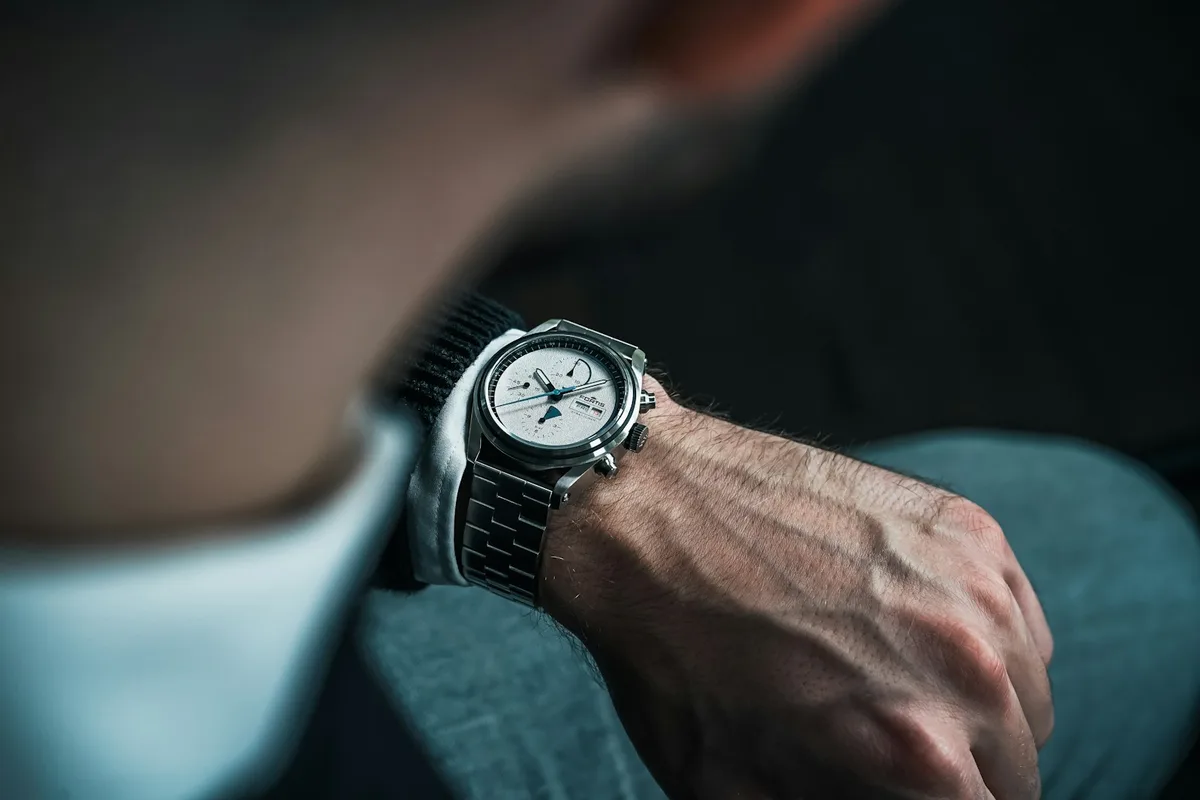
Underneath the dial, a watch is one of three things: quartz, automatic, or manual wind. Quartz watches run on a battery and a vibrating crystal, and they are the most accurate option by a wide margin. A National Institute of Standards and Technology study of consumer quartz watches found that ordinary models kept time to well within their rated specification of plus or minus 15 seconds a month, with some tested watches accurate to a fraction of a second per day. NIST attributes the small amount of drift that does occur to temperature change and to a slow aging process inside the oscillator itself, not to any flaw in the watch.
Automatic and manual mechanical watches work differently. A tiny mainspring stores energy, and hundreds of moving parts release it in controlled pulses. That mechanical complexity is the entire reason people pay a premium for them, and it comes at a real cost in precision. According to Longines, a standard automatic movement without any special certification typically drifts by five to ten seconds a day, and can run as far off as ten seconds in either direction under normal conditions. That is not a defect. It is simply what a spring and a gear train can do. A manual wind watch runs on the same basic mechanism as an automatic, minus the rotor that winds it from the motion of your wrist, which means it needs to be wound by hand on a regular basis or it will simply stop. Some men prefer that small daily ritual. Others find it one more thing to remember before walking out the door. Neither answer is wrong, but it is worth knowing before you buy which kind of relationship with a watch you actually want. Knowing all of this before you buy keeps you from mistaking normal mechanical drift for a broken watch, or from resenting a manual watch for doing exactly what it was designed to do.
Does a Chronometer Certification Actually Matter?
If accuracy in a mechanical watch matters to you, look for the word chronometer, which is a specific, tested claim rather than a marketing adjective. The Contrôle Officiel Suisse des Chronomètres, known as COSC, is an independent nonprofit founded in 1973 and accredited by the Swiss Accreditation Service as a calibration laboratory. Before a movement can be sold as a certified chronometer, COSC tests it in five positions and at three temperatures over fifteen days, and it must average between minus four and plus six seconds a day across that entire test to pass. A watch that carries this certification has been independently verified, not just described by the brand that made it. One that does not carry it may still be an excellent watch. It simply has not been tested by a third party, and you are trusting the manufacturer’s word alone.
Is the Swiss Made Label Actually Worth Paying For?
Few phrases move a price tag as reliably as Swiss Made, and few buyers know what it legally requires. Under the ordinance revised by the Swiss government and administered by the Swiss Federal Institute of Intellectual Property, effective January 2017, a complete watch can only carry that label if at least sixty percent of its total manufacturing cost was generated inside Switzerland. The movement itself faces a separate, stricter test: at least half of its value must come from Swiss made components, and at least sixty percent of the cost to manufacture the movement must be Swiss. The technical design work has to happen in Switzerland as well. This is a real, legally enforced standard now, not a loose geographic suggestion, and it is worth knowing exactly what you are paying for when a dial carries those two words.
How Much Water Resistance Do You Actually Need?
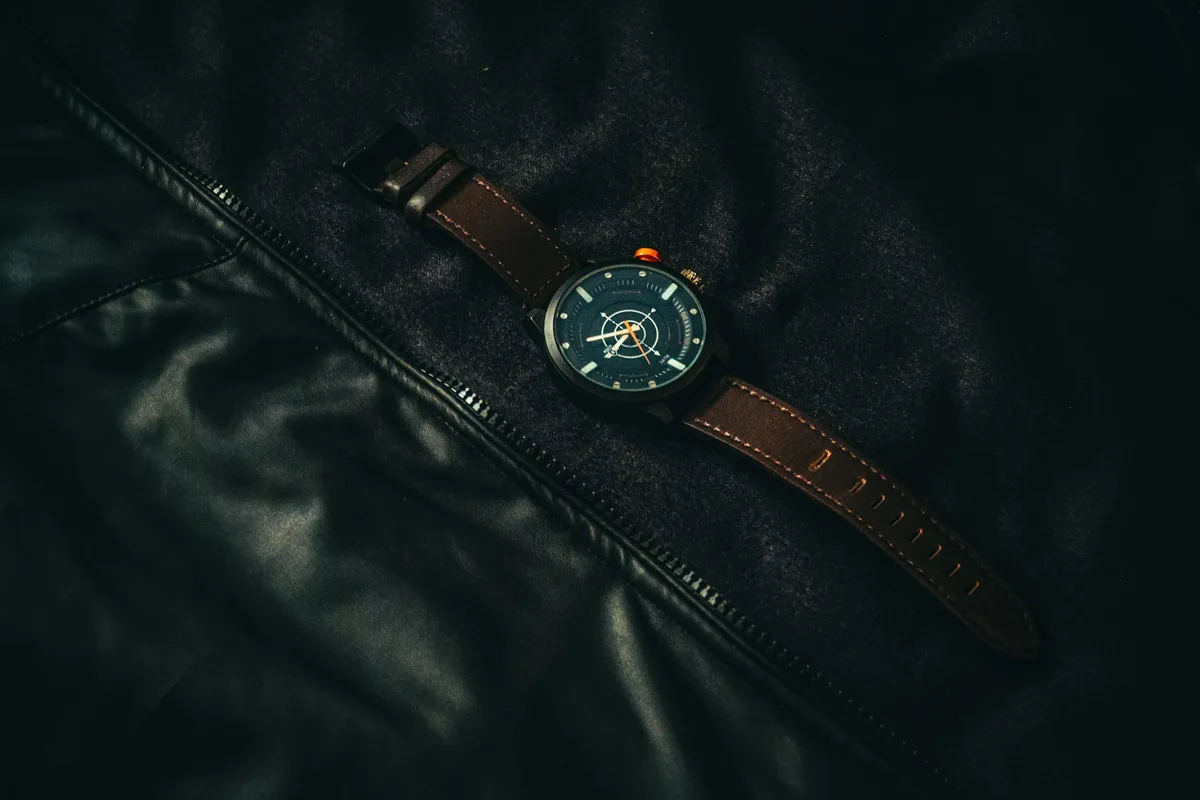
Water resistance is where most men either overpay for a capability they will never use or underbuy for one they actually need. If you genuinely dive, look for a watch built to the ISO 6425 standard, which Longines notes requires a minimum resistance to depths of one hundred meters, legibility in complete darkness, and resistance to magnetic fields up to 4,800 amperes per meter while staying accurate to within thirty seconds a day under that magnetic exposure. That is a demanding, specific engineering standard, and a watch that meets it has been built for real underwater use, not styled to look like it was. If you do not dive, none of that capability does anything for you day to day. Buy resistance for the life you actually live in the water: showering and swimming call for a very different watch than descending on a dive line, and there is no reason to pay for testing you will never put to use.
What Should the Crystal Be Made Of?
The crystal is the one part of the watch touching everything you touch, and the material underneath it matters more than most men realize when they are focused on the dial. Sapphire crystal, which is synthetic corundum, rates a nine on the Mohs hardness scale according to the International Gem Society, one step below diamond itself. That is close to scratch proof under normal wear. Ordinary mineral crystal sits far lower on that same scale and will pick up fine scratches from little more than a set of keys in the same pocket. Sapphire costs more to produce and to replace if it ever does crack, but for a watch you intend to keep for years, it is one of the few upgrades that is purely functional rather than cosmetic.
How Should a Watch Actually Fit Your Wrist?
Fit gets less attention than movement or material, and it should get more. A case that overhangs the wrist bone looks borrowed, not owned, regardless of how much the watch cost. Stand in front of a mirror with your wrist relaxed at your side and look at where the case edges sit relative to the bone on either side. The case should sit inside that line, not spill past it. Strap choice matters just as much as case size. Leather reads as more formal and pairs naturally with tailoring, while a metal bracelet holds up better against daily wear and does not need to be replaced as often. Buy for the wrist you have, not the wrist in the advertisement, and the watch will look intentional instead of accidental. Pay attention to case thickness as well as diameter. A watch can be the correct width and still ride awkwardly under a shirt cuff if it sits too tall off the wrist, which is a detail almost impossible to judge from a product photo and worth trying on in person whenever that option exists.
What Does Owning It Actually Cost Over Time?
The purchase price is not the full cost of a mechanical watch. Every mechanical movement needs periodic servicing to clean and re oil its internal parts, and how often that is required varies by brand, movement, and how the watch is actually worn, which is why manufacturers are often deliberately vague about a fixed interval. Rolex’s own guidance to owners is simply to service the watch when the time comes rather than committing to a rigid schedule, and that ambiguity is common across the industry. Budget for this before you buy, not after the first time a watchmaker quotes you a service price you were not expecting. A quartz watch avoids this cost almost entirely, needing little more than an occasional battery change, which is part of why it remains the more practical daily choice even among men who also own something mechanical. If the watch has any real value, keep the original box, papers, and receipt somewhere safe from the day you buy it. That documentation affects both insurance and resale value later, and it costs nothing to hold onto compared to how much it can cost to be missing when you actually need it.
None of this makes one type of watch correct and another wrong. A COSC certified chronometer on a Swiss made bracelet is a genuinely different object than a reliable quartz field watch, and both can be the right decision depending on what you actually want from it: a tool you check without thinking, or a piece of engineering you were the one who understood before you bought it. What matters is that the decision is yours, made with the actual facts in hand, instead of a decision a salesman or an advertisement made for you. That same instinct, choosing deliberately instead of by default, is the same discipline covered in our guide to building mental discipline, and it applies just as directly to how a man spends and holds onto money, which we cover at length in our guide to building wealth as a modern man.
At Modern Men HQ, we do not think a watch has to be expensive to be right. We think it has to be understood. Buy the one you can explain, not just the one you can afford.