Modern Men HQ has access to an affiliate offer for CelluCare. Based on our review, we are not currently using an affiliate purchase link or recommending the product.
CelluCare is sold around one of the most commercially powerful supplement promises: better blood sugar without turning the product into a prescription drug.
The sales pages use ingredients such as banaba, gymnema, cocoa bean, pine bark and butcher’s broom to tell a story about glucose uptake, insulin sensitivity, circulation, cravings and metabolic health.
Some of those ingredients have legitimate research histories.
The problem is that the finished CelluCare formula has not been independently shown to deliver the blood-sugar outcomes implied by the sales ecosystem.
Quick Verdict
Bottom line: CelluCare contains ingredients that are relevant to metabolic research, but MMHQ does not have enough finished-product evidence or merchant consistency to recommend it for blood-sugar management.
Possible fit: Someone researching the formula who wants to compare ingredient evidence and merchant terms before discussing supplementation with a clinician.
Main concern: Blood-sugar and insulin language can sound treatment-like to readers with prediabetes or diabetes even though the product is not an evidence-based substitute for medical care.
Why MMHQ does not recommend it: No independent CelluCare trial was located, the public merchant ecosystem is fragmented and active pages disagree on package pricing.
Better next step: If glucose control is the real concern, know your actual numbers and work from the diagnosis, medication plan, nutrition, activity and monitoring strategy appropriate to you.
CelluCare at a Glance
Product type: Multi-ingredient dietary supplement marketed for blood-sugar and metabolic support.
Recurring public ingredients: Banaba leaf, gymnema, cocoa bean extract, pine bark extract and butcher’s broom, with additional ingredients varying by public page.
Finished-product clinical evidence found: No independent trial located.
Current public pricing: A live getcellucare.com order page checked Sep 23, 2026 listed $79 for one bottle, $69 each for three and $49 each for six. Other active CelluCare pages show different package prices and structures.
Guarantee: 60 days is repeatedly advertised.
Firsthand tested by MMHQ: No.
Merchant consistency: Material concern.
Affiliate destination: Do not use under current review.
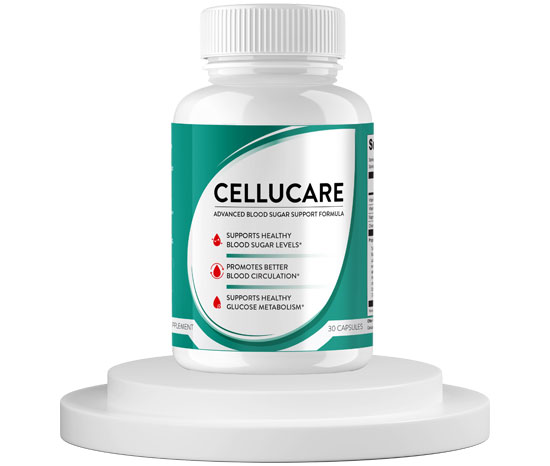
Current CelluCare label imagery from the merchant page reviewed on Sep 23, 2026. MMHQ is not using the merchant purchase link.
How We Evaluated CelluCare
MMHQ did not use CelluCare firsthand.
We reviewed current public CelluCare sales pages, pricing, refund language and recurring formula descriptions, then compared the central blood-sugar proposition with current NCCIH and NIDDK guidance on diabetes and dietary supplements.
We separated three levels of evidence: what the seller says, what individual ingredients may do and what the finished CelluCare product has actually demonstrated.
What Is CelluCare?
CelluCare is marketed as a once-daily supplement intended to support healthy blood sugar, circulation, energy and weight management.
Seller pages use metabolic language heavily. Banaba is linked to glucose uptake. Gymnema is framed around sugar absorption and cravings. Cocoa and pine bark are tied to circulation and insulin sensitivity.
That is a coherent formula story.
It is still a story until the exact product is tested.
The Category Evidence Is More Cautious Than the Sales Page
NCCIH’s current diabetes supplement guidance says a few supplements, including chromium, cinnamon and berberine, might help with blood-sugar control in some studies.
It also says the evidence is not strong enough for definite conclusions and that, for most supplements, there is not evidence supporting a beneficial effect on diabetes or its complications.
Its professional guidance is even clearer: there is not enough scientific evidence to show that any dietary supplement can manage or prevent type 2 diabetes.
That does not mean every ingredient is useless.
It means the burden of proof for a commercial blood-sugar formula should stay high.
Banaba and Gymnema Are Plausible, Not Proof
Banaba and gymnema have both appeared in glucose-related supplement research.
Small studies and traditional use make them relevant to a metabolic formula.
But product effectiveness depends on extract standardization, dose, population, duration and the rest of the formula.
A landing page saying banaba supports glucose uptake does not tell us whether CelluCare changes fasting glucose or HbA1c in real users.
Circulation Claims Need Their Own Evidence
CelluCare marketing also leans on cocoa, pine bark and butcher’s broom for circulation and cardiovascular support.
That expands the offer beyond blood sugar into a broad metabolic-health story.
A compound can have antioxidant or vascular research without proving that the finished supplement improves cardiovascular outcomes.
MMHQ would not use general circulation language as evidence that the product helps prevent diabetic complications.
Testimonials Are Especially Weak Evidence Here
Current CelluCare pages display testimonials claiming blood sugar became stable or readings moved into the normal range.
Those statements may reflect genuine customer experiences.
They do not establish causation.
Blood glucose varies with medication, meals, activity, illness, weight changes, sleep and many other factors. A review cannot turn a testimonial into a clinical endpoint.
Why Diabetes-Adjacent Marketing Needs Extra Caution
A person with type 2 diabetes is not shopping only for wellness.
They may be making decisions about medication, food, glucose monitoring and complication risk.
NIDDK states there is no clear proof that specific foods, herbs, spices or dietary supplements can help manage diabetes and advises people to talk with a health professional before taking supplements because of side effects and medication interactions.
That is why MMHQ will not use language suggesting CelluCare can replace established care.
What CelluCare Gets Right
The ingredients at least belong to a coherent metabolic-support category.
The seller provides a 60-day guarantee on the public pages we reviewed.
Multi-bottle pricing is easy to understand on individual order pages.
The formula is more interpretable than a product built entirely around a secret ‘blood sugar matrix.’
Those are useful positives.
Where CelluCare Falls Short
The biggest weakness is finished-product evidence.
The next weakness is merchant consistency.
Several active websites present themselves as authoritative CelluCare destinations. Package structure and prices differ. Some pages sell one bottle, others start at two. Three-bottle pricing ranges from $59 to $69 per bottle across active pages.
That makes it difficult to tell a reader what the actual offer is until the exact HopLink checkout is verified.
Price and Value
A live getcellucare.com order page checked Sep 23, 2026 listed one bottle at $79, three bottles at $207 total and six bottles at $294 total.
Other active CelluCare pages show different package structures, including lower one-bottle and three-bottle pricing on separate active domains.
That inconsistency is not a reason by itself to call the product fake.
It is a reason not to publish a clean price table as though the commercial offer were stable.
The live order page also routes purchases through Digistore24, while MMHQ’s supplied affiliate offer is a ClickBank HopLink. Production must therefore treat the affiliate redirect and checkout as unverified and keep the link disabled.
Who Should Skip CelluCare?
Skip it if you plan to use it instead of prescribed diabetes medication or professional care.
Skip it if you are making a medication change because a testimonial says someone else’s readings improved.
Pause and review the exact label with a clinician or pharmacist if you use glucose-lowering medication, because some supplement ingredients may affect glucose and increase the complexity of treatment.
What Makes More Sense Instead?
If you have diabetes, the strongest foundation remains an individualized care plan: food pattern, physical activity, medication when prescribed, glucose monitoring and management of blood pressure, cholesterol and other risks.
If you have prediabetes, lifestyle changes and appropriate medical follow-up have far stronger evidence than treating a supplement stack as the main intervention.
If you still want a supplement, choose one only after the exact formula and dose are visible and the role of the supplement is clearly secondary.
Frequently Asked Questions
Does CelluCare lower blood sugar?
Seller pages market blood-sugar support, but MMHQ found no independent finished-product trial proving that CelluCare reliably lowers fasting glucose or HbA1c.
Can CelluCare replace diabetes medication?
No. MMHQ would not recommend using CelluCare as a replacement for prescribed diabetes treatment.
What ingredients are in CelluCare?
Public pages repeatedly mention banaba, gymnema, cocoa bean extract, pine bark and butcher’s broom, but the exact current label tied to the affiliate checkout should be verified.
How much does CelluCare cost?
A live getcellucare.com order page checked Sep 23, 2026 listed $79 for one bottle, $69 each for three and $49 each for six, while other active pages show different package structures. Verify the exact checkout before relying on any price.
What is the guarantee?
Public pages consistently advertise a 60-day money-back guarantee. Exact return mechanics should be checked at the final merchant destination.
Final Assessment
CelluCare is not automatically worthless because it sits in a difficult category.
Some of its ingredients belong in real metabolic research.
But a blood-sugar supplement should be judged by more than plausible ingredients, testimonials and a money-back badge.
MMHQ would need a cleaner merchant identity, a stable exact label and finished-product evidence before turning CelluCare into a recommendation.
Until then, treat it as a branded claim worth investigating, not a diabetes solution.
Related MMHQ Guides
Walking After Meals: Is It Actually Worth the Habit?
How Much Sleep Do Men Actually Need?
The Art of Living Well: A Modern Man’s Framework for Balance