You pull a clean shirt from a suitcase and discover it looks as though it has been rolled into a ball. The meeting starts soon, there is no iron in sight, and the bathroom shower becomes an attractive but unreliable laundry tool. Getting wrinkles out without an iron is possible, but the best choice depends on the fabric, the available tools and how much of a crease you need to remove.
For most wrinkle-prone garments that allow steam, a proper garment steamer is the most direct iron-free option. A wrinkle-release product approved for the fabric or careful re-dampening and reshaping can help certain everyday items. Brief tumble drying may work only for dryer-safe clothing. A steamy bathroom sometimes softens light creases, but it should not be treated as a dependable substitute for a steamer.
Read the care label first. Heat and moisture can harm certain prints, finishes, woolens and synthetics. Fixing a crease is not worth creating a shine mark or damaged coating.
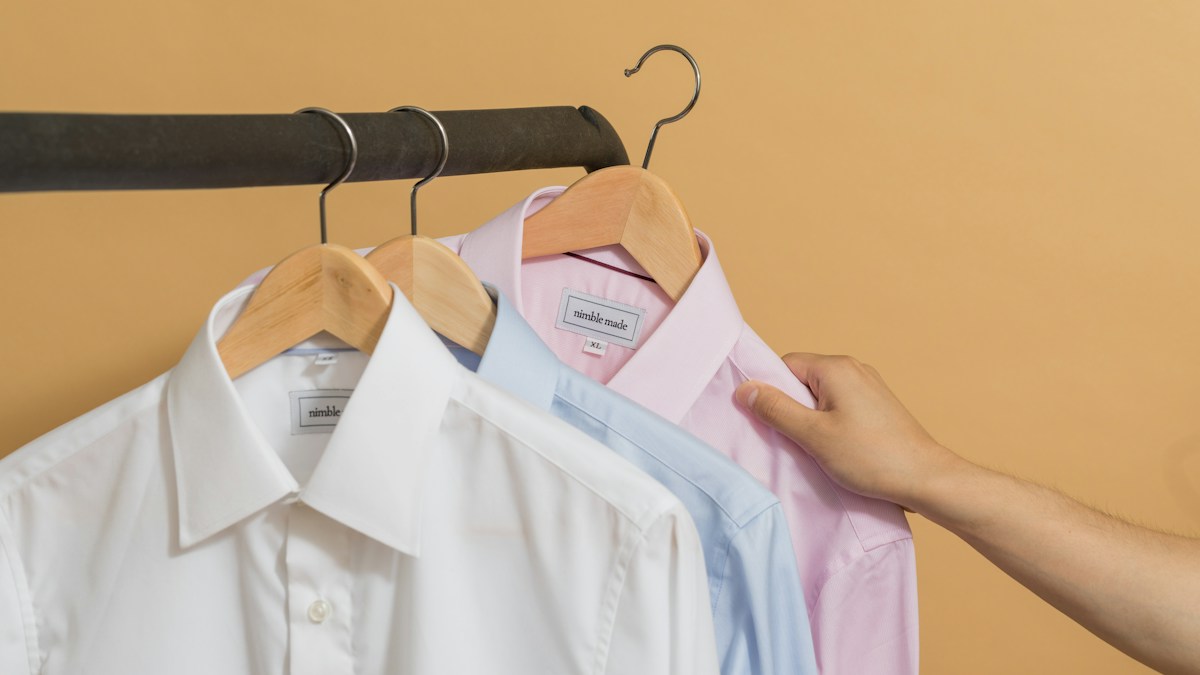
What Is the Fastest Way to Unwrinkle a Shirt Without Ironing?
The fastest safe answer depends on what you have. With a suitable handheld steamer and a shirt that permits steaming, a careful pass over the hanging garment often relaxes ordinary travel creases. Without a steamer, a small amount of moisture followed by gentle smoothing and full drying may help some washable cotton or blended shirts.
A crisp crease that was intentionally pressed into tailored trousers requires more control than random wrinkling. Some garments simply benefit from professional pressing or a real iron when available.
Do Not Skip the Clothing Care Label
Our laundry care symbols guide explains the marks that limit steaming, ironing and drying.
The word “cotton” is not a universal permission slip for heat. A shirt might be cotton with delicate adhesive interfacing at the collar. A synthetic blouse may have a pleated finish that should not be aggressively steamed. The label addresses the finished garment, including trims.
GINETEX explains that ironing symbols use dots to indicate temperature ranges, and that some low-temperature fabrics should not be exposed to steam. A crossed iron also matters. When the label restricts ironing or steaming, do not assume a handheld device is safe because it does not physically touch the garment.
Check manufacturer instructions for any steamer. Nozzle distance, water specifications and safe handling differ among devices. Keep hands clear of the outlet and do not steam fabric while it is being worn.
If a valuable garment has no readable care tag, consult its maker or a professional cleaner rather than treating high heat as the shortest route.
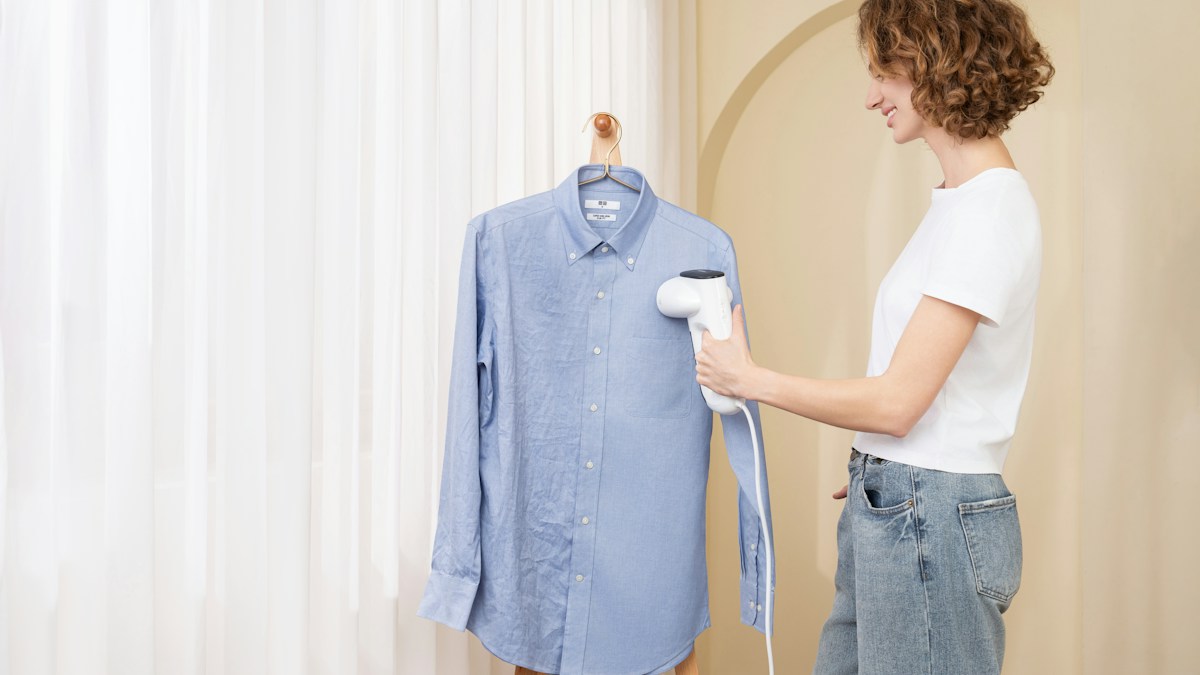
How to Use a Garment Steamer Properly
Start with a clean, filled and functioning steamer, following its own operating directions. Hang the garment on a secure hanger with room around it. Protect floors or other nearby surfaces from condensation, and allow the appliance to heat as directed.
Light creases may relax as the fabric hangs. If they remain, do not keep passing maximum heat over one spot until the material is wet. Some fabrics show water spotting, gloss or texture changes when overtreated.
An easy mistake is aiming the nozzle directly at a print or a glued detail. Those areas may have different heat tolerance from the cloth around them. When in doubt, avoid them or ask a cleaner.

Can You Use a Dryer to Remove Wrinkles?
For the fit risks that come with excess dryer heat, consult our guide to preventing dryer shrinkage.
A brief appropriate dryer cycle can reduce some wrinkles on clothing that is explicitly tumble-safe. The key is to use the allowed setting and remove items promptly instead of leaving them sitting in a hot drum after the cycle ends.
The American Cleaning Institute identifies overloading and failure to remove garments promptly among the reasons fabrics wrinkle. It also describes controlled dryer treatment for some permanent-press fabrics. This is not a recommendation to put all delicate clothes into a machine.
Do not add water or damp cloths to an electrical appliance unless its manufacturer instructs a compatible method. Some online shortcuts suggest improvisations that can leave items unevenly damp or create operational risks.
If the garment has shrunk previously, review its drying restrictions before introducing more heat. A wrinkle is cosmetic; another size change may be permanent.
Does Hanging Clothes in a Steamy Bathroom Work?
Sometimes it helps very light creasing, but it is unpredictable. The shower warms the air and adds moisture, which can slightly relax certain fabrics. It cannot apply steam as consistently or precisely as a purpose-built garment steamer.
Avoid hanging clothing where water can directly hit it. Keep it away from wet walls and surfaces that might transfer dirt. Do not let the item remain damp in a closed bathroom for hours.
A humid bathroom may not be a good idea in the first place if the room already has condensation or a ventilation problem. An article about wrinkles should not encourage excessive moisture in a space where mildew is already a concern.
For time-sensitive situations, a steamer, a suitable wrinkle-release product or a change of shirt may be more practical than running a shower and hoping for the best.
Will Spraying Water Remove Wrinkles?
Light moisture and smoothing can relax some everyday washable fabrics. The important word is light. Saturating the whole garment creates a drying problem and may leave water rings, particularly on materials not meant for that treatment.
Lay a suitable washable garment on a clean, flat surface or hang it securely. Dampen the wrinkled area very slightly, ease the fabric back into its natural shape and allow it to dry completely. Do not tug across seams or pull knitwear longer.
Always spot-test if the color or finish might react. Do not spray structured tailoring, delicate silk, leather trim or unfamiliar finishes merely because you do not own an iron.
The technique is best thought of as refreshing minor creasing rather than reconstructing a pressed garment. It works inconsistently on sharp folds created during packing.
Are Wrinkle-Release Sprays Worth Using?
A commercial wrinkle-release spray can be convenient when it is compatible with the fabric. It may help relax minor creases while you gently smooth the garment, but performance differs by product and material.
Read the product instructions and check the garment’s care label. Test first in a hidden area, especially on dark, delicate or easily watermarked fabrics. A spray that leaves a visible deposit creates another cleaning task.
Do not spray an entire suit jacket with an untested mixture of water and household chemicals. The structure and lining may react poorly, and the resulting marks can be harder to fix than the creases.
A reasonable kit for someone who travels often might include a compact steamer if baggage and electrical compatibility allow it. That is not a call to buy more tools; it is a reminder that a suitable tool is often better than a complicated improvisation.
How Do You Remove Wrinkles From Dress Shirts?
Dress shirts are easier when you handle them immediately after laundering. Button a few buttons, smooth the placket, straighten the collar and hang the shirt while it finishes drying according to the label. That prevents some wrinkles from setting in the first place.
If creases remain, use an approved steamer or a controlled fabric-safe moisture method. Pay attention to cuffs, collars and the front placket because these areas are reinforced and may need more exact pressing than the soft body fabric.
Steam can relax fabric, but it does not always create the crisp edges of a well-ironed collar. Sometimes accepting a slightly softer finish is reasonable for casual wear; a formal event may call for proper pressing.
For garment care frequency, our separate guide on how often to wash a dress shirt covers when a full wash is appropriate and how to avoid unnecessary treatment.
What About Linen, Wool and Synthetic Clothing?
Linen wrinkles naturally because of how its fibers and fabric behave. Light steam may help where permitted, but a casual linen texture does not need to look like polished office shirting.
Wool garments vary widely. Some tolerate steaming carefully, while others can stretch under their weight when wet. Never assume an expensive knit should hang for long periods just because hanging works for a shirt. Knitwear may need flat support.
Polyester and other synthetics often react differently to heat than cotton and linen. Excessive heat can distort fibers, adhesives, coatings or prints. Follow the actual care label, not a general statement that synthetics “never wrinkle.”
For blends, trims may set the practical limit. Treat the entire finished garment conservatively.
How to Keep Clothes From Wrinkling After Washing
Prevention saves more time than rescue. Wash garments with sufficient room to move. Use the appropriate spin and drying settings. Remove clothes promptly and straighten them before wrinkles become deep folds.
If your clothes are packed into a suitcase, use a folding method appropriate for each piece and hang them after arrival. Some travel creases are inevitable. A simple recovery routine matters more than trying to pack with zero pressure.
Do not mistake wrinkle avoidance for clothing perfection. The goal is to look put together while preserving fabric.
Frequently Asked Questions
Can I use a hair dryer to remove wrinkles?
Direct heat can damage garments and is difficult to control. Prefer a garment-approved steaming or damp reshaping method instead.
Is shower steam enough to unwrinkle dress shirts?
It may soften light creases but is not consistently effective, and a closed humid bathroom creates its own problems.
Can I remove wrinkles from polyester without an iron?
Sometimes, using a method specifically allowed by the garment’s label. Avoid unapproved high heat.
Is a steamer safe for every garment?
No. Some finishes, prints and low-temperature fabrics can be affected by steam. Always check instructions.
How long should clothes hang after steaming?
Until fully dry and cool. The exact time depends on fabric and room conditions.
Can a dryer remove wrinkles without shrinking clothes?
It can help certain dryer-safe garments, but using excess heat or drying time may cause shrinkage. Follow the care label.
The Bottom Line
You do not need an iron for every wrinkle, but you do need a method that suits the garment. Start with the care label, choose a steamer or gentle reshaping when allowed, and treat dryer tricks and bathroom steam as situational options rather than universal solutions. Better laundry handling keeps creases from forming in the first place.