Most men judge a shirt or a jacket by its price tag, its brand name, or how it looks on a hanger under store lighting. None of those three things tell you how the piece will actually hold up after a year of real wear. Fabric, construction and care all matter. Price and fiber content alone cannot tell you which shirt will last longer. A well made blend can outlast a poorly made pure cotton shirt, and a strong fabric can still fail at a weak seam. Understanding what a handful of core materials actually do under stress, moisture, and repeated washing is what separates a wardrobe built to last from one that gets quietly replaced every two seasons.
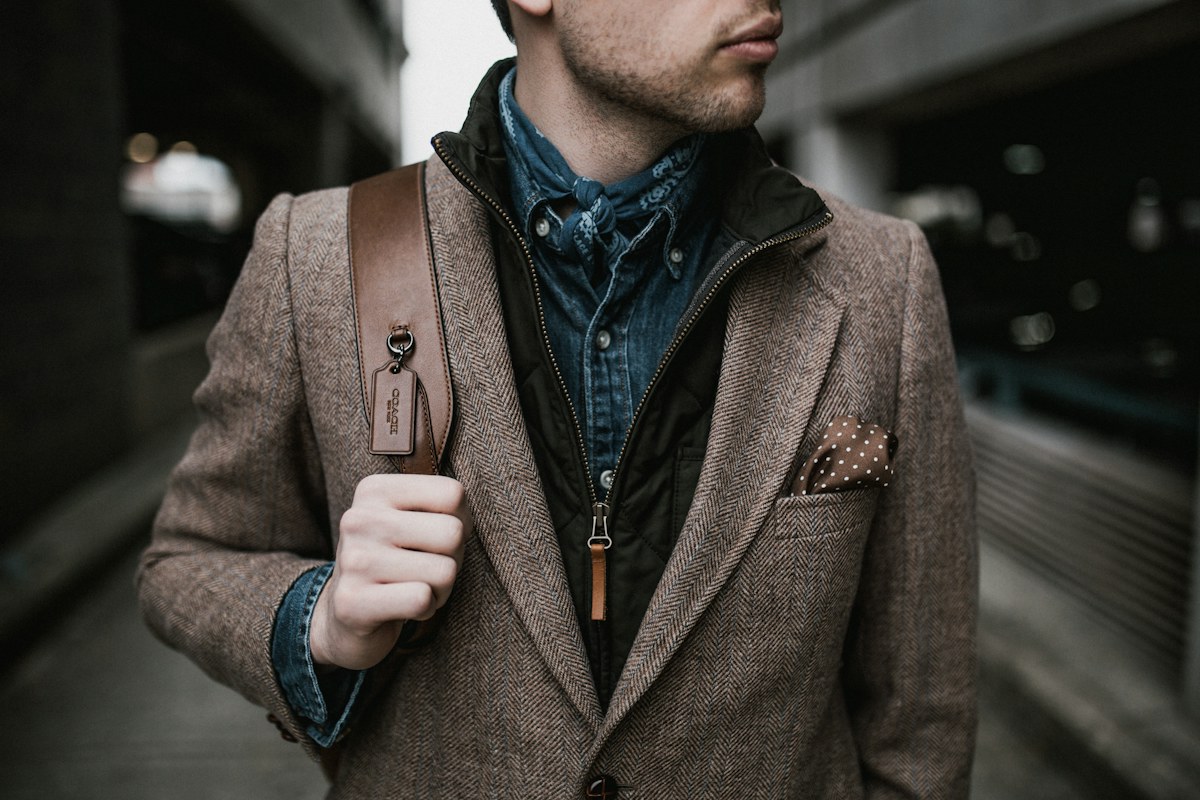
What Actually Makes a Fabric Worth the Investment?
Durability depends on fiber structure, yarn, weave, finishing, seams and care. A fiber’s strength, how it behaves when wet, how it releases moisture, and how tightly it can be woven all determine whether a garment survives five years of regular use or starts thinning at the elbows and collar within a single winter. Most retail tags list a fiber content percentage and stop there, which tells you almost nothing about how that fiber was spun, woven, or finished. The four materials below are worth knowing in more depth than that, because they show up across nearly everything in a well built wardrobe, from suiting to boots.
The Four Materials Worth Building a Wardrobe Around
One practical example
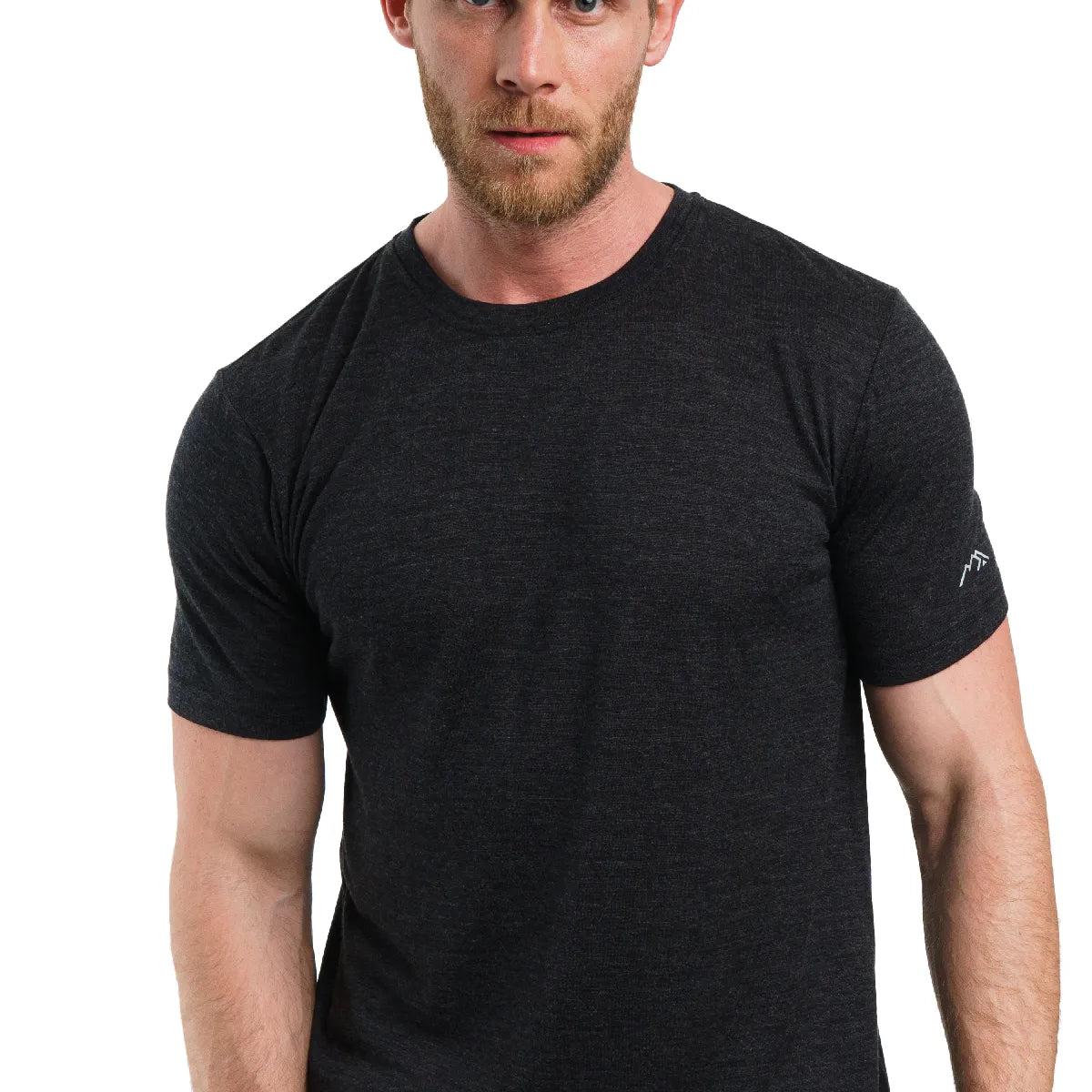
Merino Tech Men’s Merino T-shirt 180 Charcoal
This charcoal merino shirt is a concrete example of wool used in an everyday garment rather than a heavy sweater. Compare softness, fabric weight, care requirements and comfort against cotton or blends before paying a premium. The October 14 Awin feed listed the product at $42.99 USD; stock, size and price can change.
These four choices cover common wardrobe needs. They are a practical starting point, not a scientific ranking of every material or a reason to pay more without inspecting the garment.
Wool for Suits, Sweaters, and Overcoats
Wool is useful for warmth and moisture management. Woolmark explains that wool fibers absorb water vapor and their natural crimp traps insulating air. Woolmark is an industry body, and its comparisons describe particular fabrics and test conditions. They do not mean every wool garment is cooler, warmer or more breathable than every synthetic one. Fabric weight, lining, weave and fit still decide how a jacket feels in your climate.
Wool also resists odor in a way most men underestimate. A New Zealand study using thirteen trained scent assessors, described on Woolmark’s page on wool and body odor, found that wool retained 66 percent less body odor intensity than polyester and 28 percent less than cotton. A separate investigation by AgResearch and Consumption Research Norway, testing base layers, hoodies, and socks across fiber types, found that garments made from polyester needed washing sooner than equivalent wool or cotton pieces to stay fresh. These tests support wool as an option for managing odor, not a fixed washing schedule for every garment. Air a piece between wears when appropriate and follow its care label. Heat and agitation can damage or shrink some wool fabrics, while others are treated for machine washing.
Cotton for Shirts and Everyday Basics
Cotton is the fiber most men already own the most of, and it earns its place through a genuinely unusual property: it gets stronger when wet, not weaker. As Barnhardt’s technical page on cotton fiber properties explains, cotton’s crystalline structure resists moisture penetration in a way that increases its tensile strength in water, while rayon loses meaningful strength when wet and polyester simply stays the same either way. That is part of why a well made cotton shirt can survive years of weekly washing without falling apart at the seams, provided the weave itself was tight and the yarn was long staple to begin with.
Consumers already sense this intuitively even without knowing the underlying fiber science. Cotton Incorporated’s 2016 activewear research, summarized on CottonWorks’ page on cotton durability, found that 58 percent of consumers associate good quality directly with durability or longevity, more than double the share who link quality to manufacturing technique. That survey describes what consumers value; it does not prove pure cotton outlasts blends. When shopping for shirts or chinos, inspect the weave, seams and care requirements. Choose a weight suited to the weather and how you will wear the piece, rather than treating heavier fabric as automatically better.
Denim for Workwear Inspired Pieces
Denim earns its place through documented history as much as fiber science. The garment that started it all traces to a specific, verifiable date: History.com’s account of the original patent confirms that Jacob Davis and Levi Strauss received US Patent Number 139,121 on May 20, 1873, for reinforcing pocket openings with copper rivets, a method of strengthening high-stress points on work pants. It was not the invention of denim itself or evidence that earlier trousers could not last a day.
The weave itself matters as much as the rivets. Denim is a twill weave, meaning the weft thread passes over and under the warp threads in a diagonal pattern rather than a simple over and under grid, which creates denim’s familiar diagonal ribs. Weave alone does not establish how long two different finished fabrics will last. According to Levi Strauss and Company’s own account of selvedge denim’s history, the company’s original 501 jeans were woven at the Amoskeag Mill in New Hampshire before production moved to Cone Mills in North Carolina, which by 1927 was producing a distinctive 10 ounce red selvedge denim specifically for that jean. Weight changes the feel and warmth of jeans, but it is not a stand-alone durability test. Selvedge refers to the finished edge made on a shuttle loom, not a guarantee of superior yarn, stitching or abrasion resistance. Check those details separately, and do not buy stiff, heavy jeans you will avoid wearing.
Leather for Belts, Boots, and Jackets
Leather can work well for belts, boots and jackets because it can be finished for different levels of flexibility, weather resistance and wear. The Leather and Hide Council of America represents the industry and emphasizes the use of hides from livestock. That byproduct argument alone does not establish that a leather item is sustainable. A useful purchase decision also considers how the item was made, how long you will use it and whether it can be repaired.
Horween’s leather glossary defines full grain as leather with its natural surface intact. That describes the surface, not the full thickness of the original hide. Corrected grain has been treated to change the surface appearance. Neither label alone ranks every finished leather: tanning, finish, thickness and construction also matter. Look for even stitching, useful care instructions and repairable construction where possible. When choosing a Chelsea boot or Oxford shoe, judge the complete shoe rather than assuming one grain label guarantees a decade of wear.
How Should a Man Actually Shop With This in Mind?
None of this research is useful if it stays theoretical. In practice, it means checking a garment’s composition label before checking its price. Check the seams, fabric and care label together. Pure cotton or wool may fit your needs, but neither label guarantees better durability than a blend. Try the garment on, move in it and check whether you can care for it consistently. A pair of jeans listed with a denim weight in ounces, rather than no weight at all, signals a brand that expects a buyer who cares. This is the same discipline behind buying a watch meant to last a lifetime rather than one meant to look good in a single photo, covered in more depth in our guide to buying a watch you will actually wear for life. Cost per wear, not sticker price, is the number that actually matters, and it rewards exactly the materials described above.
What About Blends and Synthetic Fibers?
Blends are not automatically a downgrade. A small percentage of spandex or elastane in a pair of trousers adds stretch, though performance still depends on the finished fabric and its care, and a cotton polyester blend in a travel shirt can reduce wrinkling in a way that makes sense for its specific job. Synthetic fabrics can also be designed to wick moisture, dry quickly or resist wear. Breathability depends on fabric construction and the whole garment, not simply whether a fiber is natural. The right question is never blend versus natural fiber in the abstract. It is whether the specific blend in front of you was chosen to solve a real problem, like stretch or wrinkle resistance, or simply to cut manufacturing cost at the expense of how the garment performs after the twentieth wash.
A wardrobe built around these four materials, understood at this level rather than taken on faith from a hangtag, tends to need replacing far less often, which connects directly to the kind of deliberate, unhurried financial discipline covered in our guide to building wealth as a modern man. Buying fewer, better made pieces and actually wearing them out is the same principle as spending with intention in any other part of life, and it tends to leave more room, both in a closet and in a budget, for the things that matter more than clothing ever will, a point our framework for living well covers from a different angle entirely.
At Modern Men HQ, quality is measured in years of wear, not in how a garment photographs on day one. Learn what a fabric actually does before you pay for it, and the rest of the wardrobe decision tends to take care of itself.
Affiliate Disclosure: This article contains affiliate links. Modern Men HQ may earn a commission if you purchase through them, at no additional cost to you. Read our full Affiliate Disclosure.