Modern Men HQ may earn a commission if you purchase through the David’s Shield links in this article. That does not affect what you pay or how we evaluate the guide. We have not relied on David’s Shield during a real emergency. Our assessment is based on current seller materials, public preparedness guidance and a review of the offer’s scope and claims.
Quick Verdict
Best fit: A preparedness beginner who wants one organized, faith-based guide instead of building a household plan from dozens of separate sources.
Main strength: The underlying product covers practical resilience topics that matter across many emergencies: water, food, communications, power, electronics, medicine planning and household coordination.
Material limitation: The sales funnel uses strong EMP, AI, collapse and spiritual urgency. Some specialized claims require more technical verification than the marketing provides.
Consider it if: You value organization, want a printable or digital preparedness framework, and understand that the practical basics matter more than predicting a catastrophic scenario.
Skip it if: You already own a serious preparedness reference, want advanced engineering detail, or are buying because the sales page has convinced you that collapse is imminent.
David’s Shield at a Glance
Product type: Faith-based emergency-preparedness guide.
Format: Digital access, with a hard-copy option currently advertised when available.
Current listed price: $67 for the digital package. Current Blackout USA pages also advertise a hard-copy package at $67 plus shipping.
Bonuses currently advertised:
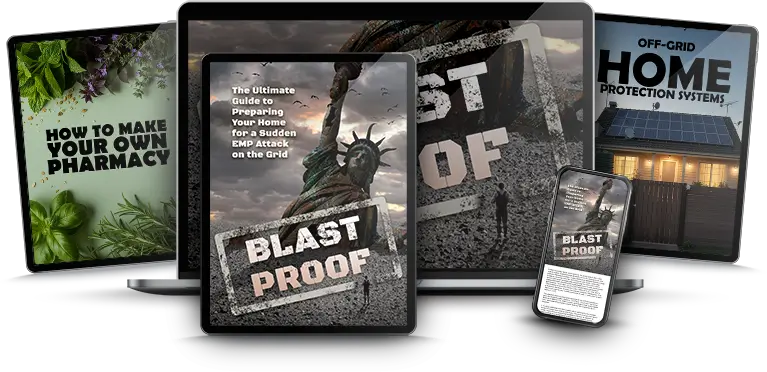
- How To Make Your Own Pharmacy.
- Off-Grid Home Protection Systems.
Guarantee: 60 days.
Subscription: The current seller says the $67 purchase is one-time with no subscription.
Merchant: The wider seller ecosystem identifies The Good Prepper Inc.
Firsthand tested by MMHQ: No.
Primary strength: One organized beginner framework.
Primary concern: The fear-heavy funnel can make rare scenarios feel more certain than the evidence justifies.
How We Evaluated David’s Shield
A preparedness guide should make a household calmer and more capable.
That is the standard.
The easiest way to get preparedness wrong is to start with the most frightening scenario and spend outward from there.
The better sequence is:
- identify the disruptions that matter,
- cover common needs,
- build redundancy,
- then decide whether specialized threats justify specialized spending.
David’s Shield contains material that can fit that sequence.
Its sales page does not always present it that way.
We therefore evaluated the guide on the usefulness of its underlying preparedness categories, the safety of the advice, the price, the alternatives and whether the buyer actually needs a paid guide.
What Is David’s Shield?
David’s Shield, also marketed as BlastProof: David’s Shield, is a preparedness guide centered on extended power loss, EMP events and broader grid-down scenarios.
Current seller pages advertise:
- the core digital guide,
- a hard-copy option when available,
- How To Make Your Own Pharmacy,
- and Off-Grid Home Protection Systems.
The sales story is explicitly faith-based.
It combines biblical language, traditional/off-grid ideas, EMP fears, grid vulnerability, artificial-intelligence imagery and the role of a man as household protector.
That framing will appeal to some readers and alienate others.
The useful question is whether the technical and practical material works when separated from the rhetoric.
A Lot of the Core Preparedness Advice Is Broadly Useful
Water matters whether the outage comes from a storm, grid failure, cyber incident or another disruption.
So do:
- food,
- lighting,
- communication,
- prescription medications,
- backup power,
- cash,
- sanitation,
- important documents,
- and a family contact plan.
Ready.gov’s preparedness guidance starts with exactly this kind of broad resilience.
Its basic kit recommendations include water, non-perishable food, radio, flashlights, first aid, medications and other household-specific needs.
That is the most defensible part of David’s Shield too.
A good preparedness guide helps you organize those basics and turn them into action.
You do not need certainty about an EMP attack to justify being ready for an ordinary power outage.
That Is the Right Way to Think About the Price
The current digital package costs $67.
You are not paying because emergency-kit information is impossible to find for free.
It is not.
Ready.gov and other public agencies publish free checklists and planning resources.
The paid value has to come from:
- organization,
- a useful sequence,
- specialized detail,
- printability,
- and whether the guide gets you to complete tasks you would otherwise postpone.
That is a more honest value test than “Would survival be worth $67?”
Of course survival is worth more than $67.
That framing makes any preparedness product impossible to evaluate rationally.
The real question is whether this particular guide improves your plan enough to justify the cost.
EMP Advice Needs Technical Specificity
Electromagnetic pulse is a real phenomenon.
Different EMP sources and electromagnetic disturbances can affect electronics and infrastructure.
That does not mean every EMP event produces the same field strength, affects every device equally, or makes one homemade container universally protective.
A claim about Faraday shielding should come with:
- the construction method,
- the frequencies or pulse characteristics being considered,
- continuity and seam details,
- test conditions,
- and the limits of the design.
The more universal the claim, the more evidence it needs.
If the guide provides a practical Faraday-cage project, that can still be useful as an educational build.
MMHQ would not call the result “EMP-proof” without appropriate independent testing.
Common Outage Safety Comes First
One of the most useful ways to judge a preparedness product is to compare its priorities with common real-world risks.
Ready.gov’s power-outage guidance emphasizes carbon-monoxide safety.
Generators, camp stoves and charcoal grills should be used outdoors and away from building openings.
That kind of advice may feel less exciting than EMP shielding.
It can also save a life during an ordinary outage.
A guide that gets a rare technical scenario right but encourages unsafe generator or heating practices would still be a bad guide.
Cross-check energy, heating and indoor-combustion advice against current public safety guidance before using it.
The Medication Bonus Needs Extra Caution
“How To Make Your Own Pharmacy” is a strong marketing title.
It also creates a higher standard.
Medication storage, substitution, dosing and improvised treatment are not ordinary preparedness tips.
Some medicines are temperature sensitive. Some medical conditions become dangerous quickly when treatment is interrupted.
A preparedness guide can reasonably help a family:
- keep an updated medication list,
- talk to clinicians about emergency supplies,
- plan backup power for medical devices,
- identify pharmacies,
- store medicines according to label instructions,
- and keep relevant documents accessible.
It should not encourage readers to improvise prescription treatment or replace appropriate medical care with a generic survival remedy.
Faith Framing and Technical Evidence Are Separate
A reader may genuinely value the Christian framing.
That is a preference, not a technical flaw.
The problem begins when spiritual interpretation is used as proof of engineering, medicine or probability.
You can believe preparedness is part of stewardship and still ask:
- Does this shielding method work?
- Is this water safe?
- Is this medicine stored correctly?
- Is this generator outside?
- Does this home-defense advice comply with local law?
Faith can explain why someone prepares.
Evidence should still explain how a technical recommendation works.
What David’s Shield Gets Right
The guide focuses on household resilience rather than only buying expensive tactical gear.
The current seller says no subscription is required.
Digital access makes the material available immediately.
A hard-copy option has genuine value in a scenario where internet or device access is limited.
The 60-day guarantee reduces financial risk.
The scope is broad enough to give a beginner a starting framework.
And much of the basic preparedness logic remains useful even if the specific EMP scenario never happens.
Where David’s Shield Falls Short
The current funnel is much more dramatic than the product needs to be.
It uses collapse predictions, “AI Beast” imagery, scarcity, identity pressure and language that frames buying as a test of leadership or faith.
That does not improve the preparedness advice.
It makes rational evaluation harder.
The guide also enters areas — EMP engineering, medicine storage, improvised pharmacy concepts and home defense — where a general consumer book should not be treated as the final authority.
Experienced preppers may also find the broad coverage too basic for $67.
David’s Shield vs Free Ready.gov Resources
Ready.gov wins on price, authority and broad emergency-planning fundamentals.
A beginner can build a strong baseline without buying anything:
- make a communication plan,
- assemble supplies,
- plan for power outages,
- account for medications,
- and learn local risks.
David’s Shield needs to add organization, specialized depth or a format that makes implementation easier.
If the guide simply causes you to complete tasks you have ignored for months, there is value in that.
If you already have an emergency plan and a trusted preparedness manual, the incremental value is much lower.
Who Should Consider David’s Shield?
It makes the most sense for:
- a beginner,
- someone who wants a single organized reference,
- a reader who appreciates faith-based framing,
- and a household that has not yet created a real outage plan.
The buyer should be willing to cross-check specialized technical or medical advice rather than treating the guide as an authority on every subject it mentions.
Who Should Skip It?
Skip it if you are an experienced prepper with established references.
Skip it if the sales page is driving you into fear-based spending.
Skip it if you expect one book to guarantee safety in every grid-down scenario.
And do not use a general preparedness guide as your sole authority for medication, medical-device, generator, firearms, structural or electrical decisions.
Better Alternatives
Start with free Ready.gov planning and supply guidance.
Then identify actual gaps.
A good general preparedness book from a recognized publisher may be enough.
For backup power, electrical work, radio, water systems or medical planning, specialist resources can be more valuable than one all-in-one guide.
The goal is not to own the most preparedness content.
It is to have a plan you can execute safely.
Price and Value
Current Blackout USA pages list the digital package at $67.
The hard-copy option is also advertised at $67 plus shipping when available.
A 60-day refund period is advertised.
The price is defensible only if the guide saves you planning time or gives you specialized material you will actually implement.
Do not judge value against the cost of a catastrophe.
Judge it against the free and paid information alternatives available today.
Frequently Asked Questions
Is David’s Shield only about EMPs?
No. The current seller positions EMP as the central scenario, but the guide also covers broader blackout, food, water, power, home and communication preparedness.
How much does David’s Shield cost?
The current Blackout USA offer lists the digital package at $67. A hard-copy option is also shown at $67 plus shipping. Recheck the exact checkout before buying.
Is there a subscription?
The current seller states that the purchase is one-time with no subscription.
What is the refund period?
The seller currently advertises a 60-day no-questions-asked guarantee.
Can a homemade Faraday cage protect electronics from any EMP?
That is too broad a claim. Shielding effectiveness depends on construction and test conditions. MMHQ would not call a design universally EMP-proof without appropriate independent testing.
Should I buy David’s Shield before building an emergency kit?
No. Cover the basic plan and supply kit first. Free Ready.gov resources are enough to begin.
Final Assessment
David’s Shield has a clear, limited use as a beginner preparedness reference.
It can function as an organized preparedness reference for a beginner.
That does not mean the sales funnel deserves the same endorsement.
The fear-heavy EMP, AI and collapse language is not necessary to justify household resilience.
The offer link lets you check the current package and terms. It does not endorse predictions of imminent collapse or unverified technical claims.
Keep the buying logic simple:
Cover ordinary resilience first.
Use free authoritative resources.
Then pay for an organized guide only if it fills a specific gap.
If a preparedness product makes you more afraid but not more prepared, it is failing the job.