Affiliate disclosure: Modern Men HQ may receive a commission if you purchase through links in this article. This does not change your purchase price or MMHQ’s editorial assessment.
Quick Verdict
Phytomem One is a 10-ingredient brain supplement attached to a much bigger story than the evidence can currently carry.
The formula itself contains recognizable ingredients such as saffron, berberine, Ceylon cinnamon, olive-derived oleuropein, fucoxanthin, fucoidan, corosolic acid, kudzu, Morosil, and xylitol.
The marketing goes much further.
Current pages describe a "Plastic Stranglehold," connect memory decline to microplastics and impaired glucose metabolism, and in some versions say the formula neutralizes microplastic buildup that is "suffocating" neurons.
That is where MMHQ stops following the sales narrative.
Human microplastic research is real and important, but current systematic reviews still describe neurocognitive outcomes as limited or inconsistent and do not establish a simple causal chain from microplastic exposure to an individual’s memory problem. We also found no independent finished-product trial showing Phytomem One removes microplastics from the brain or restores memory by doing so.
MMHQ evaluates the product independently. The seller may make broader claims than the evidence supports; those claims remain the seller’s claims. Affiliate commissions do not change this assessment.
We have not personally used Phytomem One. This review is based on current public product information and independent research.
Check Current Pricing and Product Details
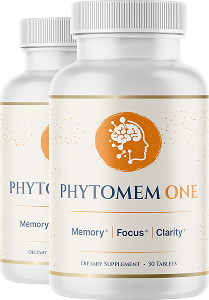
What Is Phytomem One?
Phytomem One is a once-daily dietary supplement marketed for memory, focus, mental clarity, and broader cognitive wellness.
The current formula is built around 10 ingredients:
- Saffron extract
- Fucoxanthin
- Fucoidan
- Oleuropein
- Berberine HCl
- Ceylon cinnamon
- Corosolic acid
- Kudzu flower extract
- Morosil red orange extract
- Xylitol
That list mixes ingredients commonly discussed in cognitive wellness with ingredients more often studied in metabolic or antioxidant contexts.
The product’s public pages do not clearly publish individual milligram amounts for every ingredient.
That is a meaningful limitation.
A buyer can see what is in the blend, but not easily compare each ingredient dose with the dose used in a human trial.
What Does Phytomem One Cost?
Current public pages commonly advertise the largest package at $49 per bottle, a three-bottle package at $59 per bottle, and smaller packages around $79 per bottle.
The seller advertises a 60-day money-back guarantee and describes the purchase as one-time rather than a subscription.
The linked offer checked on September 24, 2026 showed two bottles for $158, three for $177, and six for $294, with a 60-day guarantee. Confirm shipping, billing and refund terms at checkout.
The commercial terms are not the main concern anyway.
The scientific story is.
What Is the "Plastic Stranglehold"?
"Plastic Stranglehold" is merchant language.
It is not a recognized diagnosis.
The seller uses it to describe a theory that microplastic exposure contributes to brain inflammation, oxidative stress, and cognitive decline. Some current pages go further and say Phytomem One can fight or neutralize this supposed process.
There is a real scientific question underneath the marketing.
Researchers have detected microplastics and nanoplastics in human tissues and are studying their possible effects on inflammation, oxidative stress, endocrine function, cardiovascular health, and the nervous system.
But "researchers are studying this" is not the same as "this is the cause of your forgetfulness."
That distinction matters when the next step in the funnel is buying a supplement.
What Does Human Microplastic Research Actually Show?
The human evidence is still developing.
A 2025 systematic review of human studies found recurring associations with inflammatory, endocrine, and oxidative-stress markers. But evidence for neurocognitive outcomes and chronic diseases was limited and inconsistent, and the authors said causal relationships with specific clinical diseases had not been established.
A newer 2026 systematic review also found that microplastics and nanoplastics can be detected in human biological samples, while emphasizing the limitations of the current human evidence base.
This does not mean microplastics are harmless.
It means science has not reached the point where a supplement seller can diagnose "microplastic-related memory decline" in an individual customer from ordinary forgetfulness or brain fog.
And even if future research establishes a clearer causal role, a second question would remain:
Has Phytomem One been shown to remove the relevant particles or improve cognition by doing so?
We did not find that evidence.
Can Phytomem One Remove Microplastics From the Brain?
MMHQ found no independent clinical trial showing that.
The ingredients may have antioxidant, metabolic, or anti-inflammatory research behind them.
That is not the same as demonstrating microplastic clearance.
To support a claim that a product removes microplastics from the brain, we would expect direct human evidence showing exposure or tissue markers before and after the intervention, alongside validated clinical outcomes.
Ingredient mechanisms are not enough.
The phrase "neutralizes microplastic buildup" sounds specific.
The evidence needs to be equally specific.
What About the "Type 3 Diabetes" Idea?
Some Phytomem One marketing links cognitive decline to impaired brain glucose metabolism and uses language associated with "Type 3 diabetes."
Researchers do study insulin resistance and glucose metabolism in relation to Alzheimer’s disease.
But "Type 3 diabetes" is not a consumer diagnosis that a sales page can establish.
It also does not mean a supplement that contains berberine, cinnamon, or corosolic acid has been proven to treat cognitive decline by correcting brain glucose metabolism.
The formula includes ingredients with metabolic research.
That evidence should stay at the ingredient level unless the finished product itself has been tested for a cognitive outcome.
Has Phytomem One Been Clinically Proven?
We did not locate an independent randomized trial of the complete formula.
That is important because a 10-ingredient product creates many opportunities for evidence to be stretched.
- A study on saffron does not prove the whole blend.
- A study on berberine does not prove the whole blend.
- A study on cinnamon does not prove the whole blend.
- A study on microplastics does not prove the whole blend.
The finished product needs to stand on its own if the merchant wants to make a strong finished-product promise.
Until then, the appropriate confidence level is low.
What About Saffron and the Other Ingredients?
Saffron is one of the more interesting ingredients in the formula because it has been studied in human cognitive and mood research.
Berberine, cinnamon, and corosolic acid have substantial research histories in metabolic contexts.
Oleuropein and seaweed-derived compounds are also legitimate research subjects.
That is enough to say the formula is not made of random ingredients.
It is not enough to conclude the product prevents cognitive decline or corrects a defined brain problem.
Dose still matters.
Population still matters.
Outcome still matters.
The absence of individual public doses makes those comparisons harder.
Why the FDA Language Matters
Several Phytomem One pages use an "FDA Approved" badge or heading and then explain that the supplement is manufactured in an FDA-registered facility.
Those are not the same statement.
A facility can be registered with the FDA without the dietary supplement itself being FDA-approved for memory loss, dementia, microplastic exposure, or any other disease.
MMHQ would not repeat "FDA approved" as a product claim.
That wording should never be treated as evidence of FDA approval for a supplement.
What Do Experts Say About Memory Supplements?
The National Institute on Aging does not recommend a vitamin or supplement as a proven way to prevent Alzheimer’s disease.
NCCIH similarly states that direct evidence dietary supplements can prevent Alzheimer’s disease or other forms of dementia is lacking.
That does not mean a healthy adult can never choose to try a wellness supplement.
It means the reason for buying matters.
Trying a supplement because you understand the uncertainty is one decision.
Buying it because a marketing page has convinced you that microplastics or "Type 3 diabetes" explain your memory changes is a different decision.
What If Memory Changes Are the Real Problem?
Start with the symptom, not the supplement.
Memory changes can be related to sleep, stress, depression, medication effects, hearing problems, thyroid disease, vitamin deficiencies, alcohol, metabolic illness, vascular risk, or neurological disease.
Some causes are treatable.
If memory problems are persistent, worsening, or interfering with work, driving, finances, medication management, conversations, or independence, professional evaluation has more value than another supplement funnel.
That is especially true when the product is sold through fear about future cognitive decline.
Who Might Still Consider the Formula?
A healthy adult who understands the evidence limits may still decide the ingredient list is interesting.
If you do, treat it as an optional wellness experiment.
- Do not use it as a treatment.
- Do not use it to self-diagnose the cause of brain fog.
- Do not assume a subjective good day means a complex biological theory has been proven.
Also review the full label with a pharmacist or clinician if you take medications, because ingredients such as berberine and cinnamon can be relevant to glucose control and drug interactions.
Who Should Skip It?
Skip Phytomem One if the reason you are buying it is fear that you have microplastics "strangling" your brain.
Skip it as a self-treatment for memory decline, dementia, Alzheimer’s disease, diabetes, or another diagnosed condition.
Also pause if the complete label is not clear enough for you to understand the doses you are taking.
A brain supplement should make the buying decision more transparent, not require the customer to accept a sweeping mechanism on faith.
The Bottom Line
Phytomem One contains ingredients worth studying.
That is not the same thing as having a proven explanation for memory decline.
The current merchant ecosystem takes genuine areas of research — microplastics, oxidative stress, metabolism, cognitive aging — and combines them into a much cleaner commercial story than current human evidence justifies.
The largest problem is not that every ingredient is implausible.
It is that the product is sold as though the cause has already been identified and the solution has already been demonstrated.
MMHQ did not find independent evidence showing Phytomem One clears microplastics from the brain, fixes a "Plastic Stranglehold," or prevents cognitive decline.
That is why MMHQ does not recommend treating the product as a proven memory intervention.
Check Current Pricing and Product Details
Evidence and Further Reading
- NIA: Diet and prevention of Alzheimer’s disease
- NCCIH: Supplements and cognitive function
- 2025 microplastic exposure systematic review
- 2026 microplastics and human health review