Affiliate disclosure: Modern Men HQ may receive a commission if you purchase through links in this article. This does not change your purchase price or MMHQ’s editorial assessment.
Quick Verdict
Neuro Serge has one feature that sounds impressive immediately: more than 20 ingredients.
That is also the first reason to slow down.
The current official page describes two proprietary blends rather than giving readers a simple public breakdown of each ingredient and dose. Several named ingredients have legitimate research behind them in different health contexts, but that is not the same as evidence that the complete Neuro Serge formula improves memory, prevents cognitive decline, or produces a meaningful change in daily function.
The marketing environment makes us even more cautious.
One current Neuro Serge funnel uses an "8-Letter Test" said to reveal whether someone will lose memory, presents a "Top Neurologist" and research scientist, and calls the product a major medical breakthrough. That is much stronger than ordinary "brain support" language.
MMHQ evaluates the product independently. The seller may make broader claims than the evidence supports; those claims remain the seller’s claims. Affiliate commissions do not change this assessment.
We have not personally used Neuro Serge. This review is based on current public product information and independent guidance.
Check Current Pricing and Product Details
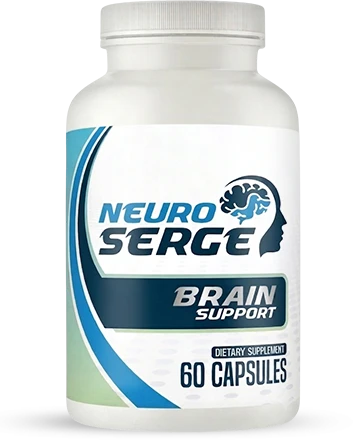
What Is Neuro Serge?
Neuro Serge is a capsule dietary supplement marketed for brain health, focus, memory, mental clarity, energy, and healthy aging.
The official product page says the formula is stimulant-free and combines more than 20 plants and nutrients across two proprietary blends.
Publicly named ingredients include olive leaf extract, Cinnamomum cassia, deglycyrrhizinated licorice, green tea extract, grape seed extract, and bilberry extract.
The merchant describes those ingredients as clinically studied.
That wording needs interpretation.
An ingredient can appear in published research without the finished product having been clinically tested. The study may use a different dose, extract, population, duration, or outcome.
The question is not whether research exists somewhere for something on the label.
The question is whether the evidence matches Neuro Serge closely enough to support the promise a buyer thinks they are purchasing.
What Does Neuro Serge Cost?
The current merchant funnel shows:
- 2 bottles at $79 each, $158 total.
- 3 bottles at $69 each, $207 total.
- 6 bottles at $49 each, $294 total.
The seller advertises a 180-day money-back guarantee.
These package prices were visible at the linked offer on September 24, 2026. Confirm shipping and the final checkout terms before paying.
A long guarantee can reduce financial risk. It does not increase the strength of the cognitive evidence.
Why Is the Proprietary Blend a Problem?
A proprietary blend is not automatically a bad product.
It does make evaluation harder.
If a product names 20-plus ingredients but does not show the amount of each one clearly on the public sales page, you cannot easily compare the formula with clinical studies.
That matters because dose is part of the evidence.
An ingredient studied at a meaningful dose does not validate a capsule containing an unknown smaller amount. A broad blend also creates more possibilities for duplication with other supplements, medication interactions, and side effects.
More ingredients should increase the need for transparency.
It should not lower it.
Do Clinically Studied Ingredients Mean Neuro Serge Is Clinically Proven?
No.
"Clinically studied ingredients" and "clinically tested finished product" are two different statements.
The first means research exists on one or more components.
The second means researchers tested the exact commercial formula under defined conditions and measured outcomes.
We did not locate an independent randomized trial of Neuro Serge itself.
That does not prove the product cannot help anyone.
It means MMHQ will not turn ingredient citations into claims that the finished formula has been proven to improve memory.
What Do Experts Say About Memory Supplements?
The National Institute on Aging gives unusually direct advice here.
It tells consumers to be cautious with unproven over-the-counter products promising a sharper brain or prevention of brain disorders. Such products may be unsafe, a waste of money, or interfere with other treatment.
NCCIH reaches a similar conclusion on supplements marketed for cognitive function and dementia. Some natural products have been studied, but direct evidence that dietary supplements prevent Alzheimer’s disease or other forms of dementia is lacking.
That is the right baseline for evaluating Neuro Serge.
A product can be sold for "brain health" without being a dementia treatment.
The problem starts when marketing makes those categories feel interchangeable.
Why the "8-Letter Test" Marketing Matters
The sales funnel is more concerning than the general product page.
It uses a headline suggesting an "8-Letter Test" can reveal whether you will lose your memory in 2026. It also presents the product through a "Top Neurologist" and "medical breakthrough" narrative.
A supplement sales page cannot diagnose the future.
Memory changes require context, history, and sometimes medical evaluation. They cannot be reduced to a marketing test designed to lead into a checkout.
That type of fear framing lowers our confidence in the destination even if parts of the underlying formula are ordinary supplement ingredients.
What Can Cause Memory Problems?
Memory complaints are not all the same.
Possible contributors can include poor sleep, depression, anxiety, stress, medications, hearing problems, thyroid disease, vitamin deficiencies, alcohol, vascular conditions, diabetes, and neurological disease.
Some causes are treatable.
That is why finding the cause matters.
If forgetfulness is persistent, worsening, affecting work or finances, changing medication management, interfering with driving, or reducing independence, buying another brain supplement is not a good substitute for evaluation.
What About the Individual Ingredients?
Several named ingredients are legitimate research subjects.
Green tea, olive polyphenols, grape seed compounds, bilberry anthocyanins, cinnamon, and other botanicals have been studied across antioxidant, vascular, metabolic, and inflammatory outcomes.
That does not create a simple "better brain" effect.
For a cognitive claim to be persuasive, we would want relevant human participants, validated cognitive testing, an appropriate dose, adequate duration, and ideally independent replication.
A study showing an antioxidant marker changed is not equivalent to showing a person remembers appointments better.
A blood-flow hypothesis is not equivalent to a clinically meaningful improvement in cognition.
Neuro Serge’s ingredient list can justify research interest.
It cannot substitute for product-specific evidence.
What Should You Check Before Taking a Large Brain Supplement?
Start with the full Supplement Facts label.
- Look for:
- Exact amounts.
- Serving size.
- Standardized extracts.
- Caffeine or stimulant sources.
- Vitamins and minerals that overlap with your multivitamin.
- Herbs that can affect bleeding, blood pressure, blood sugar, liver enzymes, or medication metabolism.
If you take several prescription medicines, bring the label to a pharmacist or clinician.
A 20-plus ingredient formula can make interaction checking more complicated than a single-ingredient supplement.
That is another reason dose transparency matters.
Who Might Still Consider Neuro Serge?
A healthy adult may decide to try a broad wellness supplement despite limited product-specific evidence.
If you do, keep the goal narrow.
Do not ask, "Is my brain healthier?"
Choose something you can observe, such as perceived mental fatigue during a defined work period, ability to sustain focus, or whether you notice any consistent change that survives normal day-to-day variation.
Keep sleep, caffeine, training, and other supplements reasonably stable.
If nothing meaningful changes, that is useful information.
A supplement trial should lead to a clearer decision, not an endless assumption that a larger bottle stack must eventually work.
Who Should Skip It?
Skip Neuro Serge as a self-treatment for unexplained memory decline.
Also be cautious if you take multiple medications, already use several supplements, are pregnant or nursing, have liver or kidney concerns, or are preparing for surgery.
Most importantly, do not let a fear-based memory-loss advertisement convince you that a commercial supplement has diagnosed a neurological problem.
The Bottom Line
Neuro Serge is not being rejected because it contains herbs.
It is being held to a higher standard because it is sold in a high-stakes category.
The public formula is broad and not sufficiently dose-transparent for easy evidence matching. The finished product lacks the independent randomized evidence we would want for strong memory claims. And the current sales funnel uses predictive memory-loss fear and medical-authority framing that MMHQ is not willing to adopt.
That combination keeps MMHQ from recommending Neuro Serge as a proven memory intervention.
If Neuro Serge later publishes a complete transparent label, uses a restrained sales page, and produces independent finished-product evidence with validated cognitive outcomes, our assessment could change.
Until then, treat it as a commercial brain-health supplement with uncertain product-specific benefit, not as a proven memory intervention.
Check Current Pricing and Product Details