
A commute is useful language time only when the learning task fits the way you travel.
That is the entire rule.
If you drive, the road gets your attention.
If you ride a train or bus, you have more room for active study.
If you walk, audio can work, but your surroundings still matter.
The mistake is treating all commute time as interchangeable.
It is not.
Quick Answer
Use a commute mainly for exposure and review.
Save demanding grammar, writing, deep reading, and difficult new material for a place where you can focus.
For drivers, avoid screen interaction, reading, typing, quizzes, flashcards, and any lesson that pulls your eyes, hands, or attention away from the road. Set up audio before moving and stop it if it becomes mentally demanding.
For public transport, you can add reading, flashcards, transcripts, short writing, and active retrieval when the environment allows it.
For walking, use audio and light recall while staying alert around traffic, crossings, and other people.
The commute should support the real study plan.
It should not become the entire plan.
Driving: Keep the Standard Much Stricter
A car is not a study desk.
The U.S. National Highway Traffic Safety Administration describes distracted driving as activity that diverts attention from driving and distinguishes visual, manual, and cognitive forms of distraction. See NHTSA’s distracted driving guidance.
That matters because “hands free” does not mean “attention free.”
Do not read.
Do not type.
Do not work through flashcards.
Do not tap through a lesson.
Do not search for the next podcast while moving.
Do not stare at subtitles.
Do not use a speaking exercise that makes you focus on scoring, timing, or finding the correct response.
If you choose to play language audio, set it before the vehicle moves.
Use familiar material rather than a demanding lesson when possible.
Keep the volume low enough that you remain aware of the road and surrounding sounds.
If the audio starts competing with driving, turn it off.
Safety is not a productivity problem.

Public Transport: Use the Extra Attention Carefully
A train or bus gives you more options because you are not operating the vehicle.
You can read a transcript.
Review flashcards.
Write a few sentences.
Complete a short lesson.
Listen with headphones.
Retrieve vocabulary from memory.
Read a graded text.
The environment still matters.
A crowded bus with constant stops may be a poor place for difficult grammar.
A quiet train seat can support much deeper work.
Match the task to the amount of attention you actually have.
Do not force a high concentration activity into a low concentration environment just because the time exists.
Walking: Audio Works, but Awareness Still Comes First
Walking can be a good place for familiar audio.
A short podcast.
A repeated dialogue.
A lesson you already studied.
A set of phrases you want to hear again.
You can quietly retrieve a phrase after hearing it or summarize a short section in your head.
But the environment still decides what is appropriate.
Around traffic, construction, crowds, crossings, or unfamiliar streets, reduce the mental load.
Do not make language practice more important than situational awareness.
Cycling Needs the Same Safety First Logic
Cycling is not the place for screen based study.
Local laws and safe headphone use also vary.
The simplest rule is to preserve your ability to hear and respond to the environment.
If audio reduces awareness, skip it.
Your commute does not need to be productive every day.
Use Commute Time for Exposure, Not Your Hardest Study
The Open University makes a useful distinction between focused study time and lower attention “dead time.”
A commute often belongs in the second category.
That means it is useful for increasing contact with the language.
It is less reliable for difficult learning that needs sustained concentration.
Good commute tasks include:
• Replaying a familiar dialogue.
• Listening to a beginner or intermediate podcast at an appropriate level.
• Reviewing audio from a lesson you studied earlier.
• Hearing a short story you already understand partly.
• Listening for a specific phrase or sound pattern.
• Repeating familiar vocabulary mentally after hearing it.
Save the hardest work for later.
Detailed grammar.
Writing.
Careful reading.
New pronunciation drills that require feedback.
Complex exercises.
Long explanations that need notes.
The commute can make the language more familiar.
Focused study makes that familiarity more precise.

Repeat More Than You Add
One of the easiest ways to waste commute time is to consume endless new audio.
New podcast.
New lesson.
New video.
New playlist.
The learner feels productive because the language is always playing.
But nothing becomes familiar enough to retrieve.
Use repetition deliberately.
Listen to the same short dialogue several times across a week.
First listen for the basic meaning.
Then listen for words you missed.
Then follow the transcript later when you are not driving.
Then listen again without the transcript.
Then try to summarize the conversation.
Repetition is not a lack of ambition.
It is how a piece of input becomes easier to process.
Add a Retrieval Step After the Commute
Exposure becomes more useful when you ask your memory to produce something afterward.
When you arrive and are no longer driving or navigating, take two minutes.
What did you hear?
Which three phrases do you remember?
What was the main idea?
What word kept appearing?
Can you say one sentence from the dialogue without replaying it?
Can you write a short summary?
That small retrieval step changes the role of the commute.
You are no longer only consuming language.
You are checking what survived.
Build One Commute Playlist
Do not choose content every morning.
Build a small queue in advance.
For example:
Monday
Dialogue from the current lesson.
Tuesday
Same dialogue plus one short podcast.
Wednesday
Review audio from the previous two lessons.
Thursday
Same podcast again, this time listening for details.
Friday
Easy content for enjoyment.
The playlist can repeat next week with new lesson material.
The point is not to create the perfect playlist.
The point is to remove the daily search.
A commute routine should start in seconds.
Match the Audio to Your Level
Audio that is far above your level can become background noise.
Audio that is too easy can stop challenging you.
Use a mix.
Some material should be easy enough that you can follow the main idea.
Some should be slightly harder.
Very difficult native content can still be enjoyable, but do not confuse exposure with comprehension.
If you understand almost nothing, use a transcript later.
Break the material into smaller sections.
Return to it.
Make the same audio easier over time.
That improvement is more useful than collecting hours of barely understood listening.
Use Topics You Actually Care About
Travel.
Football.
Business.
Food.
Technology.
Fitness.
Movies.
History.
Music.
Once you can handle basic learner material, start adding content connected to your interests.
Interest gives you a reason to listen again.
It also gives you vocabulary you are more likely to use.
The goal is not to escape structured lessons.
It is to give the language a life outside them.
Where Rocket Languages Fits
Rocket Languages can fit this system when you want a structured source of audio lessons and dialogues.
Its current courses combine audio lessons, language instruction, culture lessons, practice conversations, and voice recognition activities. Lifetime access is currently advertised.
For a train or bus commuter, more of the course can be used directly.
For a driver, the boundary is stricter.
Interactive activities, screen tasks, quizzes, and voice recognition practice should wait until the vehicle is parked.
The course is useful only when the activity fits the commute safely.
Modern Men HQ is not currently placing an affiliate purchase CTA in this article because Rocket Languages requires partner approval and that approval has not yet been confirmed for this publication workflow.
If approval is confirmed later, the safety standard does not change.
A tracked link should never turn a driving commute into a study session that competes with the road.
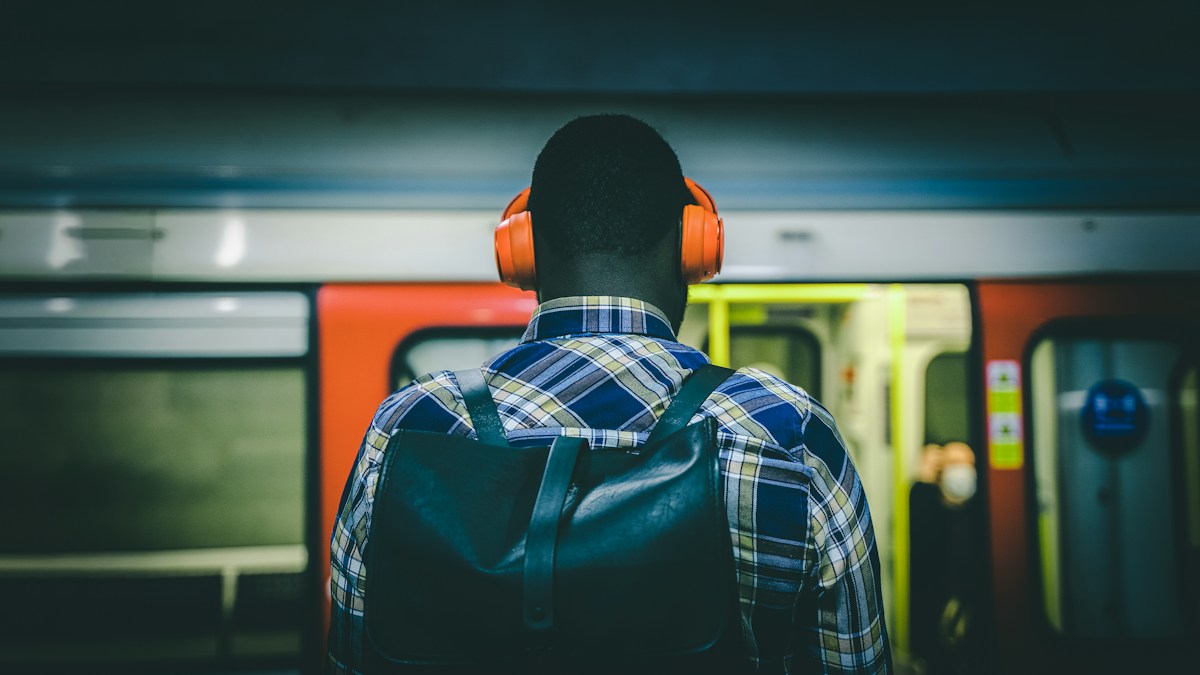
A 30 Minute Commute Framework
If You Drive
Before moving: choose familiar audio and start it.
During the drive: listen only if it does not reduce attention.
After parking: recall three phrases or one main idea.
If You Use Public Transport
Ten minutes: familiar audio or review.
Ten minutes: active retrieval, flashcards, transcript, or reading.
Ten minutes: one short lesson or writing task.
If You Walk
Listen to familiar or moderately challenging audio.
Pause the learning task whenever the environment requires more attention.
After arriving, retrieve what you remember.
That is enough.
Do not turn a commute into another complicated routine.
What Commute Learning Cannot Replace
It cannot replace speaking with unpredictable responses.
It cannot replace difficult writing.
It cannot replace focused grammar when you need explanation.
It cannot replace reading that requires sustained attention.
It cannot replace feedback.
It cannot replace a larger plan.
Commute learning is a layer.
Use it to increase exposure and keep the language close.
Then let focused study do the jobs the commute cannot.
Frequently Asked Questions
Can I learn a language just by listening during my commute?
Listening can improve exposure and comprehension, but commute listening alone leaves major gaps in retrieval, speaking, reading, writing, and feedback. Use it as one layer of a larger system.
Is it safe to learn a language while driving?
Driving requires full attention. Avoid visual, manual, and demanding interactive learning tasks while driving. Even audio can be distracting if it takes your mind away from the road, so stop it whenever it competes with safe driving.
Should I repeat phrases aloud while driving?
Do not turn driving into a speaking drill. Any task that increases cognitive load can compete with driving. Save active drills for when you are parked or in another safe setting.
Are podcasts good for commute learning?
Yes when they match your level and purpose. Repeating a manageable episode and retrieving key ideas afterward is usually more useful than constantly playing new material you barely understand.
Should I use flashcards on the train?
They can work well when the ride is stable enough for focused attention. Retrieval based review is a good fit for public transport because you are not operating the vehicle.
Final Assessment
A commute can increase language exposure because the time already exists.
That does not make every commute a study opportunity.
Driving has the strictest boundary.
Public transport gives you the widest range of options.
Walking can support audio when your surroundings allow it.
Use the commute for familiar input, repetition, and light review.
Then retrieve something afterward.
That is enough to make the time useful without pretending it can replace focused study.
Related MMHQ Guides
The Art of Living Well: A Modern Man’s Framework for Balance