A hard workout can leave you sore.
A joint problem can also hurt after activity.
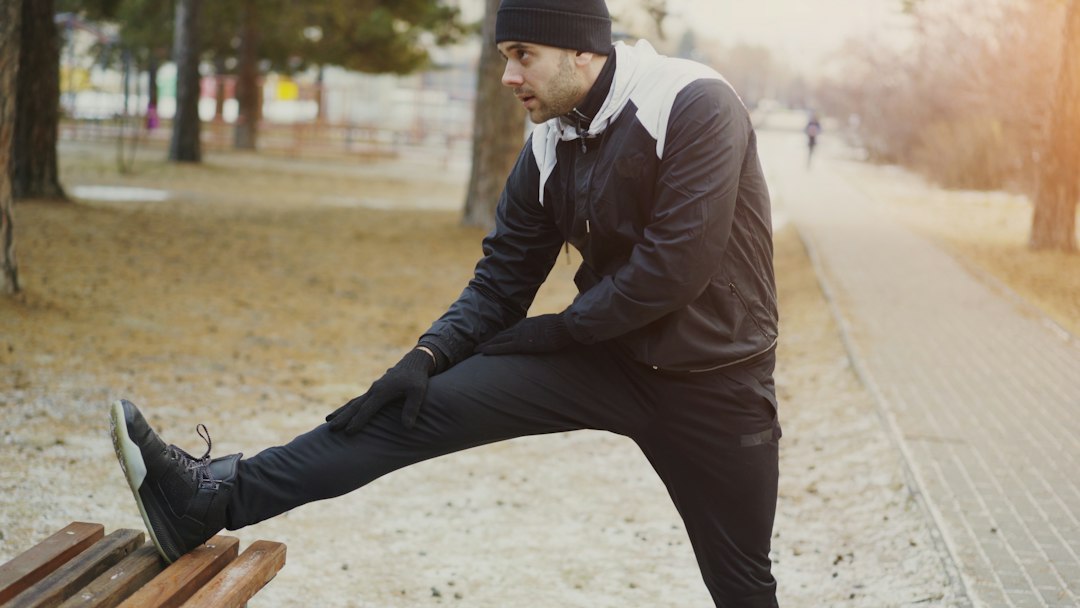
The difference matters because the right response is not always the same.
Muscle soreness usually feels diffuse, tender, and linked to a recent training load. Joint pain is more likely to feel localized around a joint, sharper with certain movements, swollen, unstable, or persistent beyond the normal recovery window.
That is not a perfect diagnostic rule.
It is a practical way to decide whether you probably need ordinary recovery, a temporary training adjustment, or a proper medical assessment.
What Delayed Onset Muscle Soreness Feels Like
Delayed onset muscle soreness, often called DOMS, tends to appear after unfamiliar or unusually demanding exercise.
It usually does not peak during the workout.
Instead, soreness often becomes more noticeable later and can be strongest around one to three days after the session.
The muscle may feel tender when pressed.
It can feel stiff when you first move.
Going downstairs after a hard leg workout is a classic example.
The discomfort is generally spread through the muscle rather than concentrated inside one small joint space.
It also improves as the muscle recovers.
What Joint Pain Feels Like
- Sharp or deep localized pain
- Swelling, warmth, or reduced range of motion
- Catching, locking, grinding, or instability
- Pain tied to one specific movement rather than broad muscle soreness

Joint pain can feel different depending on the cause.
It may be sharp.
It may produce a deep ache.
You may notice swelling, warmth, reduced range of motion, catching, locking, grinding, or a sense that the joint is unstable.
The pain may appear during one specific movement rather than across the entire muscle.
Knee pain while squatting, shoulder pain at one point during an overhead reach, or ankle pain when loading one side are examples that deserve more attention than ordinary post workout soreness.
Location Gives You a Clue
Muscle soreness usually sits in the muscle belly or along a broad area you trained.
After rows, the upper back may feel generally sore.
After squats, the quadriceps and glutes may feel tender.
Joint pain is more likely to be concentrated near the joint line or a specific structure.
That does not mean every pain near a joint comes from the joint itself.
Tendons, bursae, ligaments, and nearby muscles can all create pain in the same region.
But a very specific painful point is different from the broad ache of a muscle that was trained hard.
Timing Matters
DOMS usually follows a recognizable training event.
Maybe you returned to the gym after three weeks off.
Maybe you doubled your lunges.
Maybe you tried a new exercise.
You often know what triggered it.
Joint pain can also follow training, but it may appear during the session, immediately afterward, or repeatedly every time you perform one movement.
Pain that becomes more severe each workout rather than fading between sessions deserves attention.
Pain that wakes you at night or appears without a clear training trigger can also be less consistent with routine muscle soreness.
What Happens When You Warm Up?
Ordinary muscular stiffness often improves after several minutes of light movement.
The body warms up.
Blood flow increases.
The movement feels less awkward.
Some joint conditions also feel better temporarily after warming up, so this is not a diagnostic test.
But pain that gets progressively sharper as you load the same joint is a stronger warning than mild stiffness that eases once you move.
Do not use “it warmed up eventually” as permission to ignore pain that returns every session.
Swelling Changes the Picture
DOMS can make a muscle feel full or tender, but visible swelling around a joint is different.
A swollen knee, ankle, elbow, or finger may suggest inflammation or injury that should not simply be trained through.
The same applies to redness or unusual warmth.
Significant swelling after trauma deserves evaluation.
If swelling appears repeatedly without a clear injury, the pattern may also need medical attention.
Sharp Pain Is Not a Productive Training Signal
Strength training can be uncomfortable.
A hard set burns.
Muscles fatigue.
Breathing gets heavy.
That is different from a sharp stab, sudden catch, tearing sensation, or electric pain.
Do not confuse intensity with injury tolerance.
If a movement produces sharp pain, stop and change the movement.
Reduce the load.
Reduce the range.
Use another exercise.
If the pain persists, get it assessed.
There is no useful adaptation that requires repeatedly provoking the same sharp pain.
What About Tendon Pain?
Tendons connect muscle to bone.
Tendon problems often feel localized near a joint and may be confused with joint pain.
Examples include pain around the patellar tendon below the knee, Achilles tendon near the heel, or rotator cuff tendons around the shoulder.
Tendon symptoms can behave differently from DOMS.
They may feel stiff at the beginning of activity, improve during the session, then become irritated later.
They can also persist for weeks if the training load repeatedly exceeds what the tissue can tolerate.
Tendon problems often benefit from progressive loading rather than complete rest, but the right program depends on the tendon and severity.
That is a good reason to get recurring symptoms evaluated instead of guessing.
What About Arthritis?
Arthritis refers to conditions that affect joints.
Osteoarthritis commonly involves cartilage and other joint structures and can cause pain, stiffness, and reduced function.
Inflammatory types of arthritis can cause prolonged morning stiffness, swelling, warmth, and symptoms across multiple joints.
You cannot diagnose arthritis from one sore workout.
Persistent joint pain, recurrent swelling, or stiffness that lasts a long time deserves a proper evaluation.
Activity is generally important for joint health, but exercise selection and load may need to be adjusted around symptoms.
When Should You Rest?
Rest makes sense when a tissue has been overloaded and needs recovery. For the broader training decision, see Rest Day vs Active Recovery.
With normal muscle soreness, you do not necessarily need complete inactivity.
Easy walking, light cycling, mobility, or training another muscle group can be fine if you feel comfortable.
With an acute injury, significant swelling, or sharp pain, continuing to load the same area aggressively may make things worse.
The right amount of rest depends on what happened.
Complete rest for every minor ache can lead to unnecessary deconditioning.
Ignoring every pain can create the opposite problem.
The middle ground is relative rest: reduce the aggravating load while maintaining safe movement elsewhere.
Ice, Heat, or Neither?
Ice can temporarily reduce pain and is commonly used after acute injuries.
Heat can feel good for stiffness and tight muscles.
Neither one diagnoses or fixes the underlying issue.
Use them for symptom relief when appropriate, not as permission to continue provoking the pain.
If you have significant swelling, trauma, or symptoms that are not improving, the bigger question is not whether you chose ice or heat.
It is whether the injury needs evaluation.
Can Topical Pain Creams Help?
Topical products can reduce discomfort for some people depending on the active ingredient and condition. If you are comparing a specific topical product, our InstaSoothe review breaks down its formula, pricing, and claim limitations.
Menthol products create a cooling sensation.
Other topical medications may have specific evidence for certain types of pain.
The key distinction is symptom relief versus diagnosis.
If a cream makes an area feel better, that does not tell you why it hurt.
Do not let temporary relief hide a pattern of repeated joint pain that needs a training change or medical assessment.
A Simple Training Decision Framework
Use four questions.
First, where is the pain?
Broad muscle belly soreness is different from a precise joint line pain.
Second, when did it start?
Soreness that appears the day after unfamiliar training is different from sharp pain during one repetition.
Third, what happens as you move?
Mild muscular stiffness may improve.
Joint pain that increases with every repetition deserves more caution.
Fourth, what happens over time?
DOMS should gradually resolve.
Pain that stays the same for weeks, worsens, or returns every time you train the same movement is not behaving like ordinary soreness.
Red Flags That Need Medical Attention
Seek prompt medical care for severe pain after trauma, a visibly deformed joint, inability to bear weight, a joint that repeatedly gives way, major swelling, fever with a hot swollen joint, numbness, loss of strength, or symptoms that suggest a serious injury.
Pain that persists despite reasonable load reduction also deserves assessment.
You do not have to wait until something is unbearable.
Early evaluation can often simplify the problem.
How to Reduce Normal Workout Soreness
Increase training volume gradually.
Do not double your sets because one week felt easy.
Use warm up sets.
Keep your first sessions after a break conservative.
Sleep enough.
Eat enough protein and total calories to support recovery.
Keep moving lightly instead of spending two days completely still.
Most importantly, repeat movements consistently.
DOMS is often worst when an exercise is new.
Your body generally becomes less sore from the same workload as it adapts.
How to Train Around a Sensitive Joint
First, remove the movement that reliably aggravates it.
Then look for a similar pattern that feels better.
A painful barbell back squat might be replaced temporarily with a box squat, leg press, split squat, or another variation.
A painful overhead press might tolerate a landmine press or neutral grip dumbbell press.
Change one variable at a time.
Range, load, grip, stance, tempo, and exercise selection all matter.
The goal is not to avoid movement forever.
It is to keep training what you can while you solve the painful pattern.
Do Not Let Pain Become Your Training Identity
Some men become attached to the idea that serious training should hurt.
That mindset can make it difficult to distinguish effort from damage.
A productive workout challenges you.
It does not require you to leave every session with a new joint problem.
Long term strength comes from training you can repeat.
If your program constantly forces you to choose between progress and pain, the program needs work.
Frequently Asked Questions
How long does normal muscle soreness last?
DOMS usually improves over several days. Soreness that does not improve or is unusually severe may deserve more attention.
Can a muscle be sore right after exercise?
Yes, but classic DOMS typically develops later. Immediate pain can also come from fatigue, cramping, or injury depending on the situation.
Is joint cracking bad?
Painless popping or cracking is common. Cracking accompanied by pain, swelling, locking, or instability is more relevant.
Should I train through knee pain?
Do not repeatedly push through sharp or worsening pain. Modify the exercise and seek assessment if the problem persists.
Can soreness mean I had a good workout?
Soreness can happen after effective training, but it is not required for progress.
Do pain creams fix joint problems?
They may reduce symptoms depending on the ingredient, but they do not identify the cause of pain or replace appropriate treatment.
The Bottom Line
Muscle soreness usually tells you that a muscle experienced an unfamiliar or demanding load.
Joint pain can tell a different story.
Look at location, timing, swelling, movement response, and whether symptoms are improving.
If the discomfort behaves like ordinary soreness, recover and keep moving.
If it is sharp, swollen, persistent, unstable, or repeatedly triggered by the same movement, stop treating it like a badge of honor and figure out what is actually happening.
Sources reviewed for this article: Mayo Clinic information on joint pain and muscle pain; Cleveland Clinic guidance on delayed onset muscle soreness and joint symptoms.