A man can wash his hair in the morning, style it with pomade, and by evening feel as though a thin film has settled across his scalp. The hair may look flat, heavy, or oddly sticky. Sometimes the next shower seems to make no difference. Adding more shampoo or scrubbing harder is tempting, but that can create a second problem: a dry, irritated scalp that still does not feel clean.
The practical solution is to separate ordinary styling residue from other scalp problems and match the washing routine to the hair and product. Heavy wax and oil-based pomade may take more effort to remove than a light water-soluble gel. Fine straight hair often behaves differently from thick coily hair. The same number of shampoo sessions is not appropriate for every man.
The American Academy of Dermatology advises applying shampoo mainly to the scalp to remove buildup, dead skin and excess oil while avoiding unnecessary drying of the hair lengths. That simple principle is more useful than demanding a harsh daily reset. Clean the skin and hair with an appropriate product, rinse thoroughly, and adjust the routine based on the actual result.
Start by identifying what is on the hair
Look at the products you used over the last several days. A small amount of water-based styling cream can rinse away differently from heavy wax, oily pomade or several layers of hairspray. If you repeatedly add a new layer each morning without washing appropriately, material can accumulate. That does not automatically mean the product is harmful; it may simply be used in a way that exceeds what your current wash routine removes.
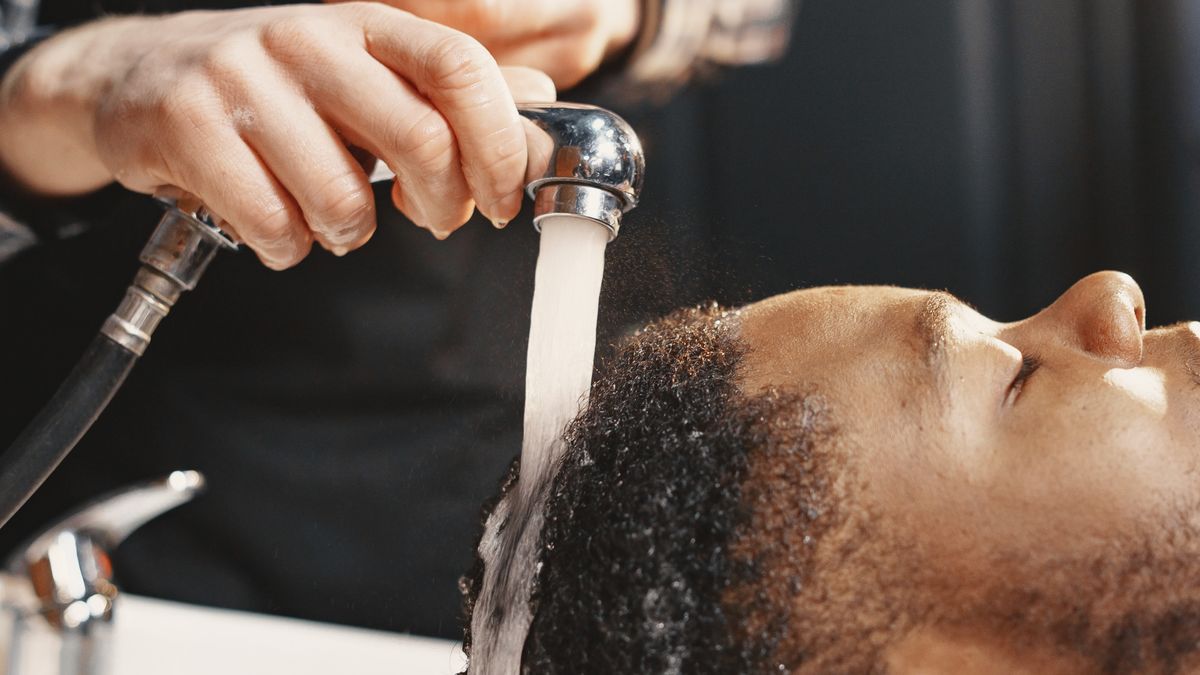
Check whether the residue is visible at the roots, spread across the entire hair shaft, or confined to the front where you apply product. Hair that feels coated may reflect oil or styling residue. White flakes could also come from dry skin, dandruff, or irritated scalp rather than leftover product. Do not diagnose a medical condition by looking at a single speck in the mirror.
If the scalp is painful, very red, crusted or persistently itchy, stop increasing detergent strength and consider a dermatologist. Effective grooming requires knowing when the problem is no longer just grooming.
Quick diagnosis table
| Observation | Possible issue | Conservative first response |
|---|---|---|
| Hair feels waxy immediately after rinsing | Styling product not fully removed | Review product type and shampoo technique |
| Roots are greasy but lengths are dry | Scalp oil and uneven washing | Concentrate shampoo at the scalp, condition lengths |
| Visible flakes and persistent itching | Dandruff, dryness or irritation | Check symptoms, consider dermatologist or suitable dandruff treatment |
| Hair looks dull after heavy conditioner | Too much product near roots | Adjust amount and application location |
| Scalp stings after stronger wash | Irritation from products or friction | Stop harsh treatment and reassess |
Choose shampoo by your hair, not by a universal schedule
Men with oily scalps or straight fine hair may need more frequent washing than men with very dry, textured or tightly curled hair. The AAD recommends tailoring wash frequency to hair texture and oil level. The goal is not to win a contest over how many days you can skip shampoo. It is to keep the scalp comfortable and the hair manageable without unnecessary dryness.
If heavy product is used every day, occasional more thorough cleansing may be appropriate, but your scalp’s response matters. A mild shampoo that reliably removes your usual product is often preferable to applying a highly aggressive cleanser every day. More foam is not always better cleaning, and the way you rinse matters as much as how strongly the product is marketed.
When choosing a new shampoo, check what kind of hair and scalp it is designed for. If fragrance or certain ingredients have caused irritation before, look for a simpler compatible formula. Trial a single change long enough to judge it rather than rotating three new bottles in one week.
Wash the scalp methodically
Wet the hair thoroughly first. Work an appropriate amount of shampoo into the scalp using the pads of your fingers, not fingernails. Focus on areas where product collects: the hairline, crown and back of the head. Gentle movement helps distribute the cleanser and lift soil without scraping the skin.
Follow the product’s directions for contact time and use. Ordinary shampoo does not require harsh mechanical scrubbing. If a therapeutic dandruff shampoo is being used, the AAD notes that instructions can differ and may specify leaving it on the scalp for several minutes. That is a separate regimen from simply removing pomade.
Rinse until the product is adequately removed. Residue left behind from cleanser can contribute to an unpleasant feel, so do not cut rinsing short because you are trying to save time. Avoid extremely hot water when the scalp is already dry or irritated.
What if one wash leaves the hair coated?

Pause and consider whether the issue is a heavy styling formula rather than a lack of effort. Some water-resistant products are designed to last. If a shampoo is not sufficiently removing them, a product-compatible clarifying cleanser might be useful occasionally. The decision should depend on the styling product and scalp condition, not a fixed instruction that everyone must clarify weekly.
Avoid combining strong degreasers, household detergents or improvised chemicals in the shower. Products meant for dishes and floors are not substitutes for scalp-care formulas. If ordinary shampoo leaves the skin uncomfortable, using an even harsher substance is unlikely to be a sensible next step.
You could also reduce the amount of styling product or change to one that rinses more easily. That is often a more direct solution than repeatedly trying to strip heavy layers away. A product that requires a laborious cleanup every evening should earn its place in your routine through a real styling benefit.
Should you use a clarifying shampoo?
A clarifying shampoo is marketed to remove stubborn residues that a regular wash might leave behind. The category can be useful, but formulations differ. Some are mild, while others are strong enough that frequent use leaves dry or processed hair unpleasant. Read the directions, test cautiously, and pay attention to the effect rather than relying only on the word clarifying.
It is not automatically a treatment for flakes, seborrheic dermatitis or scalp inflammation. Those conditions may need different active ingredients or professional evaluation. For persistent dandruff, the AAD recommends choosing an appropriate dandruff shampoo and following its specific application directions. Trying to out-wash the problem with more styling-product cleanser can delay effective care.
A balanced routine might use a regular shampoo suited to the person’s hair and an occasional more thorough wash when buildup genuinely appears. Another person might never need a separate clarifying product. Both can be reasonable if their scalp stays comfortable and the hair is clean.
A product-removal decision card
Why conditioner placement matters
Conditioner helps moisturize and detangle hair, especially when cleansing leaves the lengths dry. The AAD advises that fine or straight hair may benefit from conditioner focused on the ends, while dry or curly hair may require broader application along the lengths. This distinction is useful because a man can interpret heavy roots after conditioning as evidence that shampoo failed.
Try using less conditioner near the scalp if your hair is fine and easily weighed down. Conversely, avoiding conditioner altogether may leave textured hair dry and hard to manage. Both the cleanser and conditioner need to fit the hair. Changing only one variable at a time makes it easier to determine what actually helped.
Rinse according to directions and use a towel gently. Vigorous rubbing can cause hair breakage, especially when strands are wet. You want a clean and manageable result, not a scalp that feels scrubbed raw.

How pomade, clay, gel and hairspray behave differently
Styling labels are broad categories. A waxy pomade may contain ingredients that resist simple rinsing, while a water-based gel may soften quickly. Clay products vary widely in oil and wax content; the word clay does not tell you everything about removability. Hairspray may leave a film that accumulates if applied repeatedly over older product.
If you are testing a product for the first time, use less than you think you need. Work it into clean dry or damp hair according to directions and note how it behaves at the end of the day. The ideal amount is enough to create the style without requiring a difficult cleanup. Applying more because the hair is already heavy often makes the next wash less pleasant.
Keep a mental distinction between styling hold and scalp health. A product can hold very well but be poorly suited to your routine. You may still choose it for special occasions while using an easier-to-wash option on ordinary days.
Could flakes be product buildup rather than dandruff?
Sometimes loose white residue from dried styling product resembles flakes. But persistent scaling may indicate dandruff, seborrheic dermatitis or another scalp issue. The appearance alone is not a reliable diagnostic test. Observe whether the scalp is itchy or red and whether flakes persist after ordinary gentle washing without heavy styling products.
The AAD’s dandruff guidance makes clear that treatment frequency and products differ by hair type and symptoms. If you have ongoing scalp discomfort, an appropriate therapeutic approach can be more useful than changing ordinary styling clay. Our guide to dry scalp explains why the label dry does not answer every cause of flaking.
Do not treat your scalp as something to aggressively exfoliate with household scrubs. A rough brush or vigorous fingernail scratching can worsen irritation. Careful observation and a tailored routine are more effective than an internet trick designed to create an immediate sensation of cleanliness.
How often should men use styling product?
Use it as often as you actually need it, provided your scalp and hair tolerate the product and you can cleanse appropriately. A professional appearance does not require heavy product every day. Many haircuts work with a very small amount, especially when the cut already suits the hair’s natural direction and density.
Try styling once without additional product after a wash. You may find the hair has enough shape on its own, or that only the front needs a little hold. If you want consistent styling every morning, choose a formula that can be removed within your usual care routine. Maintenance is part of product performance.
For a broader washing schedule based on texture and oiliness, see how often men should wash their hair. That article covers frequency; this one focuses on clearing residue and deciding when changing the styling product itself is smarter.
An uncomplicated weekly maintenance system
Clean brushes and combs when residue collects on them so they do not reapply older products. Put a small amount of styling product in your hands instead of layering straight from the container. Pay attention to the scalp after washing. If it feels tight or stings, the routine may be too aggressive.
Avoid multiple new variables at once. If you switch shampoo, product and conditioner during the same week, you will struggle to tell which change helped. Try one adjustment, give it enough ordinary uses, then decide whether the result merits another step. Practical grooming is about learning what works for the actual hair on your head.
Our broader men’s grooming routine places hair care beside skin, shaving, oral hygiene and fragrance. Each part should support the others rather than turning into a shelf of unrelated products.
How to know when to stop experimenting
If hair and scalp feel comfortable, product rinses away reliably and styling looks appropriate, you have solved the problem. There is no reason to add a specialized shampoo merely because someone online calls it essential. A stable routine is an asset.
If you continue to experience painful inflammation, significant scaling, persistent itching, unexpected hair shedding or visible scalp changes, seek professional guidance. Those signs do not prove styling buildup is responsible. A clinician can evaluate conditions that are difficult to distinguish with ordinary grooming observation.
The bottom line
Remove buildup by identifying the styling product, cleaning the scalp appropriately, rinsing thoroughly and avoiding unnecessary harsh treatment. Use clarifying cleansers only when justified by a real residue problem and compatible with the hair. Reduce or replace a difficult-to-wash styling product before making washing increasingly aggressive.
A good routine makes both styling and cleanup manageable. If one demands too much of the other, the answer is often to simplify the product rather than intensify the shampoo.
Frequently Asked Questions
Does product buildup damage hair?
Residue can weigh hair down and make it feel unpleasant, but it does not automatically imply permanent hair damage. The products and scalp response matter.
Do men need clarifying shampoo every week?
Not universally. Use depends on the styling products, shampoo routine and scalp tolerance. Follow the specific formulation’s directions.
Can I use dish soap to remove pomade?
Household degreasers are not designed for scalp care and may irritate skin or dry hair. Use appropriate hair-care products.
Why is my hair greasy after shampoo?
Possible causes include remaining styling product, natural oils, conditioner applied too close to roots or incomplete rinsing.
Can styling product look like dandruff?
Some dried residue can resemble flakes, but ongoing scaling and itch may have dermatologic causes that require another approach.
How do I stop pomade buildup?
Use less when possible, wash according to your hair and product needs, keep tools clean and consider a formula that rinses away more readily.