Most men buy running shoes the same way they buy almost anything else they do not think about often. They walk into a store, someone watches them jog across the floor for ten seconds, and they walk out with whatever the salesperson points to. That process feels scientific. It is not. A growing body of sports medicine research has spent the last two decades quietly taking apart the idea that a store employee can watch your stride and hand you the correct shoe, and the findings are worth understanding before you spend another dollar on footwear.
Running is one of the simplest ways a man builds real physical capacity into his week, which is part of why it shows up so often in the broader case for living a genuinely balanced life rather than just a busy one. But the gear conversation around it has gotten louder than it needs to be. Here is what the actual research says about how to buy a pair that serves you.
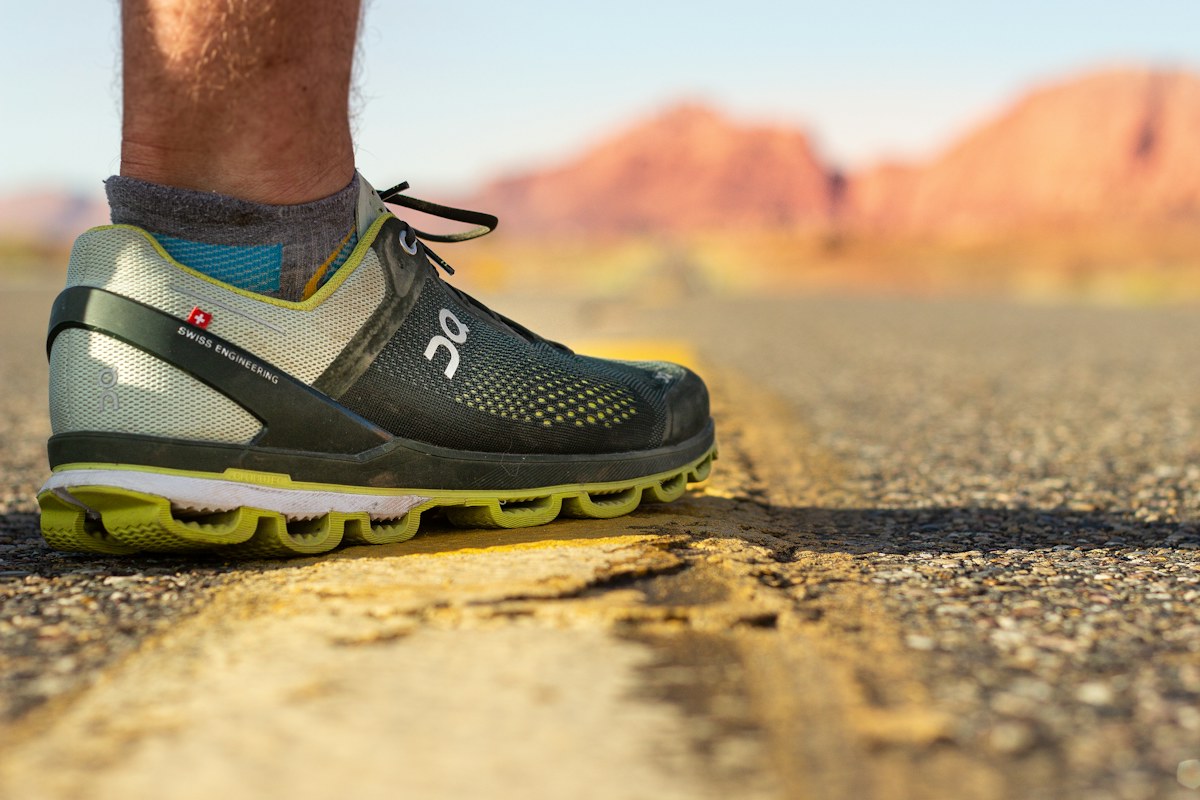
Does gait analysis actually predict the right shoe?
The traditional model, still used in plenty of running stores, sorts runners by how much their foot rolls inward after landing. Roll in a lot and you get steered toward a stiff motion control shoe built to resist that motion. Roll in very little and you get a neutral shoe. This system has a name, the pronation control paradigm, and a 2022 review in Frontiers in Sports and Active Living by researcher Cristine Agresta and colleagues concludes it is not supported by the evidence.
The review pulls together several large studies to make the point. Two military cadet studies led by researcher Joseph Knapik assigned motion control, stability, or neutral shoes based on measured arch height and tracked injuries across twelve weeks of training. Matching shoe type to arch type did not meaningfully reduce injury rates for either men or women. A separate randomized trial led by Michael Ryan looked at recreational female runners specifically and found something closer to the opposite of what the paradigm predicts, the motion control group accumulated 79 missed training days from pain over thirteen weeks, compared with 64 in the neutral group and 51 in the stability group. Those were group totals, not averages for each runner. A third study led by Rasmus Nielsen followed 927 novice runners and found no significant difference in injury risk across arch types once everyone trained in a standard neutral shoe. The review also discusses a trial that found fewer injuries with motion control shoes. Results are mixed, so neither arch matching nor a blanket rejection of supportive shoes is justified.
So what should actually guide the decision?
Comfort is a useful place to start, but it is not a proven shield against injury. Benno Nigg’s comfort-filter proposal suggests runners tend to prefer shoes that suit their movement. The 2022 review found limited evidence for the major shoe-selection models, including this one. Consider comfort alongside fit, training load and any injury history. If pain keeps returning, a qualified clinician can assess more than a brief shop-floor jog.
The practical version of this is almost anticlimactic. Try on several pairs, jog around the store in each one, and pay attention to which one disappears from your awareness fastest. That feeling is useful feedback, though a comfortable test run cannot guarantee injury-free training.
How should a running shoe actually fit?
Comfort still depends on getting the physical fit right first. Mayo Clinic Health System’s own guidance on athletic shoe fit gives a specific benchmark, there should be about half an inch of space between your longest toe and the front of the shoe, enough room to wiggle your toes freely once you are moving. Feet also swell over the course of a day, so the same guidance recommends shopping in the evening or late afternoon rather than first thing in the morning, when your feet are at their smallest and a shoe that feels fine in the store can feel tight three miles into a run.
Sizing also varies enough between brands that treating your usual number as fixed will work against you. If one foot is measurably larger than the other, which is common, fit to the larger foot and address the smaller one with an insert rather than the reverse. Bring the actual socks you plan to run in, and if you use custom orthotics, bring those too. Walk, then jog in place, before deciding anything.
Are carbon plated super shoes actually worth it?
The other major shift has been carbon plated racing shoes, which combine a stiff plate, resilient foam and a shaped sole. A 2026 systematic review of footwear technology reports running-economy improvements of roughly 2.6 to 4.2 percent in studies of these designs. Running economy means the energy needed to hold a pace. An improvement in that measure does not translate directly into the same percentage reduction in race time, and individual responses vary.
The plate, foam and sole shape work together, and the result depends on the runner as well as the shoe. A review of shoe stiffness and running energetics stresses these interactions rather than treating the plate as a stand-alone source of speed. There is no universal mileage at which every racing shoe loses its benefit. For most men running for health and consistency, start with a comfortable everyday trainer. If you race competitively, test a racing shoe in training before trusting it on race day, and decide whether the fit and benefit justify the extra cost.
What about heel strike versus forefoot strike?
Landing on your heel is not automatically a flaw that needs fixing. The running-injury review describes how footwear and running mechanics can shift loads between tissues. Changing your stride can move stress rather than remove it. If you run comfortably, do not force a new landing pattern because a video calls yours wrong. Persistent pain calls for an individual assessment and a gradual plan, not a sudden overhaul based on a general rule.
How many miles should a pair actually last?
The American Academy of Podiatric Sports Medicine puts the useful life of a typical running shoe at 350 to 500 miles, with heavier runners and those with a harder foot strike replacing theirs closer to the 350 mile end of that range. The important detail most men miss is that this has almost nothing to do with how a shoe looks. The academy’s own guidance notes a pair can appear to be in good shape, no holes, no visible wear, while the cushioning material underneath has already lost its ability to rebound from repeated compression. Cushioning and support change with wear, but mileage alone cannot tell you whether a shoe caused an injury. Check for uneven wear, damage, a changed feel or discomfort as well as the distance covered. Mayo Clinic’s guidance lands in the same range, roughly 400 to 500 miles. Treat mileage ranges as prompts to inspect the shoe, not a universal expiry date. The cheapest way to apply this is also the simplest, write the purchase date on the tongue of the shoe or log it in a running app the day you buy it, so the decision to replace it is based on an actual number rather than a guess.
A straightforward way to actually buy your next pair
Put together, the research argues for a buying process that is less complicated than most men expect. Go shopping in the evening, bring the socks and orthotics you actually run in, and try on several pairs rather than one. Fit to your larger foot, leave that half inch of space at the toe, and pay closer attention to how a shoe feels after a real jog around the store than to what any employee tells you about your arch. Do not pay a premium for motion control features unless a specific injury history and a clinician, not a retail employee, points you there. Save a carbon plated pair for race day if you run competitively, and treat your everyday trainer as the shoe that actually accumulates your miles. Track the mileage, and inspect the pair carefully as it approaches that 350 to 500 mile range, even if the upper still looks new. None of that requires an app, a lab, or a specialist. It requires paying attention to your own feet over what a chart says they should be doing.
Consistency matters here more than any single gear decision. A great pair of shoes will not save a training plan nobody sticks to, and the men who actually keep running long enough to see the benefit are usually the ones who built some structure or company around it, the same pattern that shows up in research on why men who stay socially connected as adults tend to stick with the habits that matter. Running with someone else, or arranging a regular check-in, may help you keep showing up. Equipment still needs to fit the job.
The same instinct to check what the evidence actually says, rather than what sounds authoritative, applies well beyond footwear. It shows up in how a disciplined man approaches building mental discipline in the first place, and in how he thinks about building real financial security instead of chasing whatever sounds smartest at the moment. The pattern is the same in every case, strip out the noise, find what the actual data supports, and build a simple habit around it.
At Modern Men HQ, we do not think a man needs a closet full of specialized gear to take his health seriously. He needs a shoe that fits, a plan he will actually follow, and the discipline to replace what wears out before it starts working against him.