Most planners end up in a drawer by February. That is not really a mystery, and it is not really about willpower either. It is usually a mismatch between the tool a man bought and the way his brain actually forms new habits and follows through on goals. Before buying another planner because the last one did not stick, it helps to understand what the research on goal setting, habit formation, and attention actually says, because most of it points in a specific direction that has nothing to do with how nice the cover looks.
This is not a review of one specific product. It is a way to think through the purchase itself, using real research on why some planning systems work and most do not, so the next one you buy is the last one you need for a while.
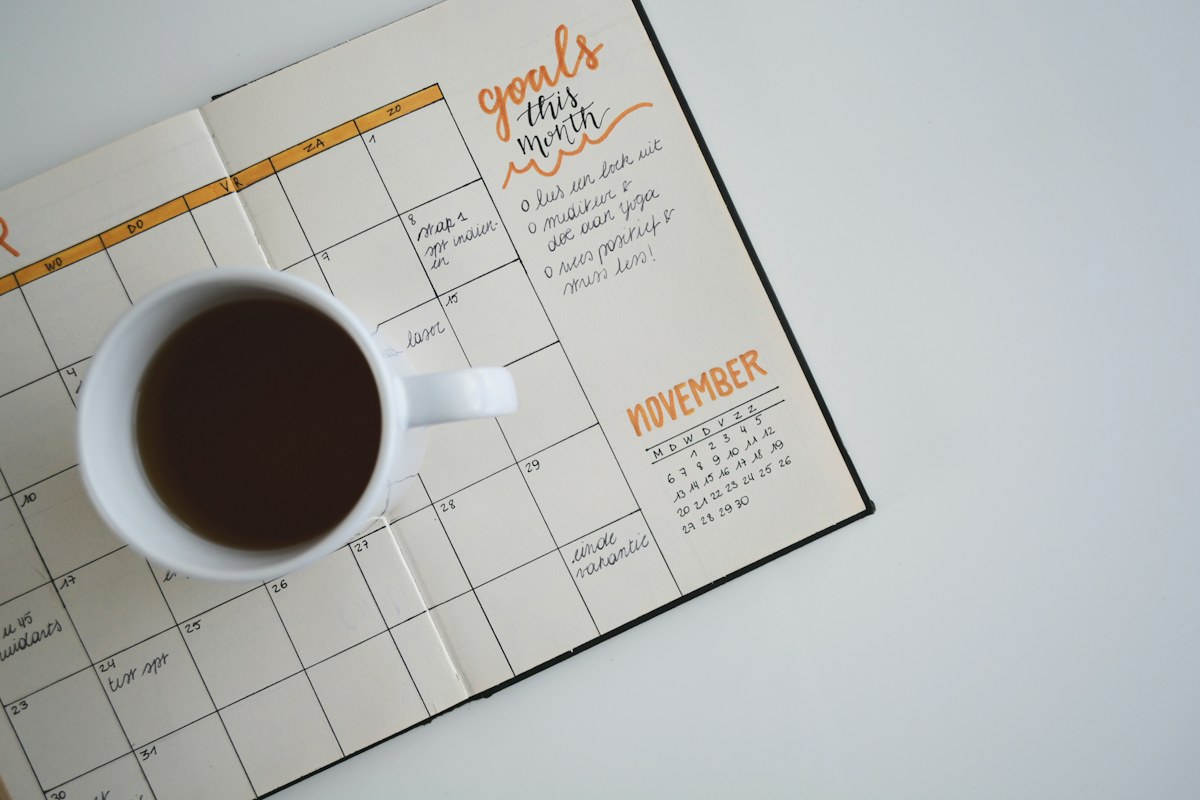
How Does the Planner Format Affect the Way You Use It?
A lot of men treat the planner as a neutral container, something you fill in with whatever productivity method you have picked that month. The research suggests the format is not neutral at all.
Pam Mueller and Daniel Oppenheimer’s 2014 note-taking study reported an advantage for handwritten notes on some conceptual questions. But a 2021 direct replication and small meta-analyses did not support a reliable immediate-learning advantage from handwriting. These studies examined lecture notes, not planners, so they cannot establish that paper planning produces better follow-through.
Paper may help if you want a quiet place to think without notifications. Digital tools may help if reminders or shared calendars are what you need. In either format, summarize your priorities in your own words and decide what you will actually do. That is a practical way to use the tool, not a result established by the lecture studies.
What Actually Makes a Man Follow Through on His Goals?
Edwin Locke and Gary Latham spent decades studying what separates goals that get met from goals that get abandoned. Their research, published in American Psychologist, drew on more than a hundred different tasks and over forty thousand participants across at least eight countries, spanning timeframes from a single minute to twenty five years. The finding held up consistently across all of it. Specific, difficult goals outperformed vague ones like doing your best, with effect sizes ranging from point four two to point eight zero depending on the task, a genuinely large and consistent difference by the standards of behavioral research. The reason is straightforward once you see it. A goal like do better this month gives you no way to know if you succeeded, so almost any outcome feels acceptable. A goal like run three times this week or finish the proposal by Thursday gives you an actual line to cross.
This matters directly for how you should buy a planner. A layout that only gives you a blank box to write whatever comes to mind is not doing you any favors. Look for one with enough structure to force specificity, whether that is a daily section broken into a small number of named priorities rather than an open ended list, or a weekly view that asks you to name the actual outcome for each day rather than just a task. The Mindset pillar guide on building mental discipline covers this same principle in more depth if you want the full framework behind it.
Peter Gollwitzer and Peter Sheeran took this a step further with what they call implementation intentions, essentially if then plans that specify exactly when, where, and how you will act on a goal, rather than just stating the goal itself. Their meta analysis, hosted by the National Cancer Institute, found a medium to large effect on actually following through, roughly a point six five effect size across the studies reviewed, which is a substantial jump for something as simple as writing down when and where you will do a thing instead of just what the thing is. A planner that has room for this, a line for when and where next to each task rather than just a checkbox, is structurally suited to a habit that already has strong evidence behind it. One that only gives you a to do list with no room for the when and where is asking you to hold that structure in your head instead, which most men will not do consistently.
How Long Should You Expect Before a New Planning Habit Actually Feels Automatic?
Phillippa Lally and her colleagues at University College London tracked people trying to build new daily habits and measured how long it actually took before the behavior felt automatic rather than effortful. Published in the European Journal of Social Psychology, the study modeled how automaticity developed during twelve weeks of daily eating, drinking or activity habits. Estimated times to approach each person’s plateau varied from eighteen to two hundred fifty four days; the widely reported median was sixty six days. The longer estimates extended beyond the observation period, and the study did not test planner use. That range matters more than the average. It means the man who is still forcing himself to open his planner every morning six weeks in has not failed at anything. He may simply be on the longer end of a well documented curve.
This has a direct implication for what you buy. A planner with a rigid structure that only works if you never miss a day sets most men up to quit around week three, before they have had much chance to build a steady routine. Look instead for a format that is forgiving of a missed day or two, whether that is undated pages you can pick back up anytime, or a weekly rather than strictly daily layout that does not visually punish you with empty boxes for the days you skipped.
Why Do Most Men Underestimate How Long Their Own Plans Will Take?
Daniel Kahneman and Amos Tversky first described what they called the planning fallacy, the tendency to underestimate how long a task will take even when you have direct personal experience suggesting otherwise. Roger Buehler, Dale Griffin, and Michael Ross tested this directly in a series of studies published in the Journal of Personality and Social Psychology. In one study, psychology students predicted they would finish their senior thesis in about thirty four days. The actual average came out to roughly fifty five and a half days, and only about thirty percent of students finished within the time they themselves had predicted. Across their other studies covering everyday academic and personal tasks, completion estimates were consistently optimistic by a similar margin, even though the same participants reported high confidence in their own predictions each time.
This is worth knowing before you fill in a planner, not just before you buy one. If a task usually runs long for you, the honest move is to schedule it with real buffer room rather than assuming this time will be different. Some planners build this in directly with time blocks wide enough to absorb overruns. Others give you rigid fifteen minute slots that all but guarantee a cascading, frustrating day the moment one thing runs over, which for most men is most days. If your work or your career goals involve estimating your own time regularly, this is worth taking seriously, and the Success pillar’s guide on building wealth as a modern man touches on the same discipline from the career and financial side.
Paper or Digital, Which One Actually Fits a Disciplined Routine?
Neither format is objectively better, but they solve different problems. Paper gives you a place to write without notifications competing for attention. It can still be forgotten in a drawer, so leave it somewhere you will use it. It also cannot sync across devices, cannot search your entries from three months ago, and cannot remind you of anything unless you remember to look at it.
A digital planner earns its place when the job genuinely requires reminders that fire on their own, coordination with other people’s calendars, or access from multiple devices during a working day that moves between a desk, a phone, and a car. If none of that applies to how you actually plan your days, paper may be the simpler choice for your routine. Plenty of disciplined men use both, a paper planner for the daily thinking and prioritizing, a digital calendar strictly for appointments and reminders that need to interrupt them. What matters is making time to think, choose and review, whichever tool holds the plan.
What Should You Actually Look For When You Buy One?
Once the format question is settled, a few concrete things separate a planner you will keep using from one that joins the drawer full of good intentions. Look at the daily or weekly layout and ask whether it gives you room to name a specific, difficult goal rather than a vague one, per the Locke and Latham research above, and whether it has any structure for noting when and where you will act on a task, per the Gollwitzer and Sheeran research. Check whether the format is forgiving of a missed day, since the Lally research found wide variation in how long habits took to develop, and a system that punishes early lapses is a system fighting its own user. Consider whether the time blocks, if there are any, give you real room to run long, since the planning fallacy research says most tasks will take longer than you first think regardless of how experienced you are. And be honest with yourself about whether you actually need a bound, dated book you have committed to for a full year, or whether a looser, undated format removes enough pressure that you are more likely to actually pick it back up after a rough week.
Price and materials matter less than all of this, though a binding that survives being carried daily and paper that does not bleed through with a normal pen are worth paying slightly more for, since a planner that falls apart or becomes unpleasant to write in will get abandoned for reasons that have nothing to do with the system inside it.
Building the Habit Once You Have Bought One
The planner itself is only ever half of this. The five mental frameworks every disciplined man should use covers several systems that pair naturally with a planning habit once the physical tool is no longer the obstacle, and a man serious about following through on career goals specifically may also find the direct, practical approach in how to ask for a raise and actually get it useful, since it applies the same specific goal, specific plan logic to a single high stakes conversation rather than a daily routine.
None of the research above says a planner will fix discipline on its own. The research on goals and habits offers ideas to apply, but it does not certify a particular planner. Judge your choice by whether you return to it and follow through. Buy accordingly, expect the first several weeks to feel effortful rather than automatic, and give yourself the buffer room the evidence says you actually need. The Mindset pillar guide on building mental discipline lays out the fuller framework this fits into, and the Success pillar guide on building wealth as a modern man applies the same specific, patient approach to money rather than to a daily planning habit.
At Modern Men HQ, discipline is built through systems that account for how a man actually behaves, not the idealized version of him. A planner is a tool, not a virtue, and the right one earns its place by making the follow through easier, not by looking impressive on a desk.