Price and fabric cannot rescue a suit that fits badly. A modest suit with the right proportions can look far better than an expensive one that pulls, collapses, or hangs awkwardly. Start with fit, then use fabric and construction to decide how much the suit is worth to you.
This guide starts where the decision actually gets made: on your body, in front of a mirror, before a single dollar changes hands.
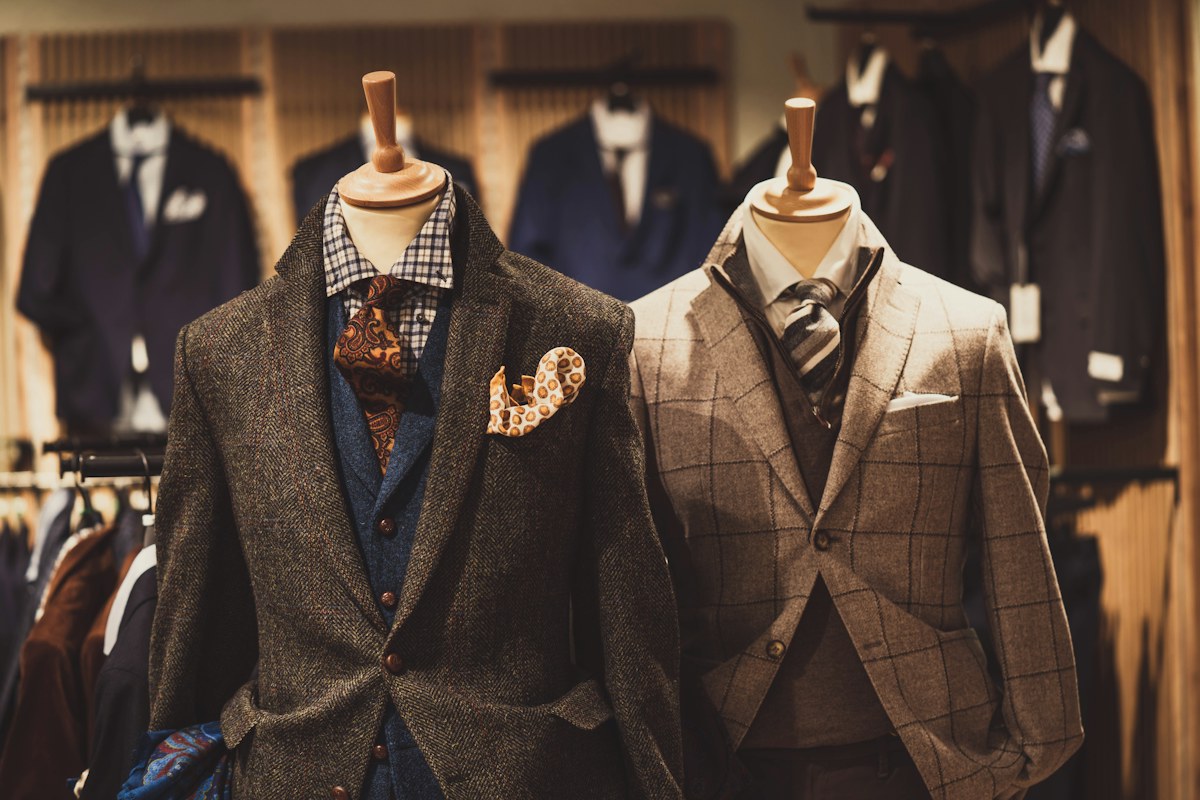
Why Does Fit Matter More Than the Label on the Suit?
Ask a tailor which matters more, a fine fabric on a poorly cut jacket or a modest fabric on a properly cut one, and the answer is not close. The people who actually cut suits for a living return to the same point again and again: fit is the single factor a man controls that changes how a suit reads on him more than anything else, including the price of the cloth. Gentleman’s Gazette, a menswear publication known for research heavy coverage of tailoring, puts it plainly when discussing fabric grades: whatever the fabric, fit is the most important consideration a buyer should weigh, ahead of the number printed on the tag.
That ordering also happens to save you money. Getting fit right first means you are not paying premium prices for a fabric that will still look wrong once it is on your frame. Get the fit right, and even a modest fabric earns its keep for years.
What Should the Shoulders Tell You Immediately?
Put the jacket on and check the shoulders before worrying about sleeve length or waist suppression. The shoulder line should look clean and follow your frame without obvious divots, pulling, or excess fabric beyond the shoulder. Shoulder alterations are among the most invasive changes a tailor can make, so a jacket that is clearly wrong here is usually better replaced with another size or cut than bought with the assumption it can be rebuilt later.
What Is the Collar Gap Actually Revealing?
Turn slightly to the side and look at the back of your neck in a three way mirror, or have someone check it for you. The jacket collar should sit close against your neck, with roughly half an inch of your shirt collar visible above it. A visible gap between the jacket collar and your neck usually means the jacket was cut for a different posture or a different back shape than yours, not that you simply need a size up or down. This is one of the clearest tells that a suit was built for an average body rather than your actual one, and it is a detail most men never learn to check, so they walk out wearing a jacket that gaps every time they move.
How Much Cuff Should Show at the Sleeve?
Let your arms hang naturally at your sides. Showing roughly a quarter inch to half an inch of shirt cuff is a common starting point, although personal preference and arm proportions matter. Sleeve length is usually a routine alteration when there is enough fabric and the cuff construction allows it, but functional buttonholes can make the job more complicated.
The one complication is working buttonholes, the kind that actually open and close on the cuff. If your jacket has them and the sleeve needs to get longer rather than shorter, a tailor cannot cleanly move buttonholes that have already been cut, so lengthening becomes far messier than shortening. If you know you want functional buttons, buy a sleeve that is already close to correct rather than counting on an easy fix later.
How Long Should the Jacket Actually Fall?
Use proportion rather than one knuckle rule. A traditional suit jacket generally covers the seat and divides the body in a balanced way when viewed from the side. Shorter or longer cuts can still work, but the jacket should look intentional relative to your torso and legs. Length can only be altered modestly before the pockets and button position start looking misplaced.
What Do the Numbers on the Fabric Tag Actually Mean?
Once fit is settled, fabric labels become more useful. Super numbers on wool refer to fiber fineness within an industry classification. A higher number generally means finer wool, but it does not tell you whether the suit is well constructed, whether the cloth is appropriate for your climate, or whether it will suit how often you plan to wear it.
Very fine cloth can feel soft and luxurious, while a sturdier cloth may be the better choice for frequent wear. Look at weight, weave, recovery from wrinkles, climate, and how the fabric feels in motion instead of treating the highest Super number as a quality score.
Alter the Suit or Walk Away? A Fitting-Room Decision Guide
Before paying, separate problems that a tailor may be able to adjust from problems that suggest the jacket or trousers were cut for a different body. Ask for an alteration estimate before deciding that a sale price is good value.
| What looks wrong | Better next move | Why it matters |
|---|---|---|
| Shoulders hang too far out or pull hard | Try another jacket cut or size. | Significant shoulder work can involve major reconstruction. |
| Collar gaps noticeably at the back | Ask an experienced tailor to assess the balance; compare another pattern. | Some collar corrections are possible, but others signal a larger fitting issue. |
| Waist is slightly roomy | Ask whether the side seams permit taking it in. | Minor shaping is often more realistic than rebuilding the whole jacket. |
| Sleeves are a little long | Get a quote and check working cuff buttonholes. | The construction can limit how much sleeve length can be changed. |
| Trouser hem is too long | Try a hem adjustment and check the intended trouser break with actual shoes. | Hem alterations are more routine than changing the jacket’s main proportions. |
Tailoring ability and price vary by construction and the individual garment. Never rely on a generic “the tailor can fix it” promise without a fitting and a quote.
Which Alterations Are Worth Paying For?
A good tailor earns their fee, but only on the right problems. Sleeve length, as covered above, is an easy and cheap fix. Taking in the chest, waist, or sides is realistic too, generally within about one size, so a jacket that is slightly roomy through the body can usually be brought in without a full rebuild. Jacket length can move a small amount in either direction. What a tailor genuinely cannot do at any reasonable cost is resize the shoulders, since altering shoulder width means reconstructing the part of the jacket with the most complex internal structure, according to the alteration limits Gentleman’s Gazette lays out for exactly this reason.
Use that list as a filter while shopping. A jacket with reasonably fitting shoulders and collar gives a tailor more workable options, but not every alteration is possible or economical. Pocket placement, jacket balance, working buttonholes, seam allowance and garment construction all matter. If the shoulders are clearly wrong, try a different cut or size before assuming a major rebuild is sensible.
How Should the Trousers Sit at the Waist and the Shoe?
Trousers get less attention than jackets, but the same logic applies. The waistband should sit where the trouser was designed to sit without needing a belt to stop it sliding and without cutting into the waist. The seat and crotch should lie cleanly, and the rise should suit your proportions. A higher or lower rise can both work when the pattern fits your body.
At the shoe, look at what tailors call the break, the small fold of fabric that forms where the trouser hem meets the top of your shoe. A slight fold, sometimes called a half break, remains the standard, versatile choice heading into the current season. A full break pools noticeably at the ankle and reads as dated, while no break at all sits flush against the shoe without any fold, a cleaner, more modern look that some men now prefer for its precision. Any of these can work depending on the cut of the suit and your own preference, but decide it on purpose rather than accepting whatever length the store’s stock happens to offer.
Should You Buy Off the Rack, Made to Measure, or Custom?
Once you understand the checkpoints above, the buying decision gets simpler rather than harder. Off the rack suits are built to a standard set of proportions, and if your build happens to match one of those proportions closely, a good off the rack jacket paired with a competent local tailor for the fixable details, sleeves, waist, length, will serve most men perfectly well and at the lowest cost. Made to measure starts from a standard pattern and adjusts it to your actual measurements before cutting, closing much of the gap for men whose proportions fall outside the standard range, at a real but moderate premium. Full custom or bespoke construction, built from an individual pattern with no standard template involved, makes the most sense once a man knows exactly what he wants and needs, since it solves problems the first two routes cannot, particularly around shoulder shape and back balance.
For most men, the honest advice is to start with a well chosen off the rack suit, check every point in this guide before buying it, then spend the money you saved on a genuinely skilled local tailor rather than a discount alteration counter. That combination beats an expensive suit bought without checking any of these details at all.
A suit is one piece of a wardrobe built with intention, not a purchase made in isolation. Our modern man’s wardrobe guide shows where tailoring fits into the larger closet, while our comparison of Chelsea boots versus Oxford shoes covers the footwear decision that can change the formality of the same outfit.
Buying a suit is only one part of owning it. Before adding another, think through how many suits you genuinely need and when a suit actually needs dry cleaning. A garment you can maintain and wear regularly will usually serve you better than one that spends its life in a garment bag.
At Modern Men HQ, we do not think a suit needs to be expensive to be right. We think it needs to be checked, point by point, before it ever leaves the store.