Most men do not need more clothes. They need a wardrobe that makes more of the clothes they already own. Before buying another basic, identify which pieces you wear weekly and whether the new item fills a real gap.
A strong wardrobe is not built by collecting pieces that look good on their own. It is built by choosing clothes that work together, fit the life you actually live, and make getting dressed easier rather than harder. That is the standard. The goal is not to own the most. It is to own enough of the right things that you can dress well without thinking about it for twenty minutes every morning.
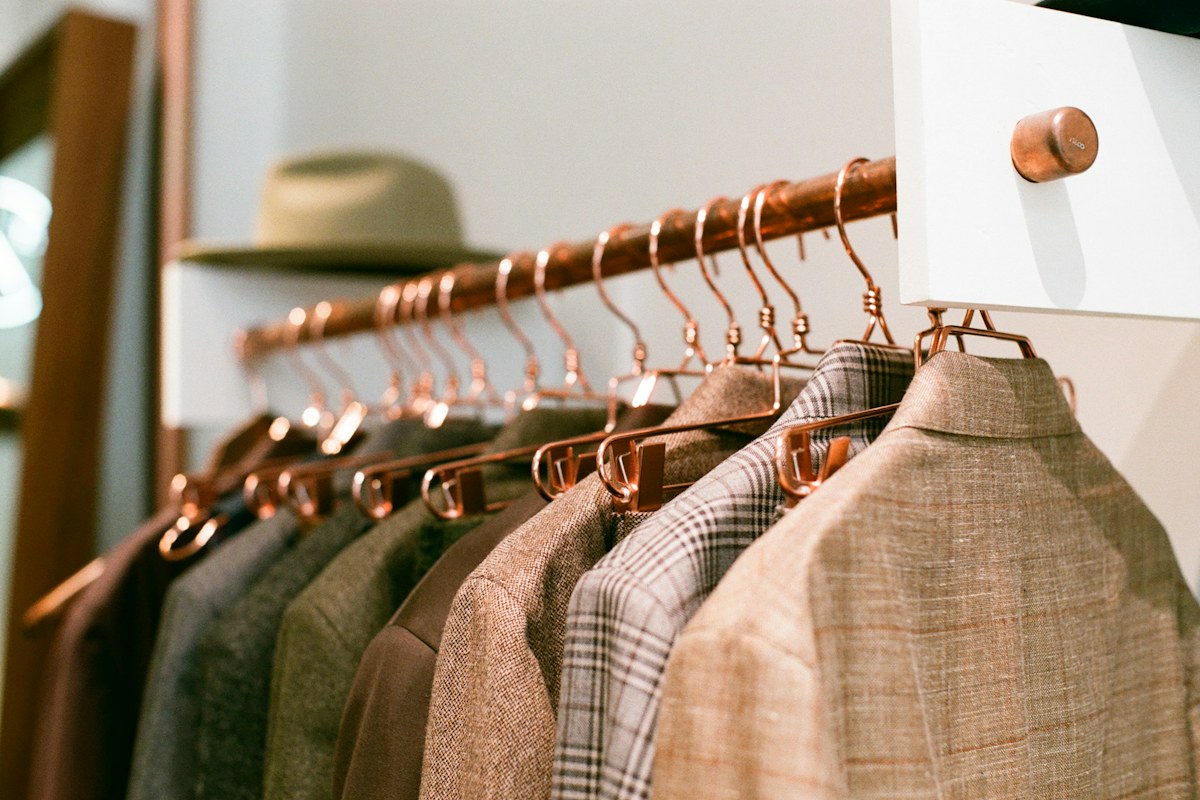
What should a modern man’s wardrobe actually do for him?
It should remove friction. You should be able to open the closet, choose almost any shirt and almost any pair of trousers, and know they will work together. That only happens when the wardrobe was built around compatibility instead of impulse.
The strongest closets usually share three traits. The colors cooperate. The fits are consistent. The clothes reflect the man’s real schedule. That means the wardrobe of a lawyer who meets clients five days a week should not look identical to the wardrobe of a remote founder who spends most days at home. Both can dress well. They simply need different ratios of tailoring, casual clothing, footwear, and outerwear.
This is why a universal checklist is useful only as a starting point. The better question is not, “What should every man own?” It is, “What clothes solve the situations I actually face?”
Start with the situations you dress for most
Before buying anything, look at a normal month. Count the environments that actually demand a different level of dress.
Work may require tailoring, business casual clothing, uniforms, or nothing more formal than clean casual pieces. Weekends may involve errands, dates, dinners, family events, travel, or time outdoors. Formal events may happen twice a year or twice a month. Your wardrobe should reflect those numbers.
A man who spends eighty percent of his time in casual environments should not devote half his budget to suits. A man who regularly meets clients should not own one decent shirt and twelve hoodies. Buy for the life you have, then leave a little room for the life you are building.
Build Around Your Actual Week, Not a Shopping List
Start with the situations that account for most of your time. The same wardrobe priorities do not suit a man who works in a formal office, someone who spends most days outside, and someone who works remotely.
| Most common situation | Useful starting pieces | What to check before buying |
|---|---|---|
| Office and client meetings | Well-fitting dress shirts, tailored trousers, versatile leather shoes and appropriate layers. | Check dress shirt fit before adding more shirts. |
| Casual or remote work | Reliable T shirts, knitwear, jeans or chinos, comfortable shoes and one adaptable jacket. | Build combinations around what you already wear, not a prescribed item count. |
| Formal events | A suit or smart separates, suitable shoes and an occasion-appropriate shirt. | Review how to buy a suit that fits rather than assuming any expensive suit is good. |
| Hot or humid weather | Breathable shirts, light trousers, comfortable shoes and fewer heavy layers. | Choose fabric and ease of movement for the real climate instead of copying a cold-weather capsule. |
If one row describes only an occasional event, buy for your normal week first and cover that event deliberately afterward. This is a planning example, not a universal checklist.
What are the foundation pieces worth owning first?
One practical example
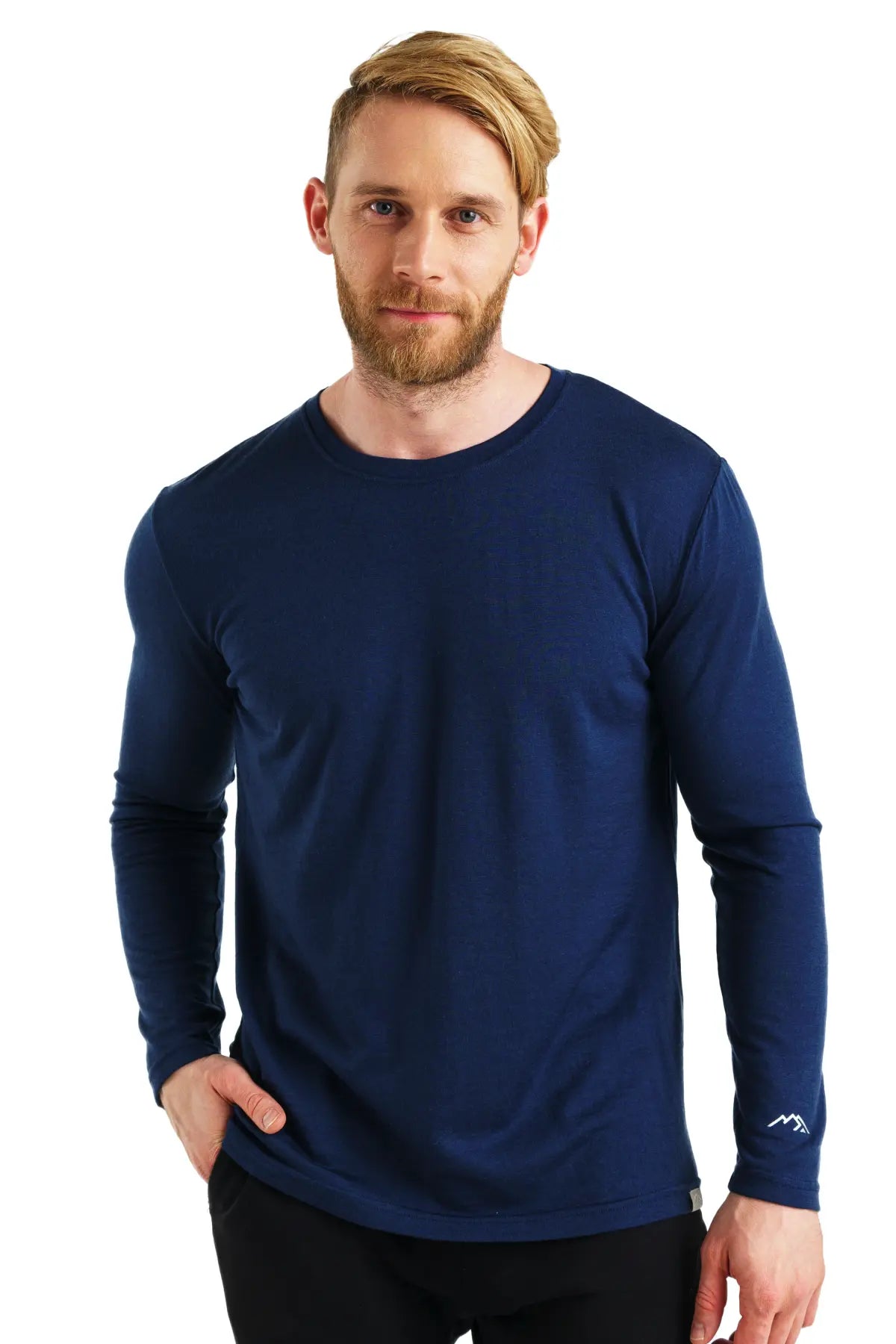
Merino Tech Men’s Merino Long Sleeve 165 Navy
A navy long-sleeve top can serve as a useful layer in a small wardrobe if it suits your climate and daily dress code. Treat this as a possible supporting piece rather than an automatic essential or a replacement for a dress shirt. The October 14 Awin feed listed the product at $49.99 USD; stock, size and price can change.
A foundation is made of clothes that can carry several situations without looking like a compromise. These are not necessarily exciting purchases. That is exactly why they work.
A dark pair of jeans that fits cleanly
Dark denim can sit between casual and polished better than almost anything else in a man’s closet. Look for a straight or gently tapered leg, minimal distressing, and enough room through the seat and thigh that the fabric falls cleanly rather than clinging.
The value is versatility. Dark jeans can work with a simple T shirt, an Oxford shirt, knitwear, a field jacket, a blazer, sneakers, boots, or loafers. One excellent pair is more useful than several pairs that only work with one type of outfit.
Neutral trousers
Charcoal, navy, olive, stone, and warm khaki give you range without forcing complicated color decisions. Choose the colors that already cooperate with your shirts and jackets. If your closet is mostly navy and white, charcoal and stone are easy additions. If you wear earth tones, olive and tan make more sense. Fit matters as much as color: see how trouser length and the break should look before buying or hemming a pair.
Two or three shirts that cover different levels of formality
A white or pale blue dress shirt handles formal situations. An Oxford cloth button down shirt works well when you need structure without looking dressed for a boardroom. Keep the collar in shape too: our guide explains how to fix dress shirt collar points that curl. A clean polo or knit polo covers the space between a T shirt and a collared dress shirt.
The point is not to own one of every category. It is to create clear options for casual, smart casual, and formal situations. For practical combinations using wardrobe essentials, explore our 25 smart casual outfits for men.
Simple layers you can repeat without thinking
A few plain T shirts, a lightweight knit, and one dependable sweatshirt or overshirt give the wardrobe depth without creating another set of complicated choices. Choose colors that already work with your trousers and outerwear. These pieces should make combinations easier, not compete for attention.
One piece of outerwear that improves almost everything under it
Outerwear has disproportionate visual impact because it frames the entire outfit. A clean overcoat, field jacket, chore jacket, Harrington jacket, or simple wool coat can make otherwise ordinary clothing look considered.
Choose according to climate and lifestyle. The best outerwear is the piece you actually reach for, not the one that looks impressive hanging in the closet.
Footwear that covers casual and dressed situations
Most men can cover a surprising amount of ground with three categories: a clean casual sneaker, a versatile boot or loafer, and a proper dress shoe if their life requires one.
If you are deciding which dressier shoe earns a place first, our comparison of Chelsea boots versus Oxford shoes breaks down which one fits different wardrobes. Frequency of use matters more than novelty.
Why does fit matter more than price?
Because fit determines the shape people see before they notice fabric, brand, or price.
An expensive jacket with poor shoulder fit will still look wrong. A moderately priced pair of trousers hemmed to the correct length can look far more intentional. This is why tailoring is one of the highest return upgrades a man can make to a wardrobe.
Start with the parts a tailor cannot easily fix. Jackets should fit through the shoulders. Shirts should not pull across the chest. Trousers should have enough room through the seat and thigh. Once those areas are right, sleeve length, trouser length, waist suppression, and minor shaping can usually be adjusted.
Do not buy clothing as a punishment for your current body either. Buy what fits now. If your size changes, adjust later. A wardrobe should serve the man wearing it today.
How many colors should a man’s wardrobe use?
Enough to create variety, but not so many that every outfit becomes a puzzle.
A useful system is to choose two or three core neutrals, then add a smaller number of accent colors. Navy, charcoal, white, cream, olive, brown, and tan are common because they combine easily. You do not need all of them.
For example, a wardrobe built around navy, charcoal, white, and brown can create dozens of combinations without feeling repetitive. Another man may prefer olive, cream, black, and tan. The principle matters more than the exact palette.
If a color only works with one other item in the closet, it is expensive in a way the price tag does not show. It demands supporting purchases. A disciplined wardrobe avoids that trap.
Should you build a capsule wardrobe?
Only if the idea helps you make better choices. A capsule wardrobe is useful because it forces compatibility, but there is no virtue in hitting an arbitrary number of items.
A capsule wardrobe can be a useful way to force that discipline, but the important principle is simpler than the label: every new piece should create several outfits, not one. Our men’s capsule wardrobe guide offers a process for choosing a smaller set of compatible pieces without following an arbitrary count.
If a jacket works with three shirts, two pairs of trousers, jeans, and two pairs of shoes, it has real leverage. If it only works with the exact trousers shown beside it in a store display, it is much less useful.
Where should a man spend more, and where can he save?
Spend more where construction, fit, and repeated wear matter. Save where the difference in quality is difficult to notice or where the item is replaced often.
Footwear, outerwear, tailoring, knitwear, and a few frequently worn trousers are usually worth more attention. Basic T shirts, casual shirts, and trend sensitive pieces rarely deserve the same percentage of the budget.
Cost per wear is a better way to think about value than sticker price. A coat worn one hundred times over several winters can be cheaper in practical terms than a cheaper jacket you stop wearing after ten outings.
How should you build the wardrobe without overspending?
Build in layers rather than trying to complete the closet in one weekend.
First, remove what no longer fits, what you never wear, and what has no realistic role. Then identify the situations where you repeatedly feel underdressed, overdressed, or short of options. Those gaps become the shopping list.
Buy the highest leverage item first. If you own plenty of shirts but no useful trousers, another shirt does not solve the problem. If every outfit works until you put on your shoes, footwear is the gap.
This approach also protects you from sale logic. A discount does not make an unnecessary purchase useful.
How do accessories fit into a disciplined wardrobe?
Accessories should finish an outfit, not rescue one.
A watch, belt, simple jewelry, sunglasses, or a good bag can add identity without requiring a completely different set of clothes. They work best after the foundation is already strong.
A useful watch, for example, can move between work and casual settings without drawing attention to itself. If you are choosing one, our guide to buying a watch you will actually wear focuses on the same idea: versatility before novelty. The principle also applies to belts and bags. Choose clean design, useful materials, and colors that already exist in your wardrobe.
How often should you replace clothes?
When condition, fit, or function gives you a reason. Not because a calendar says so.
Replace shoes when the structure is failing and repair is no longer sensible. Replace shirts when collars, cuffs, staining, or shape make them look tired. Replace trousers when the fabric is worn through or the fit no longer works. Good clothing often lasts longer than expected when it is rotated, cleaned correctly, and repaired early.
Before replacing an otherwise sound piece, check whether a small repair solves the problem. Our guides cover a pants zipper that keeps sliding down and stretched sweater cuffs.
This is another reason to own fewer better pieces. Maintenance becomes easier when you know what you own and actually care about keeping it in good condition.
Match maintenance to the material and the problem. Start with hand washing delicate clothes, sewing a loose shirt button, or cleaning suede without flattening the nap when those are the reasons a useful piece stops getting worn.
What should your wardrobe look like after the foundation is built?
It should look like you, only more deliberate.
This is where signature choices belong. Maybe you prefer textured knitwear, loafers, military inspired jackets, monochrome outfits, or tailored trousers worn casually. Once the foundation is stable, personal style becomes easier because you are adding expression to a system rather than adding noise to a pile.
Style is not the absence of rules. It is knowing which rules solve problems for you and which ones you can ignore.
A simple wardrobe standard to use before buying anything
Before buying a new piece, ask four questions.
Does it fit correctly now? Can I wear it in at least three realistic outfits? Does it solve a situation I actually encounter? Would I still want it if it were not on sale?
Four yes answers are a strong sign the piece has a role. One no answer means pause and be clear about the compromise. Two no answers usually mean leave it.
A modern man’s wardrobe should not be a museum of purchases. It should be a working system. The clothes should make decisions easier, sharpen presentation, and support the life underneath them. That is what it means to build a closet with intention.
Affiliate Disclosure: This article contains affiliate links. Modern Men HQ may earn a commission if you purchase through them, at no additional cost to you. Read our full Affiliate Disclosure.