Modern Men HQ may earn a commission if you purchase through links in this article. This does not affect what you pay or how we evaluate the product.
Digestive discomfort is an easy market for complicated products. When a man feels bloated after meals or thinks his stomach is less predictable than it used to be, a bottle promising comprehensive gut support can sound like a practical fix. The difficulty is deciding whether the ingredients and doses justify the price, or whether an ordinary change in habits or proper assessment would be more useful.
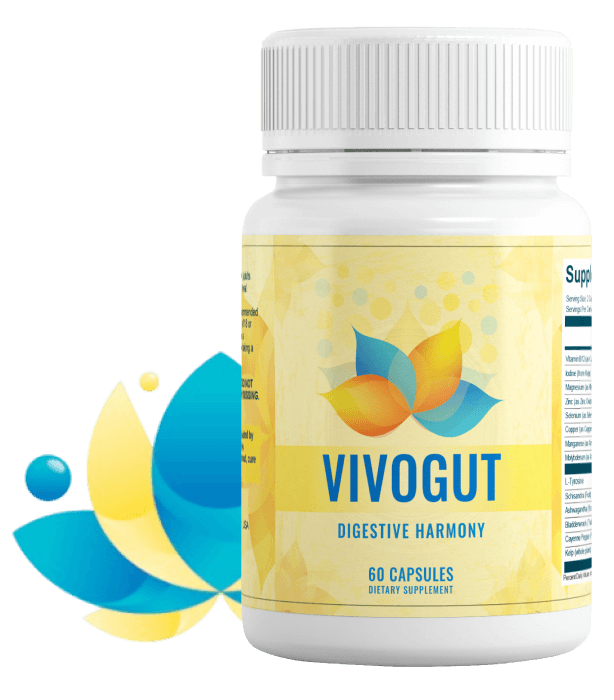
VivoGut is marketed as a 14-ingredient digestive wellness formula with a blend of seaweed-derived ingredients, herbs, nutrients, and minerals. The seller describes it as an all-in-one approach to digestion and gut balance. Those are marketing claims. We have not tested the finished supplement in people and found no independent product-specific clinical trial in the materials reviewed.
The strongest reason to hesitate is not the price. It is the distance between an attractive ingredient list and the information required to evaluate an actual dose. Until you have a complete, legible Supplement Facts panel and understand whether its ingredients are appropriate for you, the sensible verdict is not enough product-specific evidence to recommend a purchase confidently.

VivoGut at a glance
| Question | What we found |
|---|---|
| Product | A dietary supplement sold for general digestive support |
| Seller’s signature claim | A 14-in-1 blend |
| Ingredient examples | Bladderwrack, kelp, ashwagandha, cayenne, L-tyrosine, several vitamins and minerals |
| Two-bottle basic offer | $158 subtotal for two bottles, plus $9.95 shipping ($167.95 tested total) |
| Three bottles | $177, with advertised free U.S. shipping |
| Six bottles | $294, with advertised free U.S. shipping |
| Refund language | 60 days; return of bottles required according to the merchant’s FAQ |
| Modern Men HQ position | Get the label and consider health context before spending money |
Check the Official Product Details
What exactly is VivoGut supposed to do?
The merchant positions VivoGut as a way to promote comfortable digestion, nutrient absorption, and general gut wellbeing. It uses broad phrases, including support for the gut lining, and links those promises to individual ingredients. A description of what a substance does in a laboratory or in certain studies is not proof that the final commercial mixture works as promoted.
The product is not presented as a prescription medicine. More importantly, it has not been demonstrated through the reviewed evidence to treat acid reflux, inflammatory bowel conditions, persistent abdominal pain, or any specific diagnosis. That distinction matters because a man may think “gut health” refers to the problem he has, when the sales page never establishes that the product addresses it.
Begin with the symptom rather than the bottle. Is the concern occasional bloating after a large meal? Is it a recent change in bowel movements? Is there pain, bleeding, unexplained weight loss, or a long-running problem? Those situations are not interchangeable. Severe or persistent symptoms deserve professional assessment, and buying a supplement should not postpone it.

What ingredients does the seller actually name?
The reviewed sales page specifically names bladderwrack, ashwagandha, cayenne pepper, kelp, L-tyrosine, selenium, copper, magnesium, and vitamin B12. It advertises fourteen ingredients in total. We would need a clear, complete label to confirm all ingredients, serving size, individual amounts, and whether anything is included in an undisclosed blend. The merchant’s promotional descriptions are not an adequate substitute for those details.
There are different reasons each listed ingredient might appear in a supplement. Some supply nutrients. Some have a history of herbal use. Others are being marketed for stress or metabolism. Those categories should not be collapsed into a single evidence claim. The more purposes a product seems to serve, the more important it becomes to ask what problem the finished formula is meant to address and whether it has been studied for that purpose.
| Named ingredient | Why it appears in the pitch | What a buyer still needs |
|---|---|---|
| Bladderwrack and kelp | Seaweed-based mineral and iodine sources | Exact iodine exposure per serving and source quality |
| Ashwagandha | Herb often marketed around stress | Dose, preparation and interactions |
| Cayenne pepper | Promoted for digestion and transit | Actual amount and tolerability |
| L-tyrosine | Amino acid connected with body chemistry | Dose and rationale for including it in a gut product |
| Selenium, copper, magnesium, B12 | Essential nutrients | Exact amounts, daily value percentages and whether intake is needed |
The absence of a clearly displayed number for a key ingredient does not prove a formula contains too little. It simply means the reader cannot verify whether the amount resembles those used in relevant studies or whether cumulative exposure creates a safety concern. That is enough reason to withhold a confident recommendation.
Why the iodine question deserves attention
Two of the named ingredients, kelp and bladderwrack, are seaweeds. The NIH Office of Dietary Supplements explains that iodine intake and excess exposure matter. Seaweed can contain iodine, which is essential for thyroid hormone production. The right amount of iodine supports normal health; the wrong amount can be problematic, particularly in men with thyroid conditions or those taking certain medicines.
We cannot estimate the iodine dose from a photograph of kelp or the fact that bladderwrack appears on the sales page. The iodine content of seaweed products can vary, and iodine from multiple ingredients adds up. That makes the complete supplement label a practical safety requirement, not a minor detail for people who enjoy reading fine print.
If you take thyroid medication, have a known thyroid disorder, use multiple supplements, or are under medical treatment, speak to a qualified clinician or pharmacist and provide the exact label. Do not decide based on a sales page calling the ingredients natural. Natural substances can still have meaningful physiological effects.

Does fourteen ingredients mean better digestive support?
Not necessarily. An ingredient count says little about how thoughtfully a formula has been constructed. A well chosen single intervention for a specific issue can be more useful than a long list of ingredients assembled around a general marketing theme. The answer depends on what is in the bottle, how much is present, the quality of the evidence, and the person taking it.
Consider probiotics as a familiar example, even though the reviewed VivoGut sales page does not establish that its main formula is a specifically identified probiotic intervention. Research on a particular strain for a particular condition does not automatically extend to an unrelated product. It certainly does not establish that a mixture of unrelated ingredients will deliver the same result.
There is a similar problem with food nutrients. Vitamin B12, magnesium, copper, and selenium are essential, but an ingredient being essential does not mean extra intake improves digestion in people who already obtain adequate amounts. In some cases, more is not better. Good product evaluation requires a reason for each component, not a competition to have the longest label.
A practical question is whether the company can provide the exact Supplement Facts panel, batch testing information, and evidence specific to the finished product. If the answer remains vague, that uncertainty should affect the buying decision more than the number printed on the bottle.
How much does VivoGut cost?
Verified ClickBank checkout: The seller-linked checkout currently offers a basic two-bottle package at $158 plus $9.95 shipping ($167.95 in our test context), three bottles at $177, or six at $294. We did not find a separately available one-bottle $79 checkout from the actual offer.
The merchant page inspected for this review listed three purchasing options. The price difference is significant enough to warrant a comparison, but the unit discount is only worthwhile if the product is appropriate and you genuinely intend to use it.
| Package | Advertised total | Approximate price per bottle | Shipping statement |
|---|---|---|---|
| 1 bottle | $158 for two bottles ($79 each) | $158 for two bottles ($79 each) | Small shipping fee applies |
| 3 bottles | $177 | $59 | Free U.S. shipping |
| 6 bottles | $294 | $49 | Free U.S. shipping |
The package totals are seller statements at the time of review. Taxes, destinations outside the United States, and any optional purchases could affect checkout. The website also presents four digital ebooks as bonuses. A book with an assigned retail value should not be treated as an independent reduction in the cost of the capsules.
More bottles cost less per unit but require more money up front. There is no financial advantage to buying six bottles of something you have not established you need. If a buyer elects to try a product after professional advice and careful label review, the more conservative order size may leave room to change course without unused stock.
The seller says purchases are one-time payments rather than subscriptions. Confirm this from the payment summary and retain the receipt. The policy shown on a promotional page is not more important than the contract actually presented at checkout.
What does the 60-day refund promise involve?
The official page advertises a 60-day money-back guarantee. Its FAQ also says buyers must ship the product bottles back for a refund to be approved. That makes the return logistics important. You may have to pay for return postage, meet specific timing requirements, and keep the order information needed to identify the transaction.
Save a screenshot or PDF of the written return terms, the seller’s support contact, and the order confirmation. If the policy says the clock begins when goods are received, verify that detail against the current written terms. Promotional phrases such as “no risk” should never erase the time, postage, and administrative effort involved in returning a product.
The presence of a refund policy is not proof of health benefit. It is a consumer-protection detail to examine separately from the evidence supporting the formula.
Check the Current VivoGut Label and Terms
What can you try before buying another gut supplement?
An everyday problem deserves an everyday investigation before it becomes a shopping decision. Many digestive complaints are influenced by meal size, alcohol intake, eating pace, specific foods, sleep, or medications. Changing everything at once makes it difficult to identify what actually matters.
A sound food foundation is easier to judge than a proprietary bottle. Our guides to getting enough fiber and building a high-protein breakfast provide practical starting points, without suggesting any one meal can treat a digestive disease.
Start with a brief, ordinary record. Write down what you ate, roughly when you ate, what happened afterward, and whether the symptom repeats. The purpose is not obsessive tracking. It is to replace a vague sense that your stomach “isn’t right” with observations you can use personally or discuss with a clinician.
Our article on eating more food volume also explains how ordinary food choices can be adjusted for satiety. That is a separate goal from diagnosing or treating digestive symptoms.
If a particular food repeatedly triggers discomfort, you can consider an informed dietary adjustment. If you suspect a food intolerance or a medical condition, do not impose a severe or nutritionally inadequate diet without support. Likewise, if constipation is a concern, discuss appropriate fiber, fluid, and movement habits rather than assuming a multi-ingredient supplement is the most direct response.
Do not treat persistent pain, blood in stool, recurrent vomiting, swallowing difficulty, or unexplained weight loss as product-selection problems. Seek medical care. Those signs deserve attention independent of any supplement’s claims.
A three-stage decision framework
Stage 1: Define the actual complaint. Write a one-sentence description of what you want to improve, how long it has occurred, and whether it affects daily life. A specific concern can be assessed. “Better gut health” is too broad to guide a safe choice.
Stage 2: Establish the correct level of care. New, severe, persistent, or worrying symptoms belong with a healthcare professional. Routine lifestyle habits may be appropriate for mild problems, but you should not diagnose yourself from a product advertisement.
Stage 3: Evaluate any proposed supplement. Read the complete ingredients and amounts, check medication interactions and medical conditions, look for independent product-specific evidence, and calculate the complete order and potential return costs. If any critical answer is missing, there is no deadline forcing you to buy.

Who might consider VivoGut, and who should pass?
A person who simply enjoys evaluating wellness products might be curious about VivoGut’s formula. That curiosity alone is not a reason to spend $158 or more, especially where the complete dose information is hard to verify. We would not position the product as a necessary part of a man’s diet or grooming routine. It has to earn its place through evidence and suitability.
We would advise passing, at least for now, if you cannot obtain a legible label, have thyroid concerns without professional guidance, take medicines that may interact with ingredients, or hope to treat a diagnosed digestive disorder with an over-the-counter supplement. Men who are budgeting tightly should also reconsider whether the money is better spent on ordinary nutrition and appropriate medical care.
The brand’s attraction is convenience: many substances gathered into one bottle. Its weakness is that convenience does not explain safety, appropriate dosing, or results. Without those answers, the balanced choice is to keep your money and ask better questions.
Our verdict
VivoGut’s current offer is easy to understand financially and harder to evaluate scientifically. The seller names several herbs and nutrients and promises broad digestive support, but the material reviewed does not establish that the finished blend performs as advertised. The seaweed ingredients make clear iodine disclosure especially relevant.
As the FDA explains, dietary supplements do not undergo premarket approval for safety and effectiveness. Do not confuse a long ingredient list, a few testimonials, an FDA registered facility, or a money-back guarantee with medical proof. The better decision is to address your real digestive concern, obtain the label, and seek professional advice where appropriate. Buying can remain an option after those steps. It should not be the starting point.
Frequently Asked Questions
Is VivoGut FDA approved?
Dietary supplements are not approved by the FDA for safety and effectiveness before sale. A seller mentioning an FDA registered facility does not change that.
Does VivoGut contain kelp and bladderwrack?
The reviewed official product page lists both. The exact iodine amount per serving must be confirmed from the full current supplement label.
What is the smallest VivoGut package?
The current basic offer contains two bottles at $158, not a single bottle at $79. Its tested checkout total was $167.95 after shipping; confirm your own total before paying.
Is the six-bottle package better value?
Its $49 advertised unit price is lower, but only if the product is appropriate and you plan to use it. Lower cost per bottle does not make uncertain benefits more certain.
Can VivoGut replace evaluation of persistent digestive symptoms?
No. Persistent, severe, or concerning symptoms should be assessed by a qualified health professional rather than managed solely with a supplement.