A good T-shirt should look simple because the fit is doing the work quietly. The shoulder seams should sit close to the actual shoulder edge, the body should follow your frame without gripping it, and the hem should stay useful when you move rather than hanging like a tunic. Judge the fit in motion, not only while standing square to a mirror.
Do not choose a T-shirt by the size tag alone. Put it on, raise both arms, sit down and check the side view in a mirror. If the shoulders pull, the hem climbs well above the waistband or the collar twists, try a different size or cut. The same letter size can fit differently across brands and fabric weights.
| Shoulders | Seam sits close to the edge of your shoulder. |
| Chest | Fabric skims the torso without horizontal pulling. |
| Sleeves | They frame the upper arm without squeezing or flaring wildly. |
| Hem | Long enough to cover the waistband through normal movement. |
| Collar | Lies flat and returns to shape instead of stretching open. |
Start With the Shoulders
The shoulder seam gives you the fastest read on whether a standard T-shirt is fundamentally the right size. On a classic or regular fit, the seam should land near the point where your shoulder turns into your upper arm.
A seam sitting far down the arm can make an ordinary tee look accidentally oversized. A seam pulling inward toward the neck usually tells you the shirt is too small, unless the garment was intentionally cut with a different shoulder construction.

The Chest Should Skim, Not Stretch
Look at the fabric across your chest and upper back. You want room to breathe and move, but the shirt should not create a loose curtain of fabric unless you deliberately bought a relaxed fit.
Horizontal stress lines across the chest, armpits, or stomach are useful warnings. The shirt may technically go on, but that does not mean it fits well.
How Much Room Should the Body Have?
A regular T-shirt should follow your torso with a little air between skin and fabric. It does not need to trace every line of your body, and it should not require you to hold your stomach in for the shirt to look right.
If you prefer a slimmer silhouette, reduce excess fabric without letting the side seams pull forward or the front cling. For a relaxed fit, keep the extra width intentional through the whole garment rather than simply sizing up until the shoulders collapse.

Where Should T-Shirt Sleeves End?
For a versatile regular fit, begin with sleeves that end around the middle of the upper arm and leave enough room to move without cutting into the biceps. Then judge them against the torso: a wide, dropped shoulder design calls for a different sleeve shape from a neat, classic crewneck. Check the sleeves with your arms relaxed and raised, not only while posing.
Wide sleeves can make the upper body look smaller when the rest of the shirt is trim. Very tight sleeves can create the opposite problem by making a basic tee look like gym wear even when the outfit is otherwise casual.
How Long Should a T-Shirt Be?
The hem should cover your waistband and stay there when you reach, sit, and move normally. If the shirt constantly exposes your belt line, it is too short for everyday wear even if it looks fine while standing still.
At the other extreme, a long hem that reaches deep down the fly changes your proportions and can make your legs look shorter. The right length depends on your torso, which is why trying the shirt with your usual trousers matters more than memorizing a measurement.
- Raise both arms overhead.
- Cross your arms in front of your chest.
- Sit down and stand back up.
- Turn sideways and check whether the side seams still hang cleanly.
If the shirt only looks good when you stand perfectly still, the fit is not finished.
What Should the Collar Look Like?
A crew neck collar should sit flat rather than wave, gape, or pull hard against the neck. The ribbing also matters because a stretched collar can make an otherwise good T-shirt look worn before the fabric itself is finished. If it no longer recovers after washing, use our T-shirt replacement checklist to decide whether to keep or retire it.
V-necks and wider necklines have different shapes, but the same principle applies. The opening should look intentional and lie cleanly against the body.

Slim, Regular, and Relaxed Fits Can All Work
There is no moral victory in choosing the slimmest fit available. Slim works when you want a close base layer, regular is the most versatile choice for many men, and relaxed fits can look excellent when the shoulders, sleeve width, and length are balanced intentionally.
The rest of the outfit should agree with the silhouette. A boxy tee with very skinny trousers can feel top heavy, while a very tight tee with loose trousers can look disconnected.
Do Not Use Bad Body Type Rules
You do not need a different set of rigid fashion laws for every body shape. The useful goal is proportion: clean shoulders, enough room through the torso, a sensible length, and a silhouette that works with the trousers and shoes you actually wear.
If you want a broader approach to proportion, see our guide on dressing for your body without following bad body type rules.
How Should a T-Shirt Fit Under Layers?
An optional product example
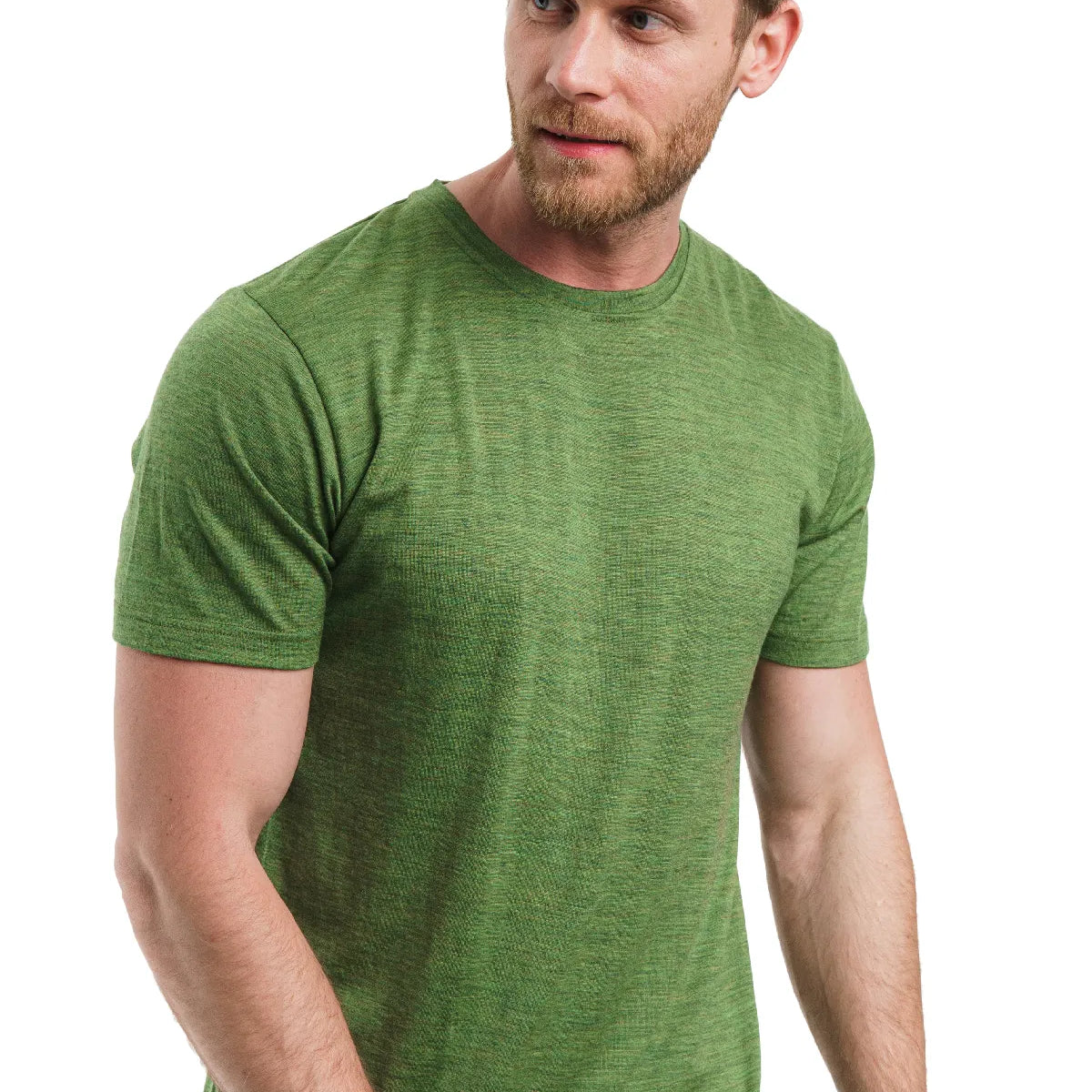
Merino Tech 180 Olive Green T-shirt
An olive merino tee is one example you can evaluate for shoulder fit, sleeve length and how it sits under an overshirt. Judge the cut on your own frame, not the product photograph. The October 14, 2026 feed reference price was $42.99 USD; current stock and pricing should be checked.
A tee worn under an overshirt, knit, or jacket usually benefits from slightly less bulk. Excess fabric at the waist and sleeves can bunch under the outer layer and make the whole outfit feel messier.
That does not mean the base layer needs to be skin tight. It means the fabric should sit smoothly enough that the second layer can fall properly over it. Our guide to layering without looking bulky uses the same principle.

Common T-Shirt Fit Mistakes
- Choosing a size only because that is what you usually buy.
- Accepting tight chest pulling because the waist looks trim.
- Going oversized by sizing up instead of choosing an intentionally relaxed cut.
- Ignoring sleeve width.
- Keeping a shirt that becomes too short every time you move.
- Trying to fix poor shoulders with styling.
The best basic T-shirts are boring in a useful way. They fit cleanly, work with several outfits, and do not demand constant adjustment.
If polos are also part of your rotation, the same proportion checks apply with a few differences around the collar and sleeve. See how a polo shirt should fit for that version.
Frequently Asked Questions
Should a men’s T-shirt be tight or loose?
Neither is automatically right. A versatile regular fit should skim the torso without pulling, while slim and relaxed cuts can also work when the proportions are intentional.
Where should the shoulder seam sit?
On a classic T-shirt, it should sit close to the point where the shoulder turns into the upper arm. Dropped shoulder designs are an intentional exception.
How long should a men’s T-shirt be?
It should cover the waistband through normal movement without extending so far down the fly that the torso looks disproportionately long.
Should T-shirt sleeves hug the arms?
They can sit fairly close, but they should not squeeze. The sleeve opening should frame the arm and stay consistent with the overall silhouette.
Should I size up for an oversized look?
Usually it is better to buy a garment designed with a relaxed or oversized cut. Simply sizing up can create too much shoulder drop and length.
The Bottom Line
Before buying, try three checks in order: does the shoulder construction sit as intended, can you move your arms without stress lines across the chest, and does the hem stay useful when you reach overhead or sit? Inspect the collar for curling and the side seams for twisting after a wash if you already own the shirt. Those practical checks tell you more than the tag.
Once a T-shirt passes the movement and proportion checks, choose slim, regular or relaxed according to how you actually wear it. A tee intended beneath a jacket needs a different silhouette from one worn loose with straight trousers. Neither should pinch, bunch awkwardly or demand constant adjustment.
Affiliate Disclosure: Modern Men HQ may earn a commission from affiliate purchases, at no additional cost to you. See our affiliate disclosure.
Sources reviewed for this article: current menswear fit guidance and Modern Men HQ wardrobe proportion standards.