A man will eventually stand in front of a glass case and have to decide something that sounds simple and is not. Quartz or automatic. The salesman will have an opinion. His father might have a different one. Neither answer is wrong, but most men make the choice based on price alone, without ever understanding what they are actually buying: a different philosophy of time, built into two genuinely different machines.
This is not a debate about which movement is better. It is a decision about what a watch is for, on your wrist, in your life. Get that part right first and the rest becomes easy.
What Is Actually Different Inside the Case?
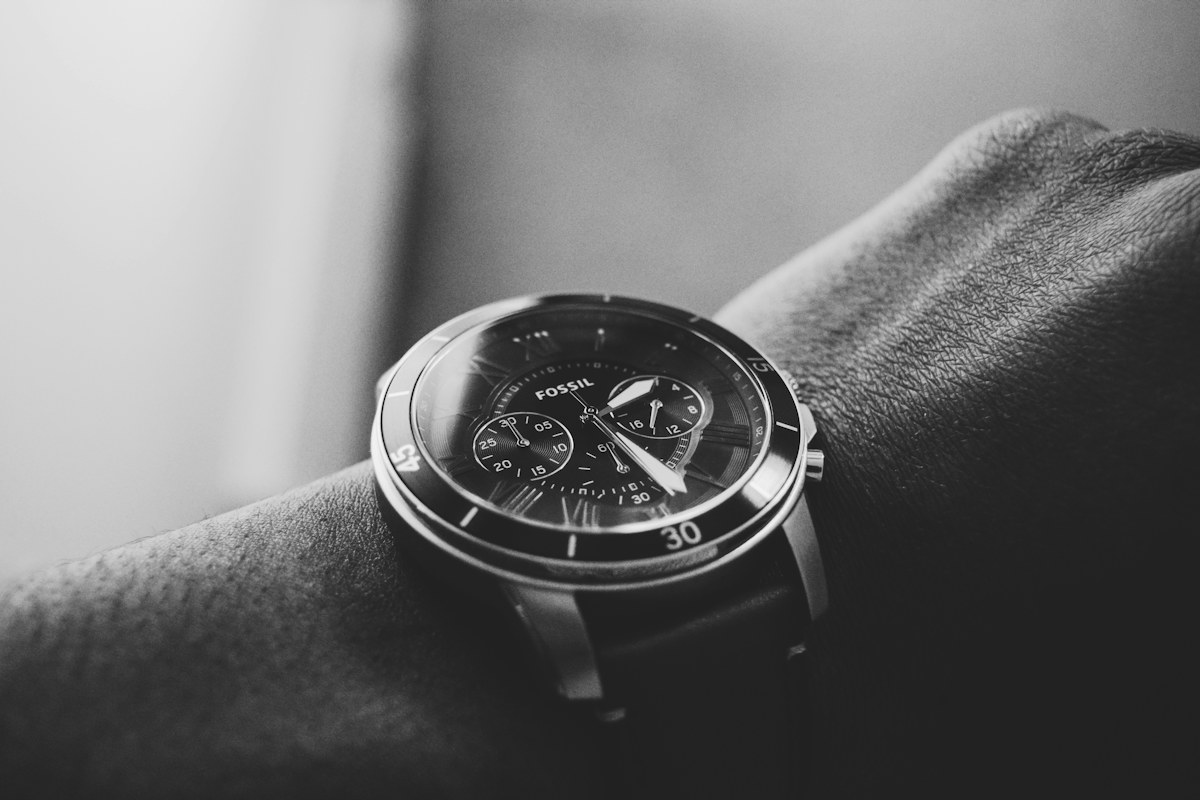
A conventional quartz movement uses electrical power and a small synthetic quartz crystal. Some models use a replaceable battery; others recharge from light or another source. Electric current passes through the crystal and makes it vibrate at a fixed, extremely stable frequency, and a small circuit counts those vibrations to move the hands. There is very little to wear out and almost nothing to adjust.
An automatic movement has no battery at all. A coiled mainspring stores energy, and a weighted rotor inside the case swings with the natural motion of your wrist and winds that spring for you. Dozens of tiny gears, levers, and jeweled bearings translate that stored energy into a steady tick, at a rate that varies by caliber, commonly six or eight beats a second. It is a small mechanical engine that runs entirely on the fact that you move around during the day.
Neither design is a compromise. Quartz was built to solve accuracy. Automatic winding solved the job of winding a mechanical watch as it is worn, while accuracy remains an important design goal, and understanding that changes how you should judge it.
Which One Actually Keeps Better Time?
Here the numbers are not close, and there is no reason to pretend otherwise. A typical mass produced quartz movement, the kind found in the vast majority of affordable watches, is rated by its own manufacturer to hold within about 20 seconds a month. Miyota specifies plus or minus 20 seconds a month for its widely used caliber 2035 under normal conditions.
A mechanical automatic movement is usually rated in seconds a day, rather than seconds a month. The tolerance depends on the caliber, its regulation and the finished watch. Check the manufacturer’s specification for the exact model instead of assuming every Swiss or automatic movement meets the same standard. Laboratory ratings and the rate you observe on your wrist are not necessarily identical.
Chronometer certification provides a defined test standard. The Swiss Federal Institute of Metrology explains that the ISO 3159 chronometer criterion includes an average daily rate within minus 4 to plus 6 seconds. A separate Master Chronometer certification uses different finished-watch requirements. Read the actual certification and model specification rather than treating every use of the word chronometer as the same promise in daily wear.
Even a certified chronometer can drift several seconds over the course of a week. An inexpensive quartz watch from a drugstore counter will often beat it without trying. If timekeeping accuracy is genuinely the priority, quartz wins this argument outright, and no amount of romantic language about craftsmanship changes the physics.
Why Men Still Pay More for the Less Accurate Option
So why does a certified automatic chronometer often cost ten or twenty times what a more accurate quartz watch costs? Because accuracy was never the only thing being sold.
An automatic movement is a small piece of applied engineering that runs without a battery, for years, on nothing but the motion of a man’s arm. Watching the rotor spin through a display case back, feeling the faint mechanical hum through the crown, understanding how the movement stores and releases energy, that experience is the actual product for a lot of buyers. It is closer to owning a small machine than owning an appliance.
There is also a durability argument that runs in automatic’s favor over a long enough timeline, if the watch is properly maintained. A well built mechanical movement, serviced on schedule, can genuinely be passed down. Omega recommends a complete service every 5 to 8 years, with frequency depending on use and environment. Follow the maker’s separate guidance on water-resistance checks as well. That is a real ongoing commitment, both in cost and attention, not a one time purchase decision.
What Ownership Actually Costs Over Time
A quartz watch usually asks for less movement maintenance. Battery life varies: Miyota lists three years for the 2035, while other movements use different batteries or charging systems. A battery replacement may also require seals and water-resistance testing. Cases, crowns and gaskets still need care, and a drained battery should not be left inside indefinitely. For an inexpensive quartz watch, replacement of a failed movement may cost less than a detailed repair.
An automatic watch asks for real participation. Wear it regularly and the rotor keeps it wound on its own. Leave it unworn until its power reserve runs out and it will stop. The reserve varies by model. You will then need to wind it and reset the time and date according to its instructions. A watch winder is optional, not a requirement for owning several automatics. Then there is servicing. At the interval recommended for your particular model, a mechanical movement needs to be opened, cleaned, lubricated, and regulated by a trained watchmaker. Skip that maintenance for long enough and wear on the gear train and mainspring barrel eventually shows up as declining accuracy or a full stoppage.
Neither cost structure is wrong. One generally costs less to maintain, though batteries, seals and repairs are not free. The other asks for periodic investment in exchange for something that, cared for properly, can outlast the man who bought it.
Does Durability Actually Favor One Design?
In terms of raw shock resistance, quartz has the practical edge. Fewer moving parts means fewer things that can be knocked out of position by an impact, which is part of why quartz movements dominate field watches, dive computers, and tools built for genuinely rough use. Impact resistance still depends on the complete watch. A quartz label is not a guarantee that its crystal, case or movement can survive a hard drop.
That said, a well built automatic movement is not fragile in ordinary use. Manufacturers shock test their calibers, and many automatics are designed for daily wear. Use the model’s instructions for sport, shock exposure and water resistance. The real vulnerability is neglect and mishandling, a hard knock against a doorframe, or years of sitting unused and unserviced, not the basic act of wearing it.
Which Man Actually Needs Which Watch?
A quartz watch makes sense as a primary daily piece for a man who values precision, low maintenance, and a lower upfront cost, and who is not particularly interested in the mechanics of what is on his wrist. It is also the more sensible choice for a rugged, active, or purely functional watch, provided the model has the water resistance and impact protection those activities need.
An automatic watch makes sense for a man who wants to actually feel connected to what he owns, who is willing to accept a small, known amount of drift in exchange for genuine mechanical craftsmanship, and who is prepared to service the watch on a real schedule rather than treating it as disposable. It also makes more sense as the centerpiece of a small collection, or as the watch a man intends to eventually hand down, since a well maintained automatic movement can last decades when parts and service remain available. Well cared for quartz watches can also last for decades.
Plenty of men reasonably own both. A quartz field watch for travel, work, and rough days, and an automatic dress watch for the moments where the story behind the object actually matters. That is not indecision. That is understanding that a watch answers two different questions, what time is it, and what does the object on my wrist actually say, and refusing to force one movement to answer both.
A Simple Way to Decide
An illustrative watch option
Tornado CELESTIA CLASSIC Analog Blue Silver
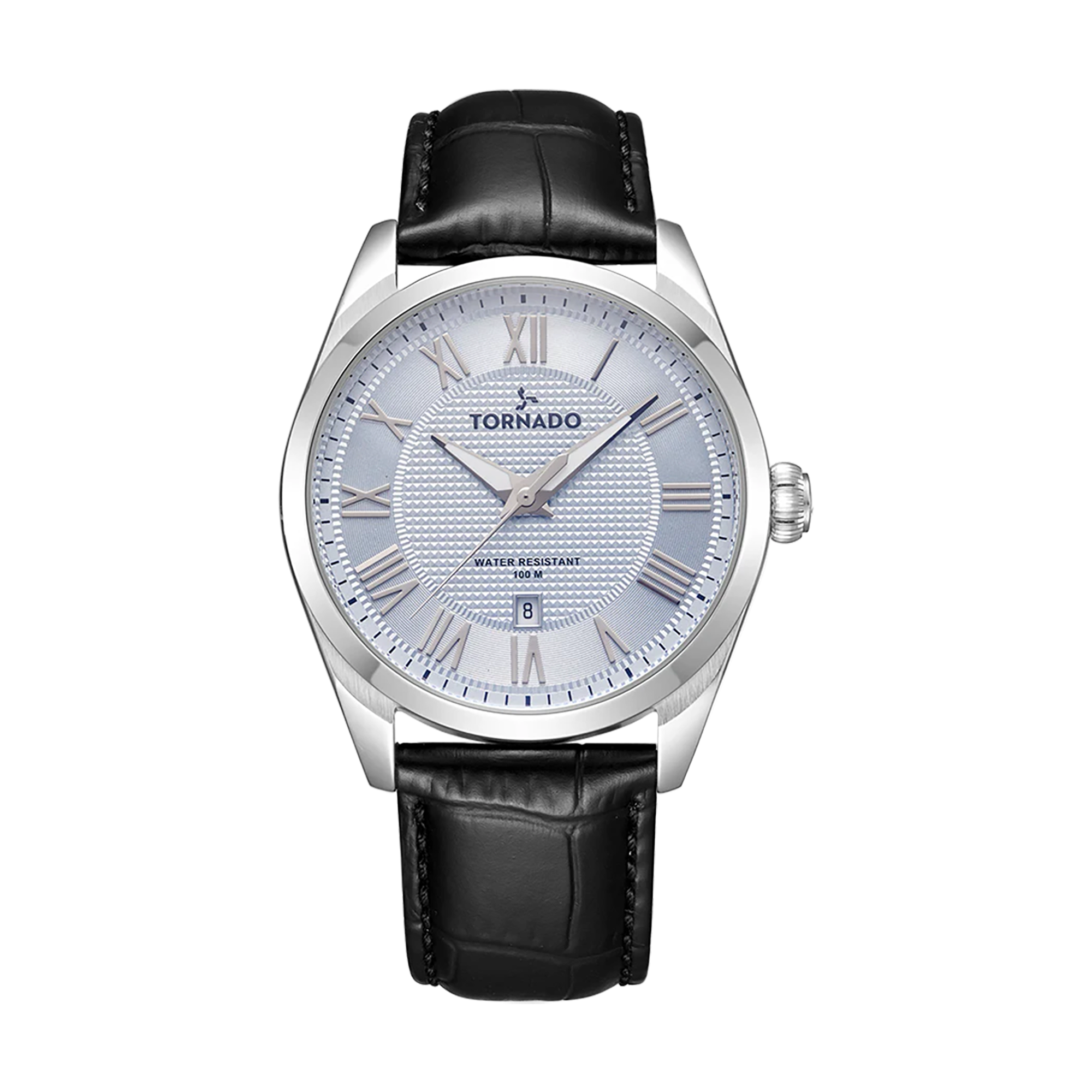
An example of a straightforward battery-powered choice: the 42 mm CELESTIA uses a Miyota 2115 quartz movement and a black leather strap. Its quartz mechanism supports the article’s point about simple timekeeping, but it is not evidence that every quartz watch has the same quality or performance. The US merchant page lists $126; price and availability may change.
Ask yourself honestly what you actually want from the watch. If the answer is reliable, accurate, low maintenance timekeeping, buy quartz and stop overthinking it. If the answer includes wanting to own something mechanical, something with a visible reason behind its price, and you are genuinely willing to have it serviced every several years according to that model’s own service guidance, an automatic earns its place.
What does not make sense is buying an automatic purely for status and then resenting the maintenance, or buying quartz and feeling like you settled for something lesser. Neither movement is lesser. They were built to solve different problems, and the man who actually understands that difference is the one who ends up satisfied with what is on his wrist five years later.
This decision connects directly to the broader question of building a watch collection with intention rather than buying on impulse, something covered in more depth in how to buy a watch you will actually wear for life. The same discipline that separates a considered wardrobe from a closet full of one time purchases, covered in Chelsea boots versus Oxford shoes, applies just as directly here. A watch, like a pair of shoes, should be chosen for what it actually needs to do, not for what it looks like it should do.
The same standard applies well beyond the watch case. Building real discipline into how you make decisions is covered in building mental discipline, and applying that same intentional approach to how you build wealth over time is covered in building wealth as a modern man. Both pieces make the same underlying point this one does. A good decision is rarely about finding the objectively superior option. It is about knowing exactly what you are optimizing for before you spend a dollar.
At Modern Men HQ, we do not chase the idea that one watch movement is inherently better than the other. We care about a man knowing precisely why he chose what is on his wrist, and being satisfied with that choice years after the purchase is forgotten.
Affiliate Disclosure: This article contains affiliate links. Modern Men HQ may earn a commission if you purchase through them, at no additional cost to you. Read our full Affiliate Disclosure.