A useful wardrobe color palette makes getting dressed easier because most of your clothes already work together.
You do not need to discover a perfect seasonal color identity before buying a shirt.
Start with a small group of neutral colors. Add a few accents you actually enjoy. Keep enough repetition that trousers, shoes, jackets, and shirts can move between outfits. This is one of the core systems behind our modern man’s wardrobe guide.
How do you build a men’s wardrobe color palette?
Choose two or three core neutrals.
Add one light neutral.
Then add two or three accent colors that work with those neutrals.
Use that palette as a filter when you buy new clothes.
What are the easiest neutral colors for men?
Navy, gray, charcoal, brown, olive, black, white, cream, and tan all behave like useful neutrals.
You do not need all of them.
Pick the ones that already dominate your favorite clothes.
Why should neutrals come first?
They create the most combinations.
A navy jacket can work with gray, cream, tan, olive, white, denim, and many accent colors.
A bright orange jacket demands more thought every time you wear it.
That does not make bright color bad. It means the foundation should do more work.

Is navy better than black?
Neither is universally better.
Navy works easily with brown shoes, denim, gray, white, cream, and olive.
Black creates stronger contrast and works well in minimal wardrobes.
Use the one that connects to more of your actual clothes.
How many core colors should you have?
Three to five is enough for a strong foundation.
For example: navy, gray, white, brown, and olive.
Those colors can create many outfits before you add anything brighter.
What is an accent color?
An accent color adds interest without carrying the whole wardrobe.
Burgundy, forest green, rust, light blue, dusty blue, mustard, or muted red can all work depending on your taste.
The accent should still connect to your neutrals.
How many accent colors do you need?
One or two is enough to start.
Too many accents can turn every outfit into a coordination problem.
Repeat the same accent in several categories, such as knitwear, shirts, socks, or casual jackets.
Should every shirt match every pair of trousers?
No.
The goal is high compatibility, not mathematical perfection.
If most tops work with most trousers, the wardrobe becomes easier.
How do you know if a new color belongs?
Think of three outfits using clothes you already own.
If the item only works with one special combination, it may become closet clutter.
If it works with three trousers and two jackets immediately, it is much easier to justify.
Should skin tone decide your wardrobe?
It can influence which shades feel most flattering, but it should not become a rigid rule system.
Hold the color near your face in natural light.
If you like how it looks and it works with your wardrobe, that evidence matters more than an online chart telling you the color is forbidden.
What colors are easiest near the face?
White, cream, light blue, navy, gray, olive, and many muted colors work well for a wide range of men.
Very bright colors create more contrast and draw more attention.
Use brightness deliberately rather than assuming bright means stylish.
How do you use black without making everything black?
Use black as an anchor.
Black trousers can work with gray, cream, white, olive, navy, and muted colors.
Black outerwear can connect with nearly any neutral wardrobe.
Texture becomes especially important in dark outfits because it keeps similar colors from looking flat.
How do you use navy?
Navy can replace black in many wardrobes while feeling softer.
Use it in jackets, trousers, knitwear, outerwear, and shirts.
It connects easily with brown leather and most classic menswear colors.
How do you use brown?
Brown adds warmth.
Use it in shoes, belts, suede, knitwear, jackets, or trousers.
It works naturally with navy, cream, olive, gray, denim, and many earthy colors.
How do you use olive?
A practical style example
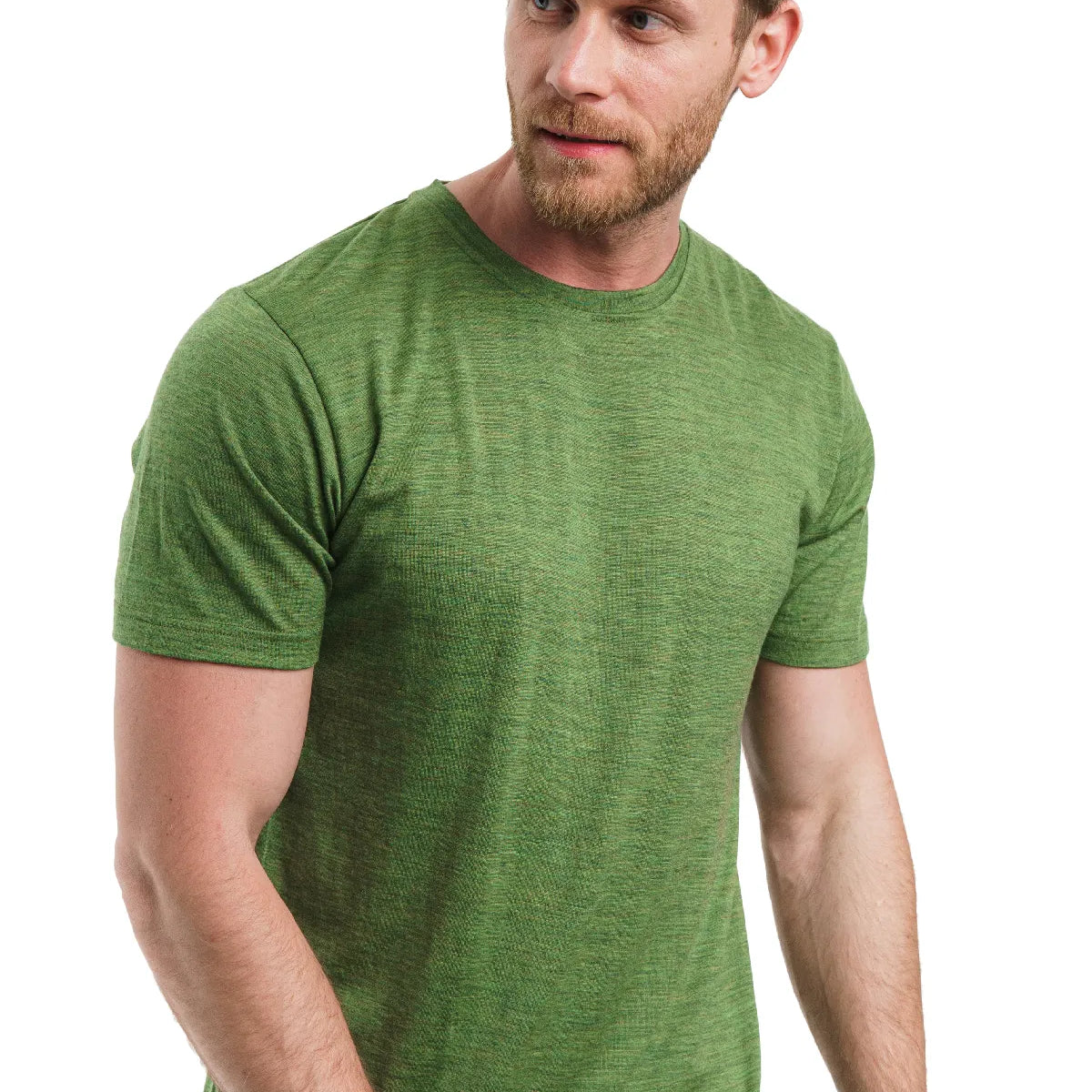
Merino Tech Men’s Merino T-shirt 180 Olive Green
An olive shirt can be a restrained accent alongside navy, charcoal and tan. This merino tee is one example, not a requirement: consider fit, wool comfort and the clothes you actually own. The merchant’s listed price is $42.99 USD; price and availability may change.
Treat it like a neutral.
Olive chinos or jackets can work with white, cream, navy, gray, brown, black, denim, and light blue.
It adds color without behaving like a loud accent.
How do you use white?
White creates clean contrast.
A white T shirt or dress shirt can connect darker trousers and jackets.
Off white and cream create a softer version of the same role.
How do you use gray?
Gray sits easily between warm and cool colors.
Charcoal works well in formal clothing. Medium gray is flexible in trousers and knitwear. Light gray works well in casual tops.
Should your shoes be part of the palette?
Yes.
If your wardrobe uses mostly brown leather, choose trousers and belts that support it.
If you wear mostly black shoes, make sure the rest of the palette has enough black, gray, navy, or other compatible colors.
What about sneakers?
White, off white, black, gray, and simple brown sneakers are easy to integrate.
Bright sneakers can become the accent, but that makes the rest of the outfit more demanding.
How do patterns fit a color palette?
Use patterns that repeat colors you already wear.
A navy and white stripe is easy in a navy based wardrobe.
A loud multicolor pattern may need special trousers and shoes every time.
Can you mix navy and black?
Yes.
The old rule that they cannot work together is too rigid.
Make the difference clear enough that the combination looks deliberate.
Can you mix gray and brown?
Yes.
Gray trousers with brown shoes are a classic example.
Brown adds warmth to gray.
Can you mix brown and black?
Yes, but use enough separation that the combination looks intentional.
A brown suede jacket with black jeans can work because texture and color are clearly different.
A nearly black brown belt with black trousers may simply look mismatched.
How do seasons change color?
They can shift the shades and fabrics.
Summer often makes lighter neutrals and washed colors feel natural. Winter can handle deeper navy, charcoal, forest green, burgundy, and brown.
You do not need a completely different palette every season.
How does climate affect palette?
Warm climates often make white, cream, stone, light blue, olive, and lighter brown easier to wear year round.
Cold climates create more opportunity for deep colors, heavy wool, dark boots, and layered texture.
Build around where you actually live.
What colors should a capsule wardrobe use?
Colors with high compatibility.
Our capsule wardrobe guide works best when the pieces share a common palette.
How do you stop buying random colors?
Keep a note on your phone with your core colors.
Before buying, ask what existing trousers, shoes, and layers the item works with.
If the answer is vague, leave it.
Does a color palette make style boring?
No.
It gives you a stable base so texture, fit, shape, and accents can matter more.
A wardrobe with thirty unrelated colors can actually create fewer usable outfits.
How do you add personality?
Use one or two colors you genuinely like.
Repeat them in knitwear, shirts, socks, scarves, or casual jackets.
Repetition makes an accent look intentional.
How do you use texture instead of more color?
Combine smooth cotton, denim, suede, wool, knitwear, leather, and linen within the same color family.
A navy knit and navy cotton jacket can feel different even though the color is similar.
This is one reason a restrained palette does not need to feel dull.
How should work clothing affect the palette?
If your office uses navy, gray, white, and light blue, build around those colors first.
Then let casual pieces share enough of the same palette that jackets, shoes, and trousers can cross over.
How should weekend clothing affect the palette?
If you mostly wear jeans, sneakers, tees, and casual jackets, a warmer relaxed palette may make more sense than a formal gray and black system.
The wardrobe should match the life.
A sample neutral palette
Navy, charcoal, white, cream, and dark brown.
Add olive and burgundy as accents.
That palette can cover work, casual wear, dates, and travel.
A sample lighter palette
Navy, stone, cream, light blue, and medium brown.
Add muted green and rust.
This works especially well in warm climates.
A sample dark palette
Black, charcoal, navy, gray, and white.
Add dark green or burgundy.
Keep fabric texture varied so the outfit does not feel flat.
A sample earth tone palette
Olive, brown, cream, navy, tan, and denim blue.
Add rust or muted burgundy.
This works well with suede, leather, knitwear, and casual outerwear.
What should you do when you already own random colors?
Do not replace the whole closet.
Identify the colors you wear most and begin buying toward a tighter system.
As older pieces wear out, replace them with colors that connect better.
How do you use color when buying online?
Be cautious because screens can distort shade.
Check customer photos where available and compare the item with colors you already own.
Return it if the real shade does not serve the palette.
The color rule that matters most
Every new color should have friends in the closet.
If it works with several pieces you own, it earns its place.
If it needs a new pair of shoes, new trousers, and a new jacket before it makes sense, it is not a color purchase. It is a new wardrobe project.
Affiliate Disclosure: This article contains affiliate links. Modern Men HQ may earn a commission if you purchase through them, at no additional cost to you. Read our full Affiliate Disclosure.