Most men own more clothes than they actually wear. Before setting a capsule wardrobe target, count the outfits you rely on during an ordinary week and build around those repeated needs. Open any closet built up over a decade of impulse buys, gifts, and things that fit once, and you will find the same pattern: a small rotation of items doing all the real work while everything else just takes up space and adds friction to a decision that should take ten seconds. A capsule wardrobe is not a trend or a minimalist aesthetic. It is a system for making sure every piece you own actually earns its place.

What actually counts as a men’s capsule wardrobe?
A capsule wardrobe is a deliberately limited set of clothing where most pieces work with several others. The point is not to hit a historically correct item count or copy somebody else’s list. It is to remove dead weight, build around a consistent palette, and make the clothes you keep easier to combine.
That makes a capsule wardrobe less of a fashion identity and more of a decision rule: if an item only works in one narrow outfit, it has to justify the space it takes. If it works across several realistic situations, it earns its place.
When Two Versions of the Same Basic Are Too Many
A capsule wardrobe becomes less useful when it fills up with minor variations that all solve the same problem. Two nearly identical grey tees, three similar thermal shirts and multiple pairs of the same casual trousers can leave you with more clothes but no extra outfit options. The useful question is whether each piece opens up a distinct combination or replaces something worn out.
Before purchasing another basic, put it next to the closest piece you already own. Compare its fit, the situations where you would wear it, how it behaves with your shoes and jacket, and whether the older piece still works. A different shade or fabric-weight number is not enough by itself to justify keeping both.
Set a practical replacement rule. Add a new item when an existing one fails the fit, comfort or maintenance test, or when your routine genuinely changes. Keep clean duplicates when laundry frequency demands them, but avoid collecting colorways as though they were separate essentials.
How Many Pieces Does a Man Actually Need?
The most widely used modern framework for this is Project 333, created by Courtney Carver, which asks participants to live with 33 items of clothing, including accessories, outerwear, and shoes, for three months at a time. Underwear, sleepwear, in home lounge wear, and workout clothing do not count toward the total, and neither does a wedding ring or another sentimental piece of jewelry someone wears every day. The number itself is not sacred. What matters is the constraint. Carver built the challenge after realizing she owned far more clothing than she ever actually reached for, and that the excess was creating decision friction rather than solving it.
For a man building his own version, 33 items is a reasonable target once you count trousers, shirts, sweaters, outerwear, and shoes as separate categories, though the exact number matters less than the discipline of counting at all. Most men have never actually counted how many pieces are hanging in their closet, let alone how many of them get worn in a given month. That first count is often the most useful part of the whole exercise.
Let Your Real Weekly Schedule Set the Capsule Size
A capsule wardrobe should fit the life you actually lead. Five identical office outfits may be efficient for a man who wears the same dress code each weekday, but less useful for somebody who splits time between physical work, travel and casual days. Write down the situations that genuinely occur over two ordinary weeks before counting shirts or trousers.

Laundry frequency matters too. If you can wash clothing twice a week, you may need fewer everyday pieces than someone who travels for several days without laundry access. Build in enough clean changes for your work and activities without expecting the same garment to replace basic hygiene. Use the numbers as a practical estimate, not an arbitrary wardrobe rule.
Test the system before shopping. Choose a small set of outfits from what you own and use them for a week. Note which garments were missing, which were uncomfortable and which never left the hanger. That tells you where a purchase would solve a real gap instead of adding another neutral shirt that looks similar to the last one.
Why does a smaller wardrobe make mornings easier?
Because the combinations are decided before you are standing in front of the closet.
If the trousers already work with most of the shirts, the shoes already work with most of the trousers, and the outerwear fits the same palette, getting dressed becomes a short selection instead of a styling problem. You still have choice. You simply remove the bad combinations and the pieces that require special handling.
That is the practical value of a capsule wardrobe. It turns compatibility into the default rather than something you have to solve again every morning.
Building the System: The Core Categories Every Man Needs
Optional example for this situation
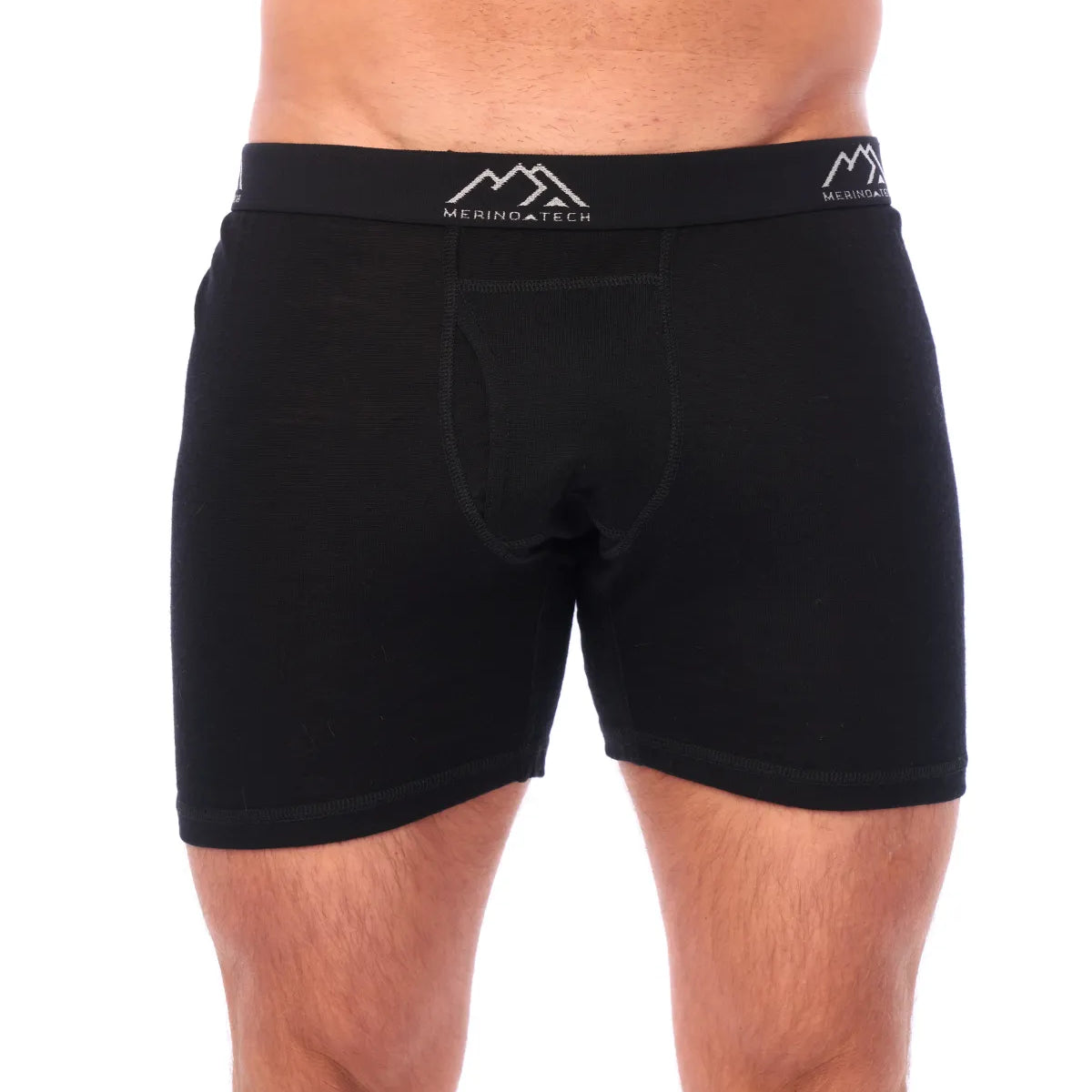
Merino Tech Black Merino Boxers 190 — 2 Pack
Merchant listed $53.99 USD on October 19, 2026. Check size, current price and stock.
Underwear is part of keeping a small wardrobe functional, although it does not need to count toward your visible outfit rotation. This black two-pack is one option if you prefer wool next to the skin. Prioritize comfortable seams, waistband fit, washing instructions and the retailer’s final-sale terms before paying more for a fabric.

A versatile everyday option
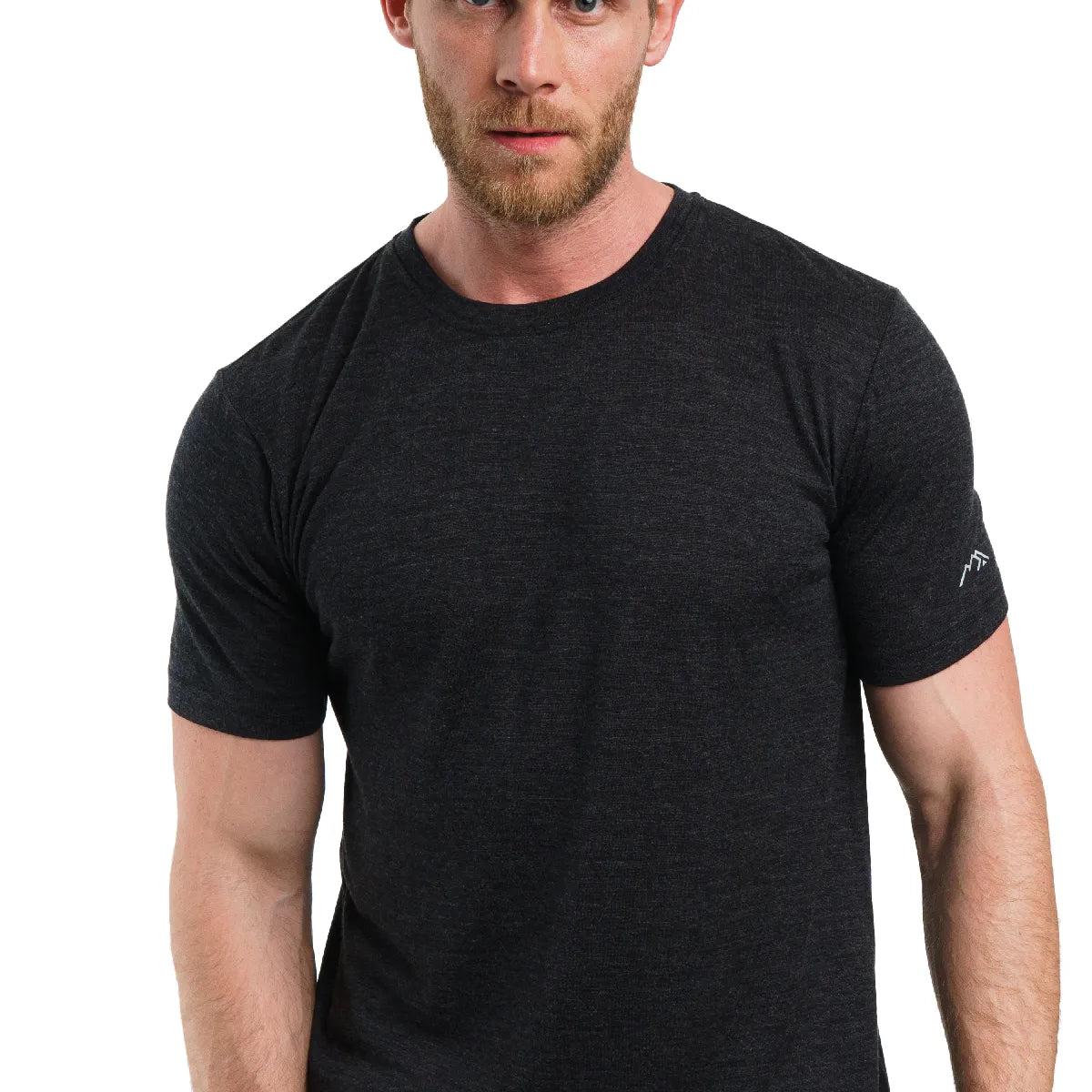
Merino Tech Men’s Merino T-shirt 180 Charcoal
A charcoal short-sleeve shirt can be a useful capsule staple when it works with several trousers and layers. This is one optional example, not a requirement to buy merino. The Awin feed listed it at $42.99 USD on October 14, 2026; check current size, price and material care before choosing.
A working capsule is not just fewer clothes. It is clothes chosen so that almost any top works with almost any bottom, which is the actual engine behind Donna Karan’s Seven Easy Pieces concept. Six categories cover nearly everything a man needs across a normal week:
Trousers form the base of the system, and two or three pairs in neutral tones, one darker and one lighter, will pair with nearly everything else in the closet. Shirts and knitwear are where most of the variety should live, since a rotation of solid colors and one or two subtle patterns gives the most combinations for the least closet space. Outerwear should match your climate and your real week, not a trip you took once. Shoes deserve the same discipline. If you are choosing between dressier options, our comparison of Chelsea boots and Oxford shoes shows how differently one pair can serve a wardrobe. Layering pieces, such as a sweater, overshirt, or blazer, extend the range of the core clothing without adding much bulk. Finally, accessories should finish the system rather than create a second one.
If you are building from scratch, start with the broader modern man’s wardrobe system first. A capsule is one way to make that system smaller and more deliberate.
Four Capsule Wardrobes for Different Lives

The combinations below are illustrative starting points, not shopping requirements. Begin with clothes you own; adjust the examples for your climate, dress code, body, and laundry habits.
| Your typical week | Practical core | Useful adjustment |
|---|---|---|
| Mostly office wear | Several compatible dress shirts, two or three suitable trousers, one jacket and shoes that work with both. | Check dress shirt fit before buying multiples; build shirt rotation around laundry frequency. |
| Remote and casual work | Jeans or chinos, plain tees, one Oxford or polo, knitwear and versatile everyday footwear. | Keep one clean smarter outfit ready rather than purchasing an entire formal capsule. |
| Warm-weather everyday use | Breathable tops, light trousers or shorts where appropriate, easy-care shirts and comfortable shoes. | Prioritize fabric, airflow, laundering and the places you actually visit. If shorts fit your week, see how to choose the right shorts length. |
| Mixed casual and formal calendar | Neutral separates that cross between work and weekends, plus a dedicated outfit for more formal occasions. | Decide which pieces truly cross over instead of making one shirt perform every role. |
When a capsule stops working, identify the missing situation before shopping. A smaller closet should make decisions easier, not make you uncomfortable or underdressed.
Check Fabric, Care and Repetition Before Buying a Replacement
A capsule wardrobe is often described as a set of colors, but similar-looking shirts can behave differently. Compare how each one sits beneath a jacket, whether the collar holds its shape and whether its care instructions fit your routine. A shirt that requires special attention every wash may be less convenient than one you already wear comfortably.
When replacing a worn garment, ask what actually failed. If it no longer fits, buying the same size from another maker without trying it may repeat the problem. If the fabric wore out quickly, inspect construction and care rather than only choosing a higher price. If you never wore the color, do not replace it simply to keep the capsule’s original count.
One carefully selected replacement can improve several outfits at once. The goal is not to collect enough pieces to fill a formula, but to maintain clothes that work together and earn their space through regular use.
What to Actually Put in the Box First
The process works better as a sequence than as a single overwhelming decision. Start by pulling every piece of clothing you own into one place, which sounds obvious but almost nobody actually does it, and the resulting pile is usually the first honest look most men have taken at their own closet in years. Separate everything into three groups: pieces you reach for constantly, pieces you have not touched in the last season, and everything in between that you are unsure about.
From there, choose a neutral base palette, navy, charcoal, and a warm neutral like tan or olive work for most skin tones and most climates, and commit to it rather than continuing to buy one off colors that only work with a single other item. Box up everything outside the capsule and put it out of sight rather than donating it immediately. A closet you cannot see into is a closet that gets used, and putting the excess out of reach for a defined stretch, three months is the standard Project 333 window, tells you honestly whether you actually missed anything. If a boxed item never crosses your mind during that window, that is your answer about whether it belonged in the rotation at all.
Does a Smaller Wardrobe Actually Save Money and Reduce Waste?
There is also a waste argument for buying more deliberately, but the numbers need context. The EPA’s published national textile figures currently rely on 2018 data: about 17 million tons of textiles entered the municipal solid waste stream, 14.7 percent was recycled, and about 11.3 million tons was landfilled. That does not tell you what any one man should own. It does show the scale of a system where clothing is often treated as disposable.
The personal case is simpler. If you buy fewer pieces, choose them more carefully, and wear them longer, you reduce replacement pressure and give each purchase more chances to earn back its cost.
How Do You Know When It Is Working?
The real test is not how the closet looks on day one. It is whether, three months in, you can point to specific mornings where getting dressed took less thought and the result still looked right. Track what you actually reach for during that window, not what you intended to reach for when you built the capsule. Some pieces will earn a permanent spot. Others will reveal themselves as a good idea on paper that never quite worked in practice, and that is useful information, not a failure. The goal was never to own the fewest possible items. It was to stop paying a daily tax for clothes that were never doing any real work in the first place.
A practical capsule needs more than compatible colors. Fit and upkeep determine whether the pieces will actually be worn. If shirts are part of your core rotation, use our guide to how many dress shirts a man needs to match purchases to workdays and laundry. The broader wardrobe should still cover the situations you actually face without forcing every piece to do every job.
At Modern Men HQ, we think a closet should work as hard as you do. Fewer pieces, chosen with intention and worn until they earn their retirement, will always beat a closet full of things you meant to wear someday.
Affiliate Disclosure: This article contains affiliate links. Modern Men HQ may earn a commission if you purchase through them, at no additional cost to you. Read our full Affiliate Disclosure.