How long should a tie be? For a standard necktie, aim to have the tip of the wide blade finish around your belt buckle or trouser waistband when you stand naturally. It should not stop several inches above your trousers or hang well below them. That simple visual check matters more than memorizing the length of a tie while it is still lying on a table.
Your height, torso length, trouser rise, knot, and the tie itself all affect where the tip lands. The aim is to bring those elements into proportion rather than force every man into the same measurement. The Tie Bar’s fit guidance uses the top of the belt buckle or waistband as its reference point. A tip around that area, including a modest overlap with the buckle, is a useful everyday standard.
Where exactly should the tip of your tie end?
With your shirt tucked in and your trousers at the height where you actually wear them, look at the lower point of the wide blade. Ideally it should meet the belt buckle or waistband. If you use a belt, the upper part of the buckle gives you an easy visual target; a slight overlap is generally less distracting than a large gap.
Do not pull your trousers upward or stretch your posture to make the tie appear correct. Stand as you would during a normal conversation. A tie can look perfect in a carefully posed mirror photograph and still sit awkwardly the moment you relax. The fit should work when you are standing naturally.
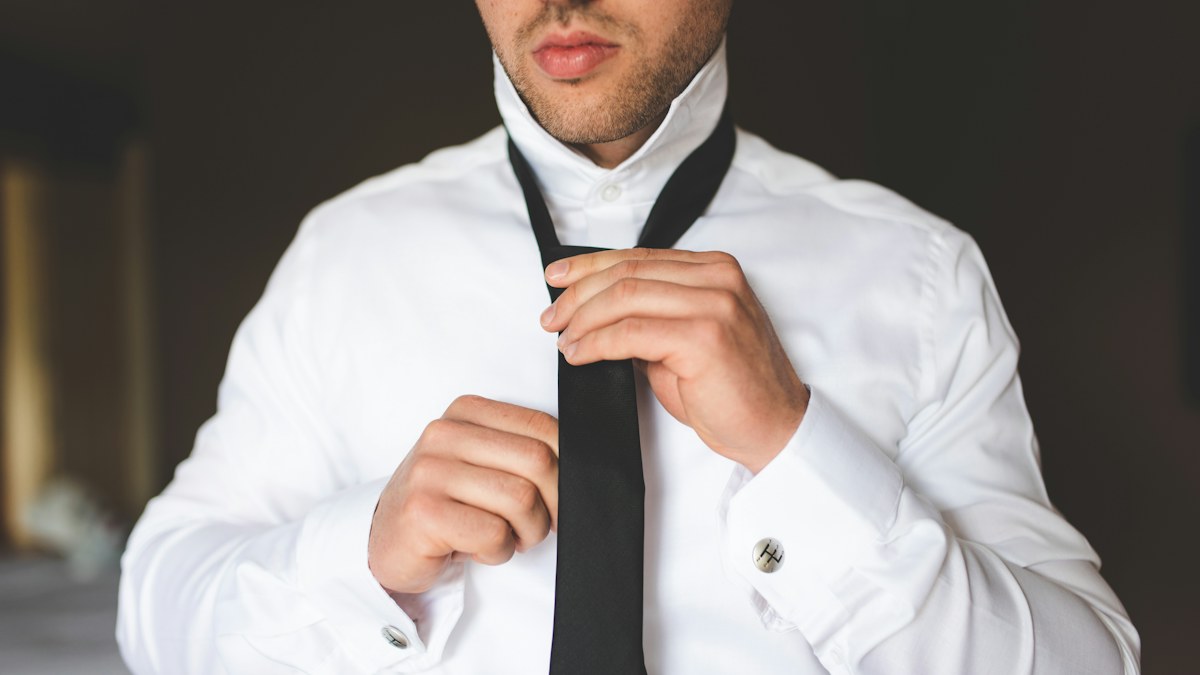
Why tie length matters more than tie measurements
A tie’s listed length tells you how much fabric you have before tying it, not how much will remain visible afterward. Two men using the same tie can end up with very different results because the cloth travels over different torso lengths and through different knots.
Think about proportion rather than trying to win a measurement exercise. A tie that ends near the waistband connects the shirt, jacket, and trousers into one coherent line. If it ends high on the stomach, that line stops abruptly. If it extends far below the belt, the extra fabric draws attention away from the outfit.
Why trouser rise changes the result
Higher rise trousers sit closer to the natural waist, bringing the waistband nearer to the tie knot. Low rise trousers place the waistband farther down the body, so the same tie and knot may appear noticeably shorter relative to the trousers.
Set the trousers in their intended position before adjusting the tie. If you change between tailored trousers and lower rise casual pants, you may need a different starting position when tying the same necktie. Our guide to trouser length and break covers another important proportion that changes how the entire outfit sits.
How do you fix a tie that is too short?
Untie it and start with more fabric on the wide blade. When the tie hangs around your neck before you form the knot, let the wide end sit lower than it did on the previous attempt. Tie it again, tighten the knot, and check where the tip lands. Small adjustments at the beginning are easier than pulling at a finished knot.
If you have to move nearly all the fabric to the wide end and the narrow blade becomes unusably short, consider a knot that uses less material. A slim four in hand can give you more visible length than a full Windsor. If even that does not work, the tie may simply be too short for your proportions.
How do you fix a tie that is too long?
Begin again with the wide blade hanging a little higher before you make the knot. This leaves less fabric in front after you tighten it. Check the result with the collar buttoned and the knot seated comfortably under the collar.
A larger knot can use more fabric, but do not choose one solely to hide excess length if it looks oversized against your face or collar. The goal is a balanced knot and a balanced tip. If a standard tie is consistently too long, a shorter length may fit you better than a collection of complicated knot adjustments.
Does your tie knot affect the finished length?
Yes. Every additional wrap uses fabric that would otherwise remain in the visible blades. A four in hand knot is compact and uses comparatively little length. A half Windsor is fuller. A full Windsor is more substantial and can leave a shorter finished blade when all other factors are equal.
This is not a hierarchy of quality. Choose a knot that works with your collar, tie fabric, and the occasion. A thick wool tie can form a large knot without elaborate wrapping, while a thin silk tie may need a different approach. The Tie Bar’s adjustment guide makes the same practical distinction between knots that use less or more material.

When does the four in hand make the most sense?
The four in hand is a practical everyday choice when you want a tidy knot without consuming much of the tie. Its slightly asymmetrical shape works with many classic shirt collars and feels less severe than a perfectly symmetrical knot.
It is especially useful for men who have difficulty getting enough length from a standard tie. You still need to adjust the starting position, but the compact knot gives you more room to work. A good knot should sit firmly at the collar without being pulled so tightly that it distorts the fabric or makes the shirt uncomfortable.
What should the narrow blade do?
The narrow blade normally sits behind the wider front blade and should not hang visibly far below it. It does not have to end at exactly the same position. The front blade is what establishes the visual length of the tie, so prioritize that before worrying about perfect symmetry behind it.
Use the keeper loop on the back of the wide blade when it helps contain the narrower end. Some men prefer to leave the narrow end slightly freer, which can work in less formal settings. Neither approach is a reason to force the front tip several inches above the waistband.
Do taller men need extra long ties?
Some do, but height by itself is not the whole answer. A long torso, a larger neck, a broad chest, lower rise trousers, or a knot that uses more fabric can each reduce the finished length of a standard tie. A shorter man with a broad build may need more tie length than a taller man with a shorter torso.
Use the mirror rather than a height chart as the final test. If you repeatedly reach the correct waistband position only by leaving almost no narrow blade, it is worth trying an extra long option. The Tie Bar describes standard ties around 57 to 58 inches and its extra long options around 61 to 63 inches, but check the sizing of the brand you actually plan to buy.
What about shorter men and shorter ties?
If a standard tie hangs too low even after you adjust the starting position, try a slightly larger knot when it suits the collar. Sometimes that is enough to bring the tip into the correct area. Avoid making an oversized knot just to use up fabric, however, because it can create a different proportion problem.
A shorter tie is a straightforward option when ordinary lengths consistently need awkward workarounds. Buying to your proportions is more useful than treating the dimensions printed on a label as a rule you must make work. Your tie should support the outfit rather than become a daily puzzle.
Should your tie reach the belt if you wear suspenders?
Yes, the waistband remains the visual reference even without a belt. Aim for the tip to meet the top of the trousers or fall close to that point. The absence of a buckle does not mean the tie should hang lower.
With tailored trousers and suspenders, the waistband may sit higher and stay in place more consistently. Check the tie after putting the complete outfit on. The right length should relate to the clothing you are wearing, not to where a buckle would have been on a different pair of trousers.
Can a tie bar fix the length?
A tie bar keeps the tie attached to the shirt. It is not a reliable solution for a tie that is several inches too long or too short. Folding excess fabric behind the bar or pulling the front blade into position often looks strained and can leave the tie sitting unnaturally.
Set the length at the knot first. Then position the tie bar where it works with the shirt and jacket without forcing the fabric into an odd shape. A small accessory should hold an already balanced outfit together, not correct a problem that starts at the collar.
Does the same rule apply to weddings and formal events?
For an ordinary necktie, yes. A wedding or business meeting does not change the basic relationship between the front tip and your waistband. It may change the fabric, color, width, and knot you choose, but the finished length should still look balanced.
The difference is that formal clothing tends to make inconsistencies more visible. A clean shirt collar, a well fitting jacket, and properly hemmed trousers create clear lines. If the tie ends far too high or low, it interrupts those lines. Our dress shirt wardrobe guide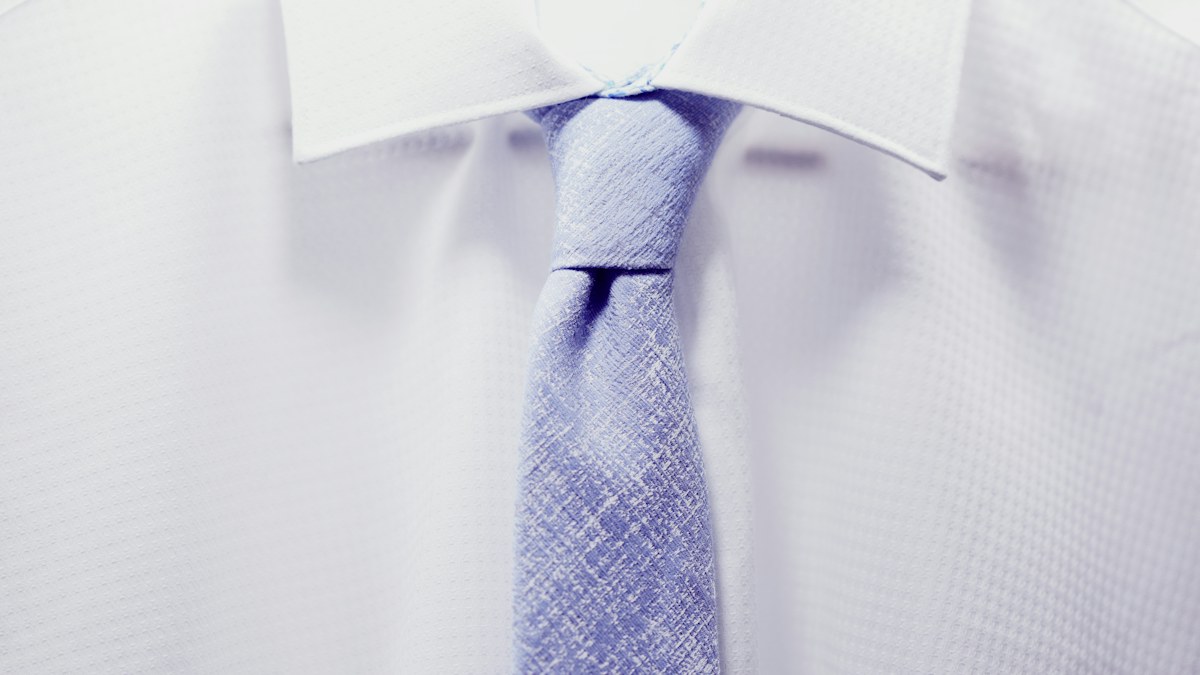
Check your tie with the jacket on
After tying, stand naturally and put on the jacket you plan to wear. Its opening frames the tie and can change how prominent the lower blade appears. A tie that seemed slightly short with the jacket off may look more noticeable once the jacket creates a clear central line.
Look at the collar, knot, front blade, waistband, and trouser rise as one outfit. The front tip should still land around the belt or waistband. If you need to adjust it, remove the jacket, retie the knot, and then check the full outfit again instead of pulling the fabric from below.
How should a tie work with your belt and shoes?
Tie length is a proportion rule, not a requirement to copy the color of your belt. The tie should coordinate with your shirt and jacket, while your belt and shoes have their own relationship. Our belt and shoe coordination guide
Do not let small accessory rules distract you from obvious fit problems. A sensible tie length, trousers that stay at the correct height, and a shirt that remains neatly tucked will do more for the overall look than buying an elaborate knot accessory or an additional patterned tie.
A simple mirror check before you leave
Button the collar, tighten the knot until it is comfortable, and let the tie settle naturally. Check where the wide tip lands against the waistband. Make sure the narrow blade is contained behind it and that the knot does not pull the collar out of shape.
Move normally, then check once more. Sit down and stand up if you have time, because your trousers may settle at a different height. If the tie looks unbalanced, retie it. That small correction is easier to make at home than during a meeting or event.
The Modern Men HQ standard
Let the wide tip finish around the top of your belt buckle or waistband, with a modest margin for the way your clothes actually fit. Start with the right amount of fabric on the wide side, choose a knot that suits your collar, and use a shorter or longer tie when your proportions call for one.
A tie should not require constant adjustment once you are dressed. Buy the right length, learn one or two reliable knots, and judge the result in the context of the entire outfit. That is a better standard than memorizing a single measurement and ignoring what you see in the mirror.
Frequently Asked Questions
Should a knit tie end at the same place as a silk tie?
Yes. A knit tie usually has a flat rather than pointed end, but its lower edge should still finish around the waistband. Judge it while standing naturally in the trousers you intend to wear.
Should the tip of your tie touch your belt while sitting?
No. Check the length while standing. Your trousers and the tie will move when you sit, so the seated position is not a useful reference for adjusting the knot.
Does tie width change the correct length?
No. A slim tie and a wider tie should both end near the belt buckle or waistband. Width affects how the tie looks with your lapels and build, while length depends mainly on your proportions and knot.
Can you tuck an overlong tie into your trousers?
Retie it rather than hiding the excess fabric in the waistband. Begin with less length on the wide blade or try a more suitable tie length. A waistcoat may conceal part of a tie, but it should not be used to avoid getting the proportions right.
Sources and further reading
The Tie Bar: Where should tie length be? explains the waistband reference and sizing factors. The Tie Bar: How to adjust tie length outlines starting position and how knot choice changes the finished length.