A good leather belt rarely needs much attention. It does, however, collect sweat, dust, body oils and the occasional mark from a crowded commute or a long day at work. The mistake is treating it like a pair of shoes: reaching for strong cleaner, soaking the strap, or rubbing until the surface looks new. Those shortcuts can remove the finish that made the belt look good in the first place.
The safest starting point is simple. Identify the leather, remove loose dirt with a soft cloth, and clean only as much as the material actually needs. A smooth finished belt usually needs less intervention than people expect. Suede, nubuck, coated fashion leather and exotic finishes require different care, so the material comes before the cleaning method.
First, check what kind of belt you own
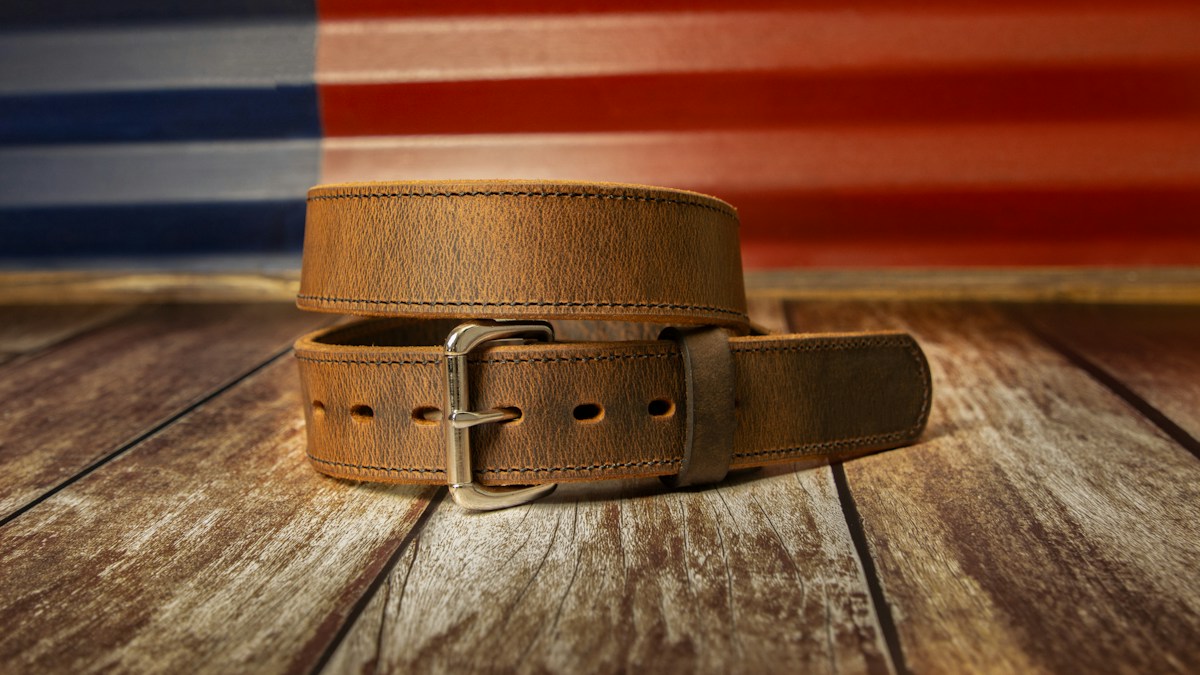
Not every belt described as leather is the same. A full grain or top grain strap may have a protective finish, a waxed surface or an open, more absorbent appearance. Some belts are bonded leather, where leather fibers are combined with binders and coated. Others are synthetic materials designed to resemble leather. A treatment that is harmless on one finish may discolor another.
Look at the product label, original listing or maker’s care instructions. If you cannot find them, examine the surface in good light. A smooth, slightly glossy belt that resists a tiny drop of water behaves differently from a soft, porous suede strap. Do not deliberately water test a valuable or delicate belt; that can itself leave a mark.
A useful rule is to treat uncertainty as a reason to use less product, not more. For an unfamiliar belt, dry dusting is the lowest risk first step. Before using any moisture or conditioner, test a tiny hidden area near the buckle or on the reverse, then allow it to dry completely before judging the result.
BELT CARE DECISION MATRIX
| Material | Safe first step | Avoid |
|---|---|---|
| Smooth finished leather | Dry microfiber cloth; barely damp wipe only if the maker allows | Soaking or forceful scrubbing |
| Suede or nubuck | Appropriate dry suede brush | Default wet cleaning |
| Coated or bonded leather | Gentle dry wipe and finish inspection | Unapproved conditioners or solvents |
| Unknown finish | Dry dusting and manufacturer guidance | Experimental cleaning |
What you need for a routine clean
Most routine cleaning can be done with a clean microfiber cloth, another dry soft cloth and, when the maker permits it, a little lukewarm water. A soft brush can lift dry dust from stitching and the buckle, but stiff bristles can scratch a delicate finish. Keep a clean surface under the belt so grit from the table does not transfer to the leather.
You do not need a collection of conditioners, sprays and polishing creams. Start with the least aggressive method. If the belt is simply dusty, a dry cloth may be enough. If it has light surface dirt, a slightly damp cloth can be appropriate for many finished leather belts, provided the manufacturer allows it.
Avoid household degreasers, alcohol wipes, bleach, abrasive sponges and general-purpose cleaning sprays. Even if they remove the stain, they may remove dye or protective coating at the same time. The result can be a permanent pale patch that is more noticeable than the original mark.
How to clean a smooth leather belt step by step
Unbuckle the belt and lay it flat on a clean towel. Check both sides, especially where the strap folds around the buckle and where the holes have stretched. Those areas collect grime but are also more vulnerable to rubbing damage. If the belt has detachable hardware, follow the maker’s instructions before attempting removal.
Wipe away loose dust with a dry microfiber cloth. Move along the length of the strap rather than scrubbing one spot repeatedly. Use a soft, dry brush around the buckle and stitching only when necessary. This first pass prevents grit from acting like sandpaper when you add moisture.
For a smooth finished leather belt whose maker permits damp cleaning, lightly moisten a second cloth with water. The cloth should feel barely damp, never wet enough to leave droplets. Wipe a small section gently, then move on. Do not saturate the leather, submerge the strap or leave moisture standing around the stitching.
Immediately follow with a clean dry cloth. Allow the belt to air dry at room temperature before wearing or storing it. Keep it away from radiators, hair dryers and direct strong sunlight. Heat may dry and stiffen leather, while uneven drying can affect its shape. If the belt looks clean after this, stop. More polishing is not automatically better care.
What if the belt has a stain?
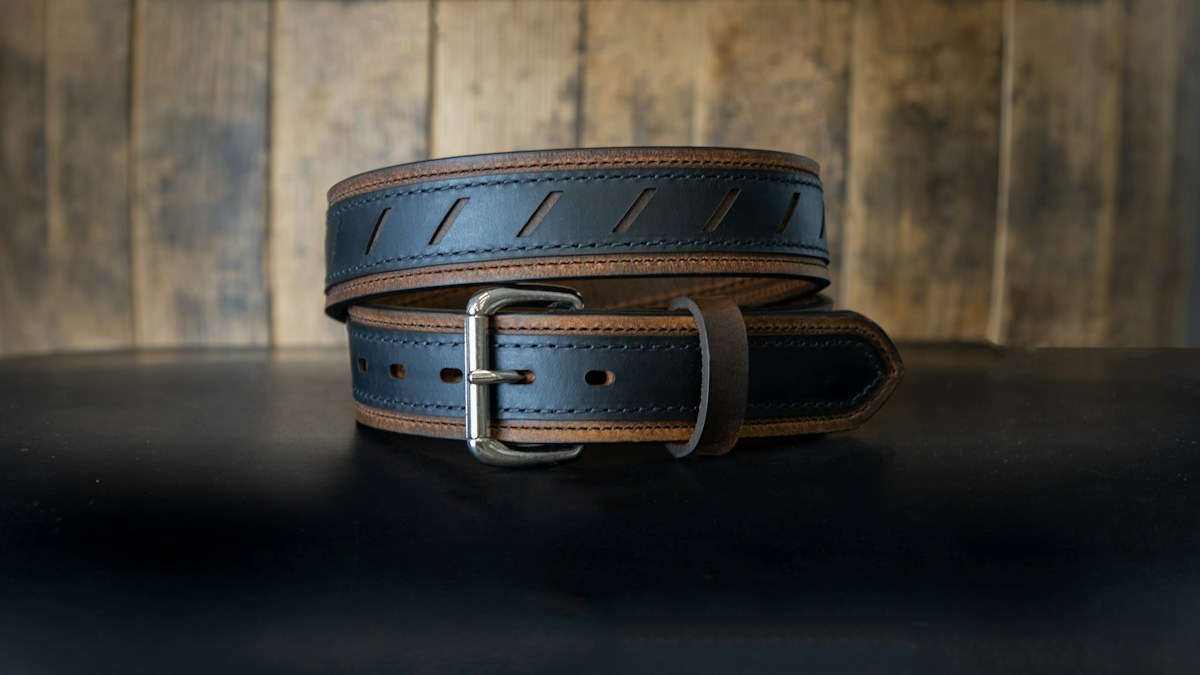
The right response depends on the stain and the finish. A fresh water splash is different from oil, ink, dye transfer or an old dark patch. Blot liquid promptly rather than spreading it. For a light superficial mark on finished leather, a gentle wipe may help, but stop if color transfers to the cloth.
Grease and ink are especially risky because they can penetrate leather or dissolve a surface coating. Do not chase a stain with stronger chemicals. A professional leather repairer may have options, but even professionals cannot guarantee an invisible result. If the belt is expensive or sentimental, the cost of expert advice is often smaller than the cost of replacing a damaged finish.
White and brightly colored belts deserve particular caution. A cleaner that works on black leather may leave a visible halo on white or painted leather. PM Belts advises avoiding sprays, chemicals and soap on its straps, particularly colored finishes. That is product-specific guidance, but it illustrates why universal internet cleaning recipes are unreliable.
STAIN RESPONSE REFERENCE
| Mark | First response | Stop condition |
|---|---|---|
| Water splash | Blot gently and let air dry | Color or texture changes |
| Surface grime | Dry wipe, then cautiously damp wipe if permitted | Dye transfers to the cloth |
| Ink or grease | Consult a leather care specialist | Do not apply household solvent |
| Dye transfer | Stop and inspect the coating | Finish begins to lift |
Should you condition a leather belt?
Sometimes, but not automatically. A leather conditioner is meant to help maintain a suitable finish, not to reverse every crack or restore damaged coatings. Many finished belts arrive ready to wear and may need little treatment for years. Noble Buffalo, for example, advises conditioning its own full grain belts only when they become dry or dull, often after long intervals. That is not a universal schedule for every belt.
If your maker recommends a conditioner, choose one compatible with the exact leather and test it in a hidden area. Apply a very thin layer, let it absorb according to the product instructions and buff away residue. Too much conditioner can darken the leather, soften the strap excessively or leave marks on clothing.
Never assume that shoe polish belongs on a belt. Shoe products may contain pigments or waxes that transfer to a shirt or trousers. Belts sit against fabric all day, so color transfer matters more than it might on footwear. A belt that looks glossy but stains your clothes has not been successfully maintained.
Cleaning the buckle without harming the leather
Metal hardware needs a different approach from the strap. First identify whether the buckle is solid metal, plated, painted or lacquered. Many buckles can be wiped with a dry cloth. If you use a slightly damp cloth on the metal, keep it away from leather edges and dry the buckle immediately.
Avoid abrasive metal polish unless the manufacturer explicitly approves it. A plated buckle can lose its coating, and polishing paste can lodge in stitching or seams. If green or dark residue appears around the buckle, inspect whether it is surface tarnish, trapped moisture or deterioration of the plating before rubbing.
A detachable buckle may be easier to clean separately, but not every mechanism is designed to be removed. Do not force screws or pry at leather loops. The small repair can become an expensive problem if you tear the strap.
How often should you clean a leather belt?
Clean according to condition rather than a fixed calendar. A belt worn occasionally may need only a quick wipe before being put away. A belt worn daily in a warm climate may need more frequent dust removal, especially where sweat reaches the inside of the strap.
There is a difference between cleaning and conditioning. Dry wiping removes dust. Damp cleaning addresses light surface dirt when permitted. Conditioning is an occasional material treatment for leather that actually needs it. Doing all three every weekend is unnecessary for most belts and can create more wear than it prevents.
After a sweaty day, let the belt dry in a ventilated room rather than folding it immediately into a tight coil. Rotate between two belts when practical. Rest allows moisture to dissipate and reduces constant bending in the same place. That simple habit often matters more than buying another care product.
Can you clean suede or nubuck belts the same way?
No. Suede and nubuck have a raised, absorbent surface that behaves differently from smooth finished leather. Water and ordinary leather creams can flatten the nap or leave dark patches. Use a brush intended for the material and follow the maker’s instructions. Stubborn marks are a good reason to consult a specialist.
Likewise, patent leather, embossed finishes, painted edges and exotic leathers may have special requirements. Do not apply a universal conditioner just because the material contains leather. If you cannot identify the finish, a dry soft cloth and restraint are safer than improvisation.
FIVE CHECKS BEFORE STORING A BELT
How to store a belt so it stays in shape
Store a clean, dry belt where air can circulate and where it will not be crushed by heavier objects. Hanging it from the buckle is often convenient if the hardware and strap are designed for that. A loose coil is another option, but avoid sharply bending the leather or rolling it so tightly that the same crease deepens.
Keep belts away from direct sunlight and heaters. PM Belts specifically cautions that prolonged sunlight and extreme temperatures can dry leather and contribute to cracking. A cool, dry wardrobe is a better home than a car dashboard or a damp bathroom.
For broader wardrobe care, the same principle appears in our guide to storing leather shoes: control moisture, avoid unnecessary heat and give the material space to recover. A belt is simpler than a shoe, but it is still shaped leather that benefits from consistent treatment.
When is a belt beyond home cleaning?
Deep cracking, peeling coating, broken stitching, stretched holes and a separating buckle attachment are structural problems, not ordinary dirt. Cleaning will not rebuild the damaged material. A repairer may be able to replace hardware, shorten a strap or reinforce stitching, but a heavily cracked coated surface may not be worth restoring.
Before spending on repair, compare the cost with the quality of the original belt. A well-made leather strap with a sound body and damaged buckle may deserve a repair. A bonded leather belt whose surface is peeling across the whole length usually does not. Keep the decision practical rather than sentimental about the label.
If the belt is in good condition but no longer works with your wardrobe, our guide to matching belts and shoes explains when matching matters and when coordination is enough. For broader outfit choices, see how to match shoes with trousers. Caring for an accessory makes more sense when it is one you actually wear.
The simplest belt care routine
After wearing, check for moisture and let the strap breathe. Wipe dust when it appears. Use a barely damp cloth only if the maker permits it and the finish needs more than dry cleaning. Condition sparingly, according to the material rather than a schedule. If you notice peeling, serious cracking or dye transfer, stop treating the belt at home and ask whether repair is realistic.
Good care should preserve the finish, not make the belt look artificially new. The most reliable routine is also the least dramatic: handle the leather gently, keep it dry without overheating it, and do not turn a small mark into a larger problem.
Frequently Asked Questions
Can I use soap and water on a leather belt?
Do not assume so. Some makers permit a slightly damp cloth, while others advise against soap entirely. Follow the specific belt’s care instructions and never soak it.
Can I use shoe polish on my belt?
Only when the belt maker confirms compatibility. Pigments and waxes can transfer to clothing, especially on light trousers.
How do I remove sweat from a leather belt?
Let the belt air dry, then wipe it with a dry cloth. For surface grime, use a barely damp cloth only if appropriate for the finish. Avoid saturating the strap.
Does leather conditioner fix cracks?
No. Conditioner may help suitable dry leather feel more supple, but it cannot rebuild cracked coating, broken fibers or damaged stitching.
Should I hang or roll a leather belt?
Either can work if the belt is clean, dry and not sharply bent. Hanging avoids tight creases; a loose coil is useful when hanging space is limited.
Can I clean a suede belt with a damp cloth?
Usually avoid that as a default. Suede and nubuck need material-specific care and can show water marks. Use the maker’s guidance or consult a specialist.