Buying a dress shirt online is easy until you reach the size selector. A shirt marked medium might fit across the shoulders but choke at the collar. A 16-inch neck could look correct on the chart yet leave the sleeves dangling past your hands. Even men who know their jacket size often struggle because dress shirts are sized using measurements that do not appear on casual clothing.
The answer is not to guess from your height or copy the last size you bought. It is to measure your actual neck, determine sleeve length using the same method as the seller, and cross-check the rest of the garment against a shirt that already fits. Retailer size charts are useful precisely because brands construct garments differently. Measurements that are dependable in one brand can mislead you in another if the measuring conventions differ.
This guide is about obtaining reliable numbers before you buy. It is distinct from a general shirt-fit article because it deals with the mechanics of measurement, how to read size charts, and how to resolve uncertain online listings without trying on the item first.
The two measurements that matter first
Traditional men’s dress shirts often use a collar size and a sleeve length. In US sizing, you may see a combination such as 15.5 / 34. The first figure refers to collar or neck sizing in inches; the second relates to sleeve length under the manufacturer’s convention. Some stores show a neck size alongside a sleeve range rather than one fixed sleeve measurement.
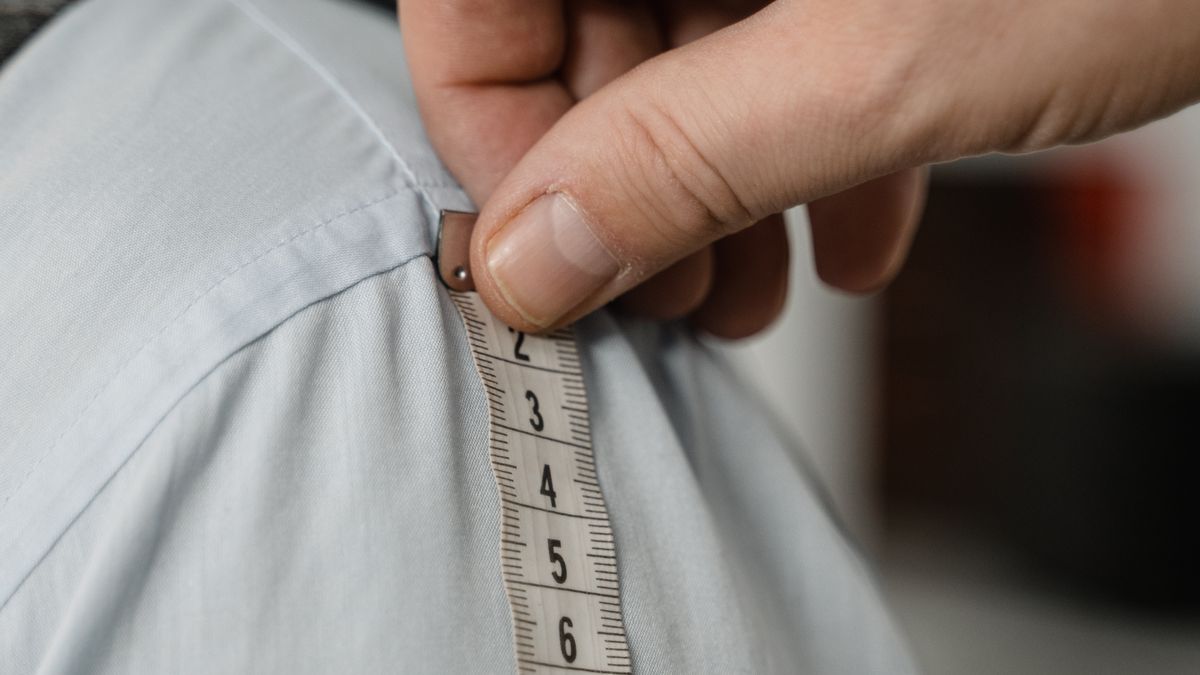
This is not the same thing as a generic small, medium or large label. Some casual button-down shirts are sold that way, and their fit may rely on broader ranges of body measurements. Formal shirts offer more precise options because the collar must close comfortably under a tie and the cuffs must fall where they belong beneath a jacket.
A chart may also show classic, slim, extra slim, and other cuts. Those words describe how much fabric the shirt allows around the torso, not merely the collar and arms. Before deciding that your collar size is right, read the chart’s chest and waist limits so the body does not become the hidden problem.
How to measure your neck
Stand naturally and wrap a flexible measuring tape around the base of your neck where a shirt collar would sit. Keep the tape level. Do not lift your chin dramatically, hunch forward or pull the tape tight enough to compress the skin. You want a number that describes the neck you actually have while breathing normally.
Charles Tyrwhitt’s measuring instructions recommend allowing two fingers between the tape and neck for a comfortable fit. This is a practical comfort check, not a guarantee that every shirt collar will feel the same. Collar construction, lining and button placement can alter comfort. Record the measurement and then compare it with the brand’s size chart rather than automatically rounding down.
If you plan to wear a tie, fasten the top button when trying a similar shirt. A collar that feels fine open may be uncomfortable closed. You should be able to move your head and swallow normally without pressure. If the collar gaps dramatically when buttoned, it may be oversized, but a different collar style can also affect the appearance.
Neck measurement: common mistakes
| Mistake | Why it misleads | Better method |
|---|---|---|
| Tape pulled hard into skin | Undersizes the collar | Keep tape comfortably flush |
| Measuring high beneath the jaw | Misses normal collar position | Measure near the base of the neck |
| Standing with chin raised | Changes neck contour | Keep ordinary posture |
| Assuming a brand’s medium is universal | Ignores chart differences | Check neck measurement in the current chart |
| Ignoring comfort while buttoned | Hides tight collar problems | Test or allow appropriate ease |
How to measure sleeve length accurately
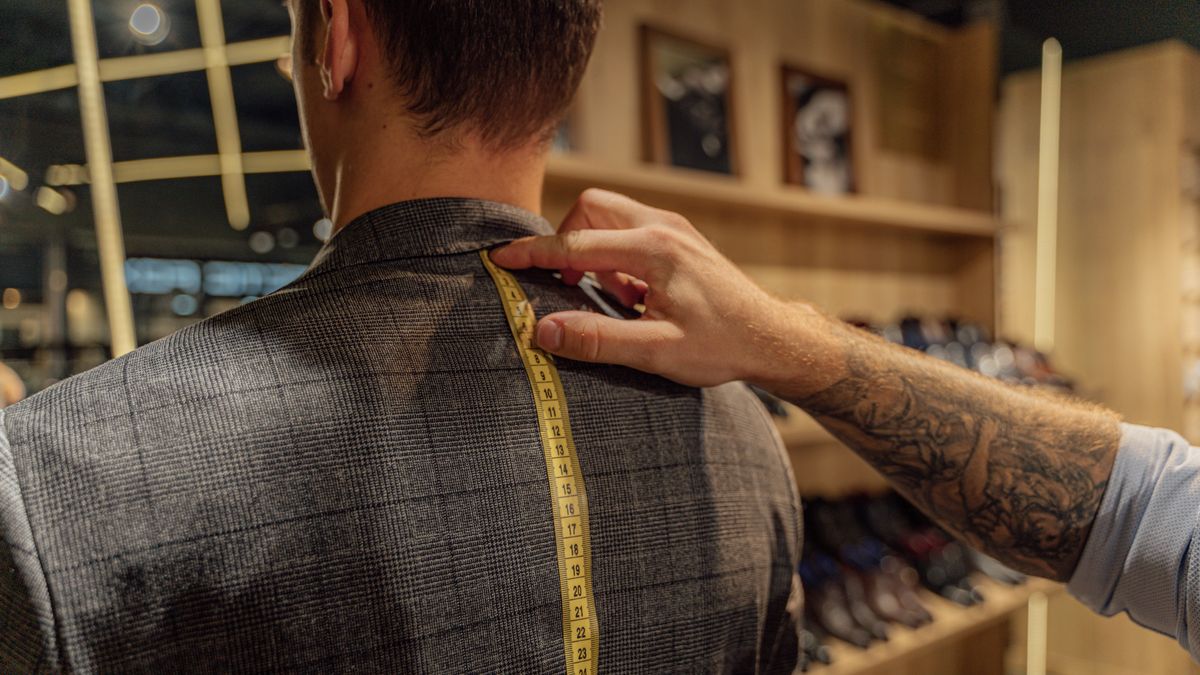
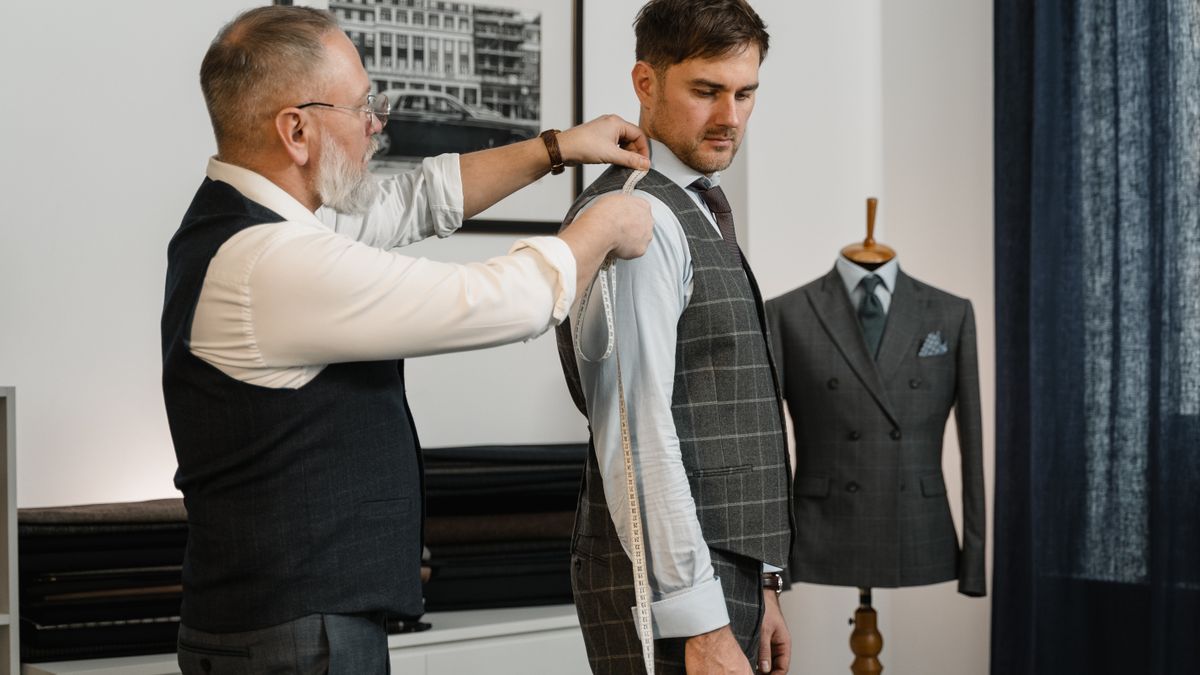
One source of confusion is where the measurement starts. Charles Tyrwhitt describes sleeve length from the middle of the back of the collar, across the shoulder, down the arm and to the cuff. Its guide breaks that path into segments: center back to shoulder, shoulder toward elbow, and elbow to just above the wrist bone or preferred cuff endpoint. The segments are then combined.
This is different from holding a tape only along the top of the sleeve from shoulder seam to cuff. That simple shoulder-to-cuff measurement can be useful when comparing existing garments, but it may produce a smaller number than the neck-to-wrist convention on the store’s sizing chart. Ask or check which system the brand uses before treating the figures as equivalent.
Stand with shoulders relaxed and arms at your sides. Slightly bend the elbow if the measuring instructions request it. Have someone else take the measurement when possible, because reaching across your own back while holding a tape can change your posture. Record the result with its method, not just a bare number.
The cuff endpoint matters. Some men prefer a shirt cuff close to the wrist bone. Others want a small amount to show beneath a jacket sleeve. A very long sleeve can bunch at the wrist, while a short one may ride up when you stretch your arms. Measure to your practical preferred endpoint and use the seller’s guide to choose the corresponding size.
Why measuring a favorite shirt helps
A shirt that fits well provides an actual garment reference in addition to body measurements. Button it, lay it smoothly on a flat surface, and compare its collar, chest, waist, shoulder width, sleeve length and body length with the seller’s garment dimensions if available. Check how the brand defines each measurement before making a direct comparison.
For example, a shirt chest measurement shown as the width across the garment while laid flat must be understood differently from a circumference around your body. Doubling a flat width can give a garment circumference approximation, but shirt construction and stretch can change the practical fit. Always note whether you are looking at body measurements or finished-garment measurements.
Do not use an old shirt that shrank or was substantially altered as your primary standard unless you account for those changes. A shirt that looked good three years ago may no longer reflect your current fit preferences or body proportions. The goal is to compare against a shirt you would happily wear today.
Fit labels do not solve measurement errors
Classic, slim and extra slim generally represent different torso ease, but retailers use them differently. Charles Tyrwhitt’s size guide explicitly separates neck size from the body measurements allowed by several cuts. That means two shirts with identical collar and sleeve labels can fit differently through the chest or waist.
Choose the neck and sleeve first, then decide whether the torso cut gives you enough room to sit, reach forward, and move comfortably. A shirt that pulls across the buttons is too close-fitting regardless of how trim it appears while standing still. Equally, a shirt with excessive billowing may be the wrong cut even when the collar and cuffs fit.
Small tailoring changes can improve some body dimensions, but not all collar or shoulder problems are economical to correct. Buying a clearly wrong collar size because you expect a tailor to rescue it is a weak plan. Fit at the structural points should be as close as possible before alteration.
Reading an online size chart without fooling yourself
Confirm the unit system. A table in centimeters is not the same as one in inches, and a US-labeled number can be shown next to a brand conversion. Read the actual heading on the retailer’s page. Avoid assuming that similar-looking figures in international charts refer to identical body or garment measurements.
Read any notes below the grid. Some labels recommend sizing down for a generous classic fit, while others display a ‘body up to’ limit rather than an exact garment circumference. The difference changes the meaning of the number. If you are between sizes, prioritize which measurement would be hardest to correct and check the return terms before ordering.
A retailer may change its cuts between seasons or collections. A familiar brand name does not eliminate the need to inspect the current product’s specific chart. Even within one store, casual shirts, non-iron shirts, and tailored dress shirts can use different sizing conventions.
When the collar fits but the sleeves do not
Do not force the entire shirt into the wrong size to solve an arm-length issue. Some brands offer several sleeve lengths for one collar size. Use that choice when available. If they do not, consider another brand whose proportions suit you better rather than selecting an oversized collar to gain sleeve length.
A slightly long sleeve may be easier to shorten than a too-short sleeve to lengthen, but that depends on cuff construction and tailor capability. There is no guarantee every shirt has enough seam allowance for alteration. If your sleeves are consistently too short, buying a longer option at the outset usually makes more sense.
Consider the cuff width too. A properly sized sleeve can still catch at a wristwatch or feel bulky under a jacket if the cuff is too tight or excessively roomy. Retailers may provide cuff measurements as part of a detailed spec sheet. If your watch is thick, test the relationship before declaring the sleeve length wrong.
How to create a reusable sizing note
Record your comfortable neck measurement, the sleeve-measuring method used, the preferred sleeve endpoint, and one or two favorite shirts that fit. Add notes on brand, cut and size. This becomes a useful shopping reference instead of forcing you to remember what ‘size 16’ felt like from a purchase months ago.
Update it after any meaningful change in body measurements or fit preferences. Do not turn it into a complicated spreadsheet unless you truly buy shirts frequently. A simple note with actual numbers and one fit photograph can prevent repeat ordering mistakes. It is especially useful for men who shop during sales and feel rushed by limited inventory.
For wardrobe planning, see how many dress shirts a man should own. That choice becomes easier when you understand which sizes actually work and can buy replacements deliberately.
What to check when the shirt arrives
Try it with the top button fastened, then move naturally. Raise your arms, reach forward and sit down. Confirm that the collar is comfortable, that buttons do not strain through the chest, and that cuffs land where you expected. A shirt should work through ordinary motion, not only in a still mirror photograph.
Check the measurements before washing or altering it. If it does not fit, follow the return policy while the garment remains eligible. Washing first can change the fabric and complicate a return. Our separate guide on how often to wash a dress shirt covers care after you have decided to keep it.
Finally, test with the rest of your wardrobe. A dress shirt worn under a suit jacket should allow comfortable arm movement and present the desired cuff. A shirt intended for business casual might be worn untucked and have a different preferred body length. Measurements should serve the way the shirt is used.
A simple purchase checklist
The bottom line
Accurate dress-shirt shopping begins with two clear numbers and the measurement method behind them. Measure the neck comfortably, follow the retailer’s sleeve path, then cross-check chest, waist and shirt length against a garment you already like. Fit labels and generic sizes are secondary to the actual dimensions.
Once you understand the measurements, the goal is not to chase a perfect number. It is to choose a shirt that closes comfortably, moves correctly and suits the occasions for which you will wear it.
Frequently Asked Questions
Does dress shirt sleeve length include the shoulder?
Often yes when measured from the center back of the neck to the cuff, but brands may use different methods. Follow the chart’s definition.
How tight should a dress shirt collar be?
Comfortably snug without pressing into the neck, particularly when buttoned under a tie. Charles Tyrwhitt suggests a two-finger measuring allowance as a practical guide.
Can I use a casual shirt’s size as my dress-shirt size?
Not reliably. Casual letter sizes and traditional dress-shirt collar and sleeve measurements can use different ranges and cuts.
Should I size up if I am between collar sizes?
Consider comfort, the shirt’s exact chart and return terms. Do not automatically enlarge the entire garment without checking torso fit.
Why are my sleeves short when the collar fits?
Your body proportions may not match the brand’s default sleeve length. Choose a longer sleeve option for the same collar size if available.
How do I measure a shirt I already own?
Button it, lay it flat and follow the retailer’s points of measurement. Distinguish flat garment widths from body circumferences.