A jacket can fit your shoulders and chest correctly and still look wrong because the body is too short or too long.
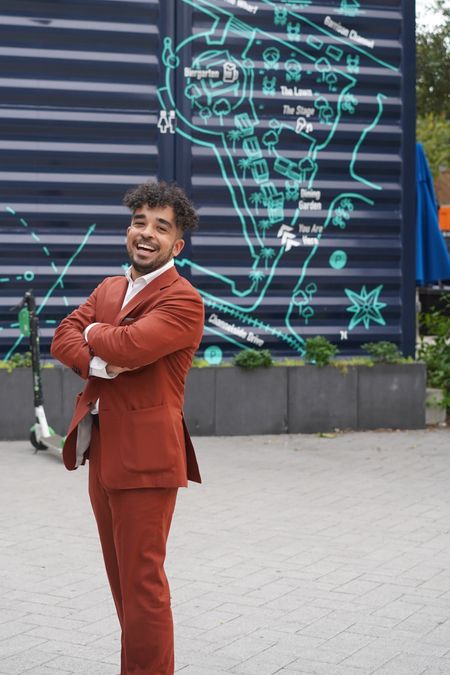
Length changes proportion.
A short tailored jacket can make the torso look compressed and the legs look longer. A long jacket can make the legs look shorter and the outfit more traditional. Neither effect is automatically bad. The question is whether the length matches your body and the style of the garment.
For a classic suit jacket or sport coat, a strong starting point is enough length to cover the seat and create balanced proportions from shoulder to shoe. Then adjust for your actual torso, leg length, posture, and the garment’s intended style.
Why Jacket Length Matters
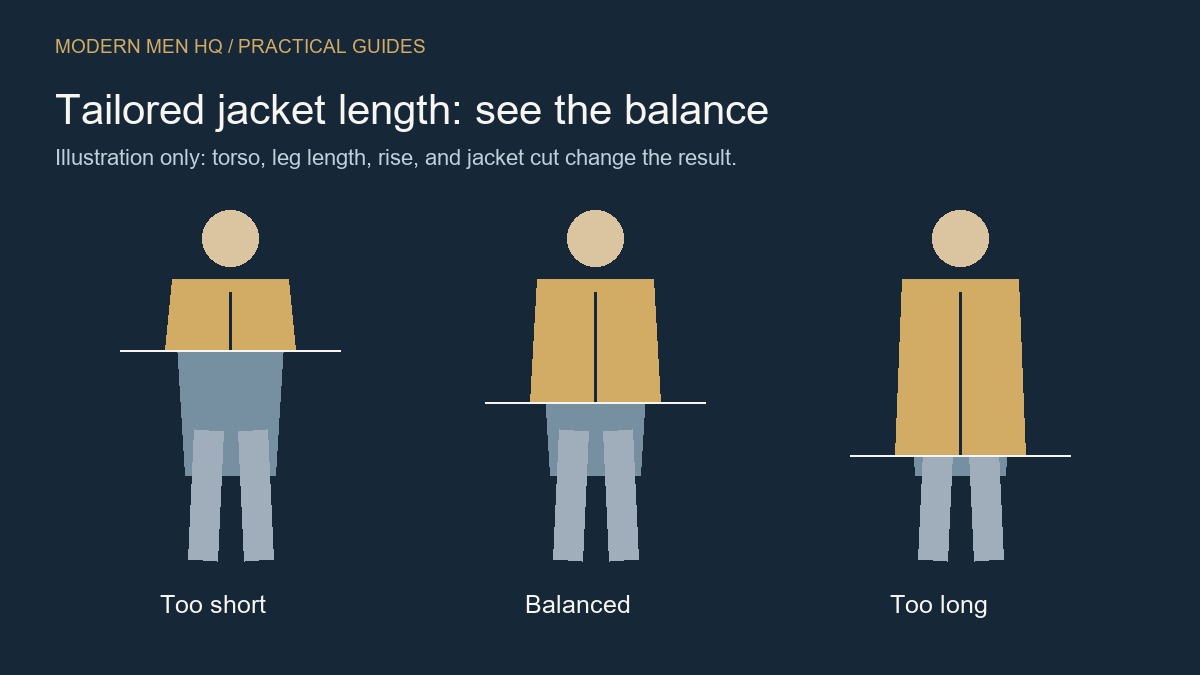
A jacket creates one of the largest uninterrupted shapes in a man’s outfit.
Its bottom edge becomes a major horizontal line. Move that line upward and more leg becomes visible. Move it downward and the upper body takes up more visual space.
That is why two jackets with the same chest fit can produce completely different proportions.
The Traditional Seat Coverage Rule
For classic tailored jackets, covering the seat remains a useful reference.
Permanent Style’s jacket length guidance includes seat coverage among the traditional checks because it usually produces enough body length for a balanced, formal silhouette.
If a suit jacket ends halfway up the seat, it often reads more like a cropped casual jacket even when the shoulders and lapels are formal.
Treat seat coverage as a starting point, not a law that overrides the rest of the fit.
The Half-Body Rule
Another traditional method measures roughly halfway from the jacket collar to the floor.
The logic is proportion: the jacket visually divides the body into balanced upper and lower sections.
This can be useful, but human bodies do not divide into identical torso and leg ratios.
A man with a long torso and shorter legs may need a slightly different visual balance from a man of the same height with long legs and a shorter torso.
The Thumb Rule
You may also hear that the jacket should end around the thumb or where the fingers naturally curl.
This is a convenient fitting-room reference because your arms are already attached to you.
It is also imperfect. Arm length varies relative to torso length.
Use it as a quick check, not the final judge.
Start With the Garment Type
Do not apply suit jacket rules to every jacket.
A bomber is intentionally short. A chore coat may be longer and straighter. A trucker jacket sits around the hip. An overcoat can extend to the knee or below. A sport coat is generally shorter and more relaxed than old-school formal tailoring but still needs enough length to look like tailored clothing.
Decide what the garment is before judging the hem.
How Long Should a Suit Jacket Be?
For a conventional modern suit, cover the seat or come very close, keep the front and back visually balanced, and make sure the jacket does not look chopped off under the waist.
Shorter fashion cuts can work, but they create a more casual and contemporary impression.
If this is your only suit, err toward a balanced classic length rather than an extreme.
The MMHQ suit buying guide covers the rest of the fit checkpoints.
How Long Should a Blazer or Sport Coat Be?
A blazer or sport coat can tolerate slightly more variation because it is often worn separately with chinos, denim, or odd trousers.
Still, the garment should look intentionally tailored.
A very short blazer worn with a long shirt and low rise trousers can make the torso look crowded. A slightly longer jacket worn with moderate-rise trousers can create a cleaner vertical balance.
Use the seat and hand rules as references, then judge the whole outfit.
How Long Should a Casual Jacket Be?
Casual jacket length depends on the design.
Bombers, truckers, and many leather jackets are intentionally short and often finish near the waistband or upper hip.
Field jackets and chore coats usually run longer.
Do not lengthen or shorten the garment mentally until it behaves like a blazer. Judge it against its own category.
How Long Should an Overcoat Be?
Overcoats create a different silhouette because they are outer layers and need enough length to cover the jacket underneath.
A coat ending around mid thigh is easier and more casual. Knee length or longer creates more protection and formality.
The MMHQ overcoat versus peacoat guide compares those tradeoffs.
Check Your Torso-to-Leg Proportion
Stand in front of a full length mirror wearing trousers at their correct rise.
Do your legs appear long relative to the torso or does the torso dominate?
If you have a long torso, an overly long jacket can make the legs look even shorter. If you have very long legs, a slightly longer tailored jacket may create useful balance.
Height alone cannot solve this: check how your torso and leg proportions work together.
Trouser Rise Changes the Result
Jacket length does not operate alone.
Low rise trousers expose more shirt and extend the visual torso. Higher rise trousers move the waistline upward and can make a longer jacket feel more balanced.
That means a jacket that looks too long with low rise jeans may look correct with tailored trousers worn at the intended waist.
Judge the jacket with the trousers you actually plan to wear.
Check Front and Back Balance
Proper Cloth jacket fit guidance emphasizes front and back balance because body posture and chest shape can make one side appear too short.
From the side, the hem should not look like it is dramatically climbing at the front or dropping at the back unless the design intentionally calls for it.
A prominent chest, rounded posture, or erect posture can affect the way the jacket hangs.
Tailoring may need to address balance rather than simply adding or removing overall length.
How to Tell if a Tailored Jacket Is Too Short
The seat is clearly exposed. The jacket looks cropped beneath the button point. The pockets feel crowded toward the hem. The upper body looks compressed against low rise trousers. The jacket looks casual despite otherwise formal construction.
One sign alone is not decisive, but several together make the problem obvious.
How to Tell if a Tailored Jacket Is Too Long
The jacket overwhelms the legs. The bottom edge falls noticeably below the seat in a way that looks coat-like rather than tailored. Pockets and button stance appear unusually high relative to the body length. The silhouette feels heavy rather than deliberate.
Again, context matters. Traditional tailoring can be longer than contemporary mass-market jackets without being wrong.
Button Stance and Length Need to Work Together
The button stance influences where the jacket visually narrows at the waist.
A very high button stance on a long jacket can look unusual. A very low stance on a cropped jacket can make the body proportions feel off.
You usually cannot alter button stance economically after the jacket is made, so judge the jacket as a complete design.
Pocket Placement Can Reveal a Bad Length
Pockets should look like they belong on the body of the jacket rather than being squeezed close to the bottom edge.
If shortening a jacket would leave the pockets strangely low, the alteration may damage the original proportions.
This is one reason buying the correct body length is better than expecting a tailor to transform an extreme mismatch.
Do Not Judge Length With the Wrong Trousers
A jacket tried over low rise skinny jeans can look longer than it will with proper suit trousers.
A cropped casual jacket can look strange over high rise tailored trousers even if it works perfectly with denim.
Test the garment inside the outfit system.
The Mirror Test
Wear the jacket with appropriate trousers and shoes.
Stand naturally. Do not pull the jacket down. Check the front, side, and back.
Does it cover the seat if it is a tailored jacket? Does the hem visually balance torso and legs? Does the front hang level enough for your posture? Does the jacket move comfortably when you sit and reach?
Then take a full body photo. Proportion is often easier to judge in a photo than when looking down at yourself.
The Hand Test
Let your arms hang naturally.
Check where the jacket ends relative to the thumb and curled fingers.
If the result is close to traditional references and the full silhouette looks balanced, the length is probably in the right territory.
If the hand rule conflicts with the visual proportions, trust the complete outfit rather than one anatomical shortcut.
What If You Are Short?
Do not automatically buy the shortest jacket possible.
An excessively cropped suit jacket can make the garment look too small rather than making you look taller.
Keep the body clean, control trouser break, use an appropriate rise, and avoid unnecessary excess length.
A balanced jacket is more useful than a trick.
What If You Are Tall?
Make sure the jacket has enough body length, sleeve length, and back coverage rather than buying a regular size that technically closes but looks abbreviated.
Tall does not always mean long torso, so check the actual proportions.
What If You Have a Long Torso?
Be cautious with jackets that are both long and worn over low rise trousers.
A moderate jacket length combined with a better trouser rise may improve proportions more effectively than aggressively shortening the jacket.
What If You Have Long Legs?
A slightly longer tailored jacket can create balance, especially with moderate to high rise trousers.
Do not shorten every jacket simply because current casual cuts are cropped.
Can a Tailor Shorten a Jacket?
Yes, within limits.
Shortening affects pockets, vents, button spacing, and overall proportion. A small adjustment may work. A major change can make the jacket look structurally wrong.
Buy body length close to correct whenever possible.
Common Jacket Length Mistakes
Applying the Suit Rule to a Bomber
Different jacket categories have different intended hems.
Using Height Alone
Torso and leg proportions matter.
Ignoring Trouser Rise
The visible waist changes how the jacket length reads.
Trusting the Thumb Rule More Than the Mirror
It is a reference, not a command.
Trying to Alter an Extreme Mismatch
Pocket and button placement may prevent a clean result.
Frequently Asked Questions
Should a suit jacket cover your butt?
Classic tailored guidance generally uses seat coverage as a strong reference. Contemporary jackets can be slightly shorter, but a jacket exposing most of the seat will read noticeably cropped.
Where should a blazer end?
Around the lower seat area is a useful tailored starting point, adjusted for the blazer’s cut and your proportions.
Should a jacket end at the thumb?
The thumb is one traditional reference, but arm length varies. Check the overall silhouette too.
Can a short man wear a longer jacket?
Yes, if the proportions work. The goal is balance, not following a blanket rule based on height.
Does jacket length change with fashion?
Yes. Tailored jackets move shorter or longer with fashion cycles. A balanced classic length is usually more durable than either extreme.
Final Take
For tailored jackets, start with enough length to cover the seat and create a balanced line between torso and legs.
Then account for trouser rise, posture, front-back balance, and the actual style of the jacket.
Traditional rules are useful checkpoints. The full silhouette is the decision.