Good layering should make an outfit look more intentional, not larger. Watch for bulk building up at the shoulders, waist and cuffs, and choose each layer for a distinct job rather than adding thickness everywhere. Start with versatile base pieces from the modern man’s wardrobe guide.
The usual mistake is not wearing too many garments. It is stacking too much fabric in the same places.
A thick shirt under a thick sweater under a fitted jacket creates bulk at the shoulders, armholes, chest, and waist all at once. The solution is not automatically fewer clothes. It is choosing layers that have different jobs and enough room to work together.
The Basic Rule: Thin Inside, Heavier Outside
The Modest Man’s current layering guidance uses a simple starting point: thinner fabrics closer to the body, heavier fabrics farther out.
That rule works because inner layers have to fit underneath everything else.
A fine cotton shirt can sit under a merino sweater, which can sit under a wool coat. Reverse the weights and you get a heavy overshirt trapped under a thin knit that was never designed to stretch over it.
Think of each layer as part of a sequence, not as three separate outfits.
Use Three Layers as the Default Ceiling
Most men can build a useful outfit with three visible layers: base, mid, outer.
That might be an Oxford shirt, crewneck sweater, and overcoat. A T shirt, overshirt, and field jacket. A polo, cardigan, and peacoat.
More layers can work, but each additional garment increases the chances of bunching, competing collars, and excessive visual noise.
Start with three. Add a fourth only when it has a clear function.
Layer for Function Before Decoration
Ask what each garment is doing.
The base layer handles comfort against the skin. The mid layer adds warmth, texture, or shape. The outer layer handles weather and completes the silhouette.
If two layers are both doing the same job at the same thickness, one may be unnecessary.
A heavy flannel and a chunky sweater under a lined jacket can all add warmth, but the total may be more than the weather or the outfit needs.
Where Bulk Actually Comes From
Shoulders
If inner garments have stiff shoulder seams, thick padding, or excess width, the outer jacket has to sit over all of it. That can make the shoulders look rounded or cramped.
Armholes and Sleeves
This is where many layered outfits fail. A thick sleeve inside a narrow sleeve creates twisting, bunching, and restricted movement.
Outerwear intended for layering needs enough sleeve and armhole room to accommodate the mid layer.
Waist
Long shirts, thick knits, and jacket linings can stack around the midsection. Tucking every layer makes the problem worse.
Hem
Several garments ending at the same awkward point can create a dense horizontal block. Controlled length variation usually looks cleaner.
Outerwear Should Fit the Layers You Actually Wear
A coat that fits perfectly over a T shirt may be too small for winter use.
When trying on outerwear, wear the type of mid layer you expect underneath it.
You should be able to move your arms, sit, and close the coat without pulling across the chest or crushing the sweater underneath.
This is one reason the MMHQ overcoat versus peacoat guide treats outerwear as part of a system rather than an isolated purchase.
Do Not Make Every Layer Slim
Slim fit is not the same as clean fit.
If every layer hugs the body independently, the stacked outfit can become too tight.
The inner layer can be close. The mid layer needs a little room. The outer layer needs more.
The silhouette should still be controlled, but controlled does not mean compressed.
Use Fabric Weight to Create Hierarchy
Layering looks intentional when the weights progress logically.
Light T shirt. Medium overshirt. Heavier jacket.
Fine dress shirt. Fine to medium knit. Structured coat.
Polo. Lightweight cardigan. Wool jacket.
A chunky knit directly under a slim blazer often looks bulky because the blazer was designed to sit over a thinner shirt or knit.
Texture Can Add Depth Without Adding Volume
You do not need thick fabric to make a layered outfit interesting.
Oxford cloth, fine merino, suede, brushed cotton, denim, flannel, and wool all create different surfaces.
The MMHQ guide to wardrobe materials is useful because material changes how an outfit reads even when the silhouette stays simple.
Use texture where you would otherwise be tempted to add another garment.
Control the Collars
Three competing collars can make the neck area crowded.
If you wear a collared shirt under a crewneck sweater, the collar provides the detail. The outer jacket can stay simple.
If you wear a hoodie under a jacket, the hood already creates bulk behind the neck. Adding another thick scarf may be too much unless the weather requires it.
Look at the neckline as one composition.
Use Length Deliberately
Visible hem differences can create depth, but accidental tails look messy.
An overshirt can finish below a T shirt. A coat can clearly extend past the sweater. A jacket that ends slightly below the shirt can create a clean progression.
What usually fails is a dress shirt hanging several inches below a short jacket in an outfit that was meant to look polished.
Length should look chosen.
Use Color to Simplify the Visual Weight
A layered outfit can contain several garments without feeling busy when the colors relate to one another.
The MMHQ color palette guide helps build combinations that are easier to repeat.
You do not have to follow a rigid light inside, dark outside rule, but it is a useful starting point because darker outer layers can frame lighter inner layers.
Tonal layering also works well: several shades of navy, gray, brown, olive, or cream can create depth without high contrast at every boundary.
Keep One Layer Quiet
If the shirt has a strong pattern, the sweater can be solid. If the outerwear has a bold texture, the inner layers can calm down.
Every layer does not need to be the interesting layer.
This is the same principle behind the MMHQ capsule wardrobe guide: versatile clothes create more combinations because they do not all compete for attention.
How to Layer for Smart Casual
Start with a clean base such as an Oxford shirt, polo, or fitted T shirt.
Add one mid layer: fine knit, cardigan, overshirt, or unstructured jacket. Finish with outerwear only if the weather requires it.
Keep trousers relatively clean and avoid adding visual bulk everywhere at once.
The outfit should look relaxed but deliberate, consistent with the MMHQ smart casual framework.
How to Layer in Cold Weather
Warmth does not require every visible garment to be heavy.
Use a functional base layer if needed. Add a mid layer that traps warmth without enormous volume. Let the coat do the heaviest work.
A thin thermal layer under a shirt may provide more useful warmth than adding another bulky sweater over the top.
Function can be hidden. Style does not have to carry the entire thermal load.
How to Layer if You Have a Larger Build
Avoid the idea that a bigger body has to hide under oversized layers.
The same principles apply: correct fit, controlled fabric weight, enough room in outerwear, and clean vertical lines.
Do not compress the torso with tight inner layers and then add a short tight jacket. Do not drown the body in oversized fabric either.
Fit the widest necessary point, then use tailoring and proportion rather than concealment.
How to Layer if You Are Slim
Layering can add structure and visual weight, but you still need proportion.
An Oxford shirt, fine knit, and jacket can add depth without making the clothes look borrowed. Extremely oversized outerwear over very narrow trousers can make the body look less balanced rather than stronger.
What About Vests?
A vest can add warmth without adding sleeve bulk.
That makes it useful under coats or over shirts, especially when your arms already feel crowded.
But a thick puffer vest under a fitted jacket can still create chest and waist bulk. The same weight and fit rules apply.
When a Half-Zip Helps and When It Creates Bulk
A half-zip is not automatically a smarter layer than a crewneck. Its zipper lets you adjust the neckline, but a standing collar and thicker knit can compete with a fitted jacket. Put on the actual coat you intend to wear and fasten it. If the two collars bunch together, a fine-gauge crewneck may be easier to wear.
Compare midweight and heavyweight half-zips by how much room remains beneath the outer layer, how long you expect to be outside, and whether you need to remove a layer indoors. A different color of the same garment does not solve a fit problem.
Check the whole arm, not only the chest. Reach forward, sit, and turn your head while wearing all the layers. If the zipper presses into the throat or the coat pulls at the elbow, change the combination rather than adding another garment.
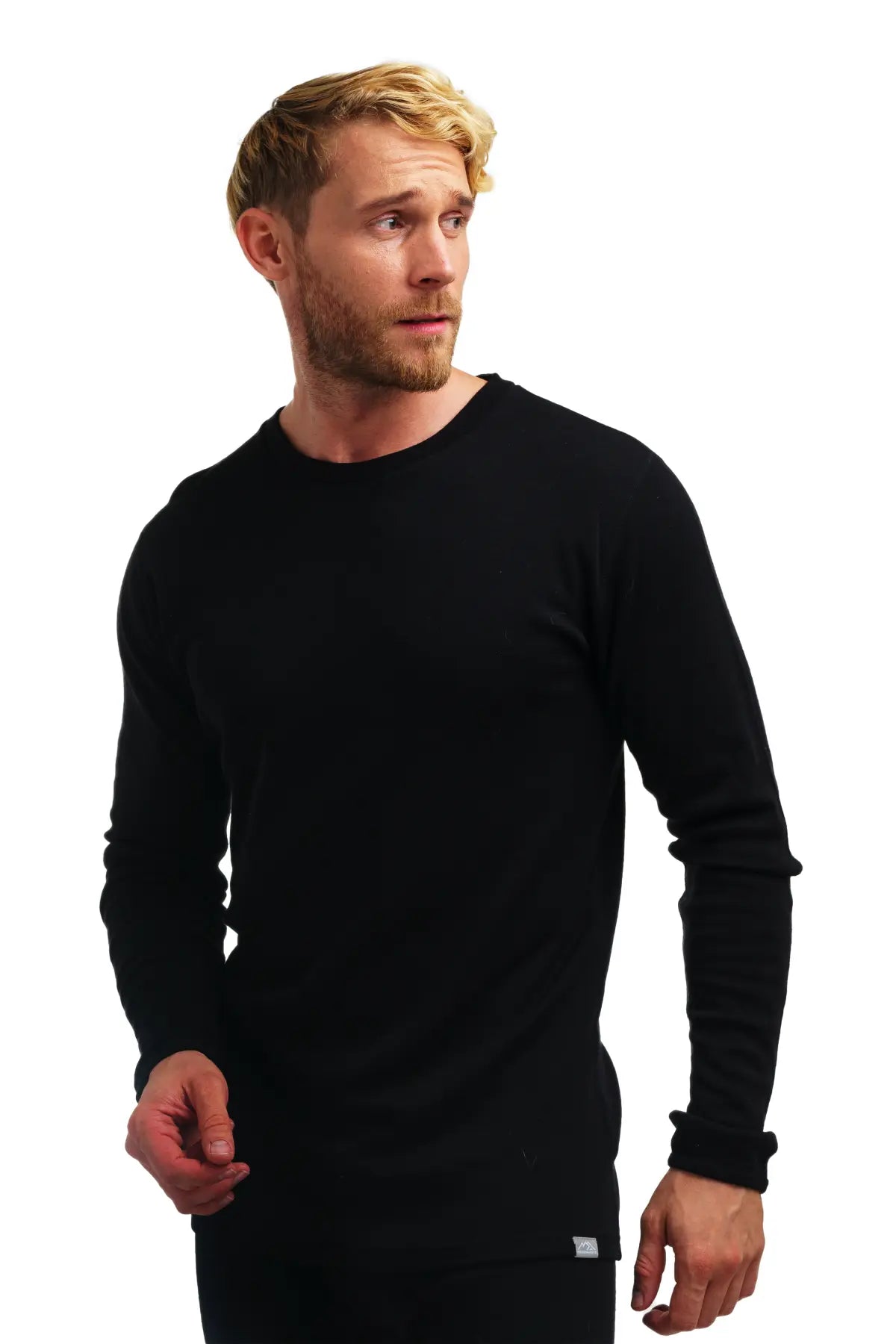
Optional midweight layer example
Merino Tech Men’s Long Sleeve 250 Black
A plain black 250-weight merino top is one way to compare a close-fitting midlayer with a bulkier sweatshirt. It is not automatically the better buy. Check sleeve room beneath your jacket, care requirements, and your selected size’s current availability before ordering.
What About Hoodies Under Jackets?
They can work when the jacket has enough room and the overall outfit is casual.
The hoodie contributes a thick collar, hood, sleeves, and often a kangaroo pocket. That is already a lot of volume.
Pair it with simpler outerwear and avoid squeezing it under a jacket cut for a dress shirt.
The Mirror Test
Look at five places: shoulder line, chest, waist, sleeve, and hem.
If the shoulder is rounded, the inner layers may be too wide or the jacket too tight. If the chest pulls, the outer layer lacks room. If the waist bunches, too many long layers may be stacking. If the sleeves twist, the mid layer is too thick. If the hems collide, adjust lengths.
Diagnose the location of bulk rather than declaring the whole outfit wrong.
Common Layering Mistakes
Starting Too Thick
A heavy first visible layer leaves no room for hierarchy.
Buying Outerwear Only for a T Shirt Fit
Try coats with realistic winter layers underneath.
Using Too Many Statement Pieces
Layering already creates visual complexity. Not every garment needs a pattern, texture, or unusual color.
Ignoring Sleeve Volume
A good looking torso with uncomfortable arms is not a good layered outfit.
Adding Layers Instead of Better Materials
Sometimes one better knit or coat solves the job of two mediocre layers.
Frequently Asked Questions
How many layers should men wear?
Three visible layers are a useful default: base, mid, outer. More can work when each has a clear purpose.
Should the heaviest layer always be outside?
Usually. Moving from thinner inner fabrics to heavier outer fabrics makes fit and movement easier.
Can I layer a shirt under a sweater under a blazer?
Yes, if the sweater is fine enough and the blazer has room in the shoulders, chest, and sleeves.
How do I layer without looking shorter?
Keep the silhouette controlled, avoid several bulky horizontal breaks, and use outerwear and trouser proportions that do not chop the body into crowded segments.
Do layers have to match?
They should relate, not match exactly. Coordinate color, formality, fabric weight, and purpose.
Final Take
Layering without bulk is mostly a problem of hierarchy and fit.
Keep inner fabrics lighter. Give outerwear room. Avoid stacking heavy fabric at the shoulders, sleeves, and waist. Use texture and color for depth before adding another thick garment.
The best layered outfit looks like one outfit, not three good outfits worn at the same time.
Affiliate Disclosure: This article contains affiliate links. Modern Men HQ may earn a commission if you purchase through them, at no additional cost to you. Read our full Affiliate Disclosure.