A personal item should hold what remains useful when your main suitcase is inaccessible. Documents, medication, permitted charging gear and a modest comfort kit matter more than carrying a second wardrobe.
Quick answer
- Start with the booked fare
- Make documents quick to retrieve
- Keep essential medication close
Check your specific airline’s underseat size and weight rule. Some fares include only a personal item; a bag marketed as ‘flight-approved’ is not proof that it fits your ticket. Plan for the actual itinerary rather than copying a stranger’s minimalist packing list.
The Practical Method
Start with the booked fare
Check your specific airline’s underseat size and weight rule. Some fares include only a personal item; a bag marketed as ‘flight-approved’ is not proof that it fits your ticket.
Make documents quick to retrieve
Store ID, passport and required travel documents securely but accessibly. Do not assume an airline boarding pass establishes entry requirements for every country.
Keep essential medication close
Do not place critical medication in a bag likely to enter the hold. Check documentation and airport-specific exemptions for medical liquids if relevant.
Apply battery rules correctly
FAA guidance requires spare lithium batteries and power banks to remain in carry-on baggage. Airlines may impose additional watt-hour and quantity limits, especially internationally.
Add a purposeful comfort kit

Headphones, eyewear, a light layer and a small snack can help on a long flight. Skip gadgets you would not use; keep liquids and screened items accessible as required.
Plan for gate-checking
If the overhead cabin bag is taken at the gate, move required medication, valuables and spare power banks into the bag staying with you. Practice this at home.
A Personal Item Is Not a Smaller Suitcase
Begin with the distinction between what you might want during the flight and what you cannot afford to lose access to. Passports, essential medication, important contact details, valuables and permitted cabin-only batteries belong in a secure, reachable place. A second pair of casual trousers may be useful, but it is not in the same category. If your main suitcase is unexpectedly gate-checked, the personal item should still allow you to navigate the journey and reach the destination safely.
This approach also helps you avoid filling a small underseat bag with random extras. Every item should answer one of three questions: will I need it before landing, would a delay make it difficult to replace, or must it stay with me under travel rules? If the answer is no to all three, consider placing it elsewhere or leaving it at home.
Documents and Identity: Keep Them Secure, Not Buried
Your travel documents should remain accessible at security and boarding, but avoid placing them loose in the bag’s outermost pocket. Use a secure compartment or small organizer and check its closure before leaving. Carry any required proof of identity, visas, travel authorization or tickets relevant to the destination. Those requirements vary by traveler and route, so verify them with official authorities rather than a generic packing list. For documents and everyday accessories, see the travel kit every man should own.
Consider the failure case of a bag being taken at the gate. You should not have to open it and rummage through clothes to locate your passport. Before traveling, practice moving through a hypothetical check-in sequence: can you retrieve your ID, boarding pass and any required documents without exposing the entire contents of your backpack?
Medication and Personal Health Essentials
Keep medication you may need during the flight or immediately after landing accessible. For liquid medicines, screening exemptions and documentation vary; check the relevant airport’s official rules. Carry medicine in appropriate packaging and follow your clinician’s or pharmacist’s guidance on storage. Some medicines have temperature or security requirements that a general travel article cannot determine.
Do not rely on the availability of an unfamiliar pharmacy at the destination for essential prescriptions. A short delay, closure or language barrier could create a problem. The same principle applies to medically necessary devices and supporting supplies. If you travel with specialist equipment, use the official airline and airport procedures for that specific item.
Electronics, Power Banks and Safety

Your phone and laptop are often useful during a flight, but their power sources deserve attention. The FAA requires spare lithium batteries and power banks to travel in cabin baggage rather than checked luggage. Many airlines impose additional quantity or watt-hour restrictions, and international rules may vary. Check the capacity markings on your actual device before boarding.
Protect batteries against short circuits and keep chargers organized so sharp plugs do not press against screens. Avoid carrying damaged or recalled battery packs. If your overhead case is gate-checked, remove spare batteries and ensure they remain in the permitted cabin bag. Do not wait until a rushed handoff at the aircraft door to discover everything is buried at the bottom of the suitcase.
A Comfort Kit Without Clutter
For a long flight, consider headphones, glasses, lip care, a lightweight layer, a water bottle you can fill after security where permitted, and modest food as relevant. Think about how much you will truly use. An overnight flight may justify an eye mask or earplugs, while a short daytime flight may require only the basics. Pack items in an order that makes sense: documents first, then the few comfort objects you can reach without disturbing your seatmates.
Do not treat the bag as a reason to carry a collection of emergency gadgets. Every item adds weight and reduces underseat space. A small comfort pouch organized for easy reach often serves better than several competing organizers and tangled cables.
Protect the Underseat Space and Your Back
The bag must comply with the operating airline’s rules and fit in the designated stowage position. Some fares include only a small personal item, and dimensions differ. Measure the bag when packed, including bulging side pockets. A retail ‘airline approved’ label is not enough to prove that it fits every route.
Weight distribution matters as well. Place heavier devices close to the bag’s supported back panel when that suits its design, and keep fragile items in padding. Check whether the load remains comfortable when you walk through a long terminal. A personal item should make transfers easier, not become an overstuffed burden hanging off one shoulder.
When the Main Bag Is Delayed
One light top or a clean underwear set can be valuable on a long or complicated trip. If the main luggage does not arrive, these give you time to purchase other necessities or coordinate with the airline. Prioritize the item you could use immediately rather than making a full spare wardrobe. When you travel for work, a necessary presentation device or important badge may deserve the space more than an additional casual shirt.
Before leaving the airport, if luggage is delayed, follow the airline’s reporting instructions and keep the claim reference. The personal item is a contingency, not a substitute for the formal baggage process.
The Underseat Bag Is Not Your Backup Suitcase
Many travelers treat a personal item as a second piece of luggage for whatever does not fit in the carry-on. That can be a costly mistake if the fare allows only a personal item or specifies dimensions smaller than a typical backpack. Check the operating airline’s actual definition, including packed thickness, handles and exterior pockets. Measure the bag after filling it, not while it is empty. The fact that an online retailer calls a bag ‘airline approved’ proves little without the exact fare and route.
Build the contents around access and consequence. If the overhead case is unavailable for the duration of the flight, which items would you need? A passport, any necessary medication, eyeglasses, a phone and a permitted charger may be essential. An extra pair of jeans is not normally urgent. This distinction helps keep the underseat bag manageable and easy to open when seated.
A Realistic Layout for a Short Flight
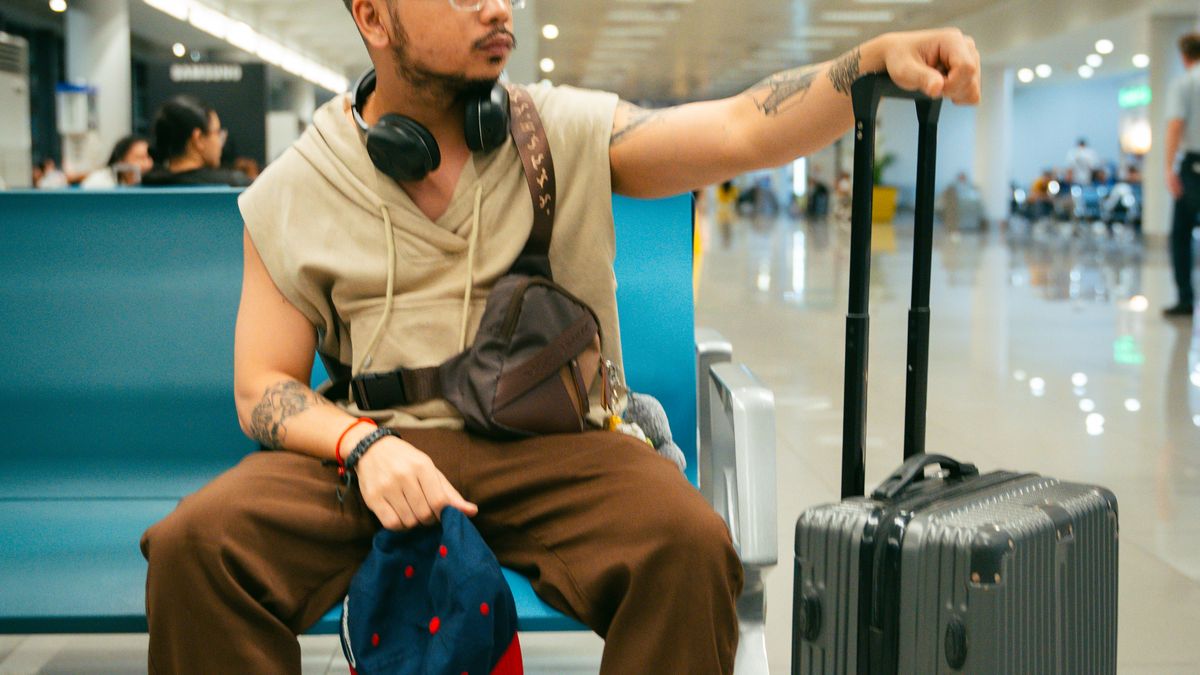
For a simple domestic flight, place identity documents and boarding details in a secure, reachable pocket. Keep your wallet, phone, essential medication and headphones within easy reach. A small protective cable pouch can prevent charging accessories from tangling with keys or scratching screens. If you do not expect to work or sleep, there is little reason to carry a full collection of entertainment devices and personal-care products.
Don’t fill every pocket simply because it exists. A bag must fit in its assigned stowage space and remain practical for airport screening. It is better to have a clean top compartment than a bag so dense that retrieving your identification requires removing the contents onto a terminal counter.
A Long-Haul Flight Needs a Different Kit
For an overnight flight, comfort items can earn more space. Eyewear, headphones, a clean top, toothbrush or other appropriate hygiene supplies and a light layer may make the journey easier. Pack liquids in compliant containers and arrange them according to the screening authority’s current rules. Avoid assuming that all airports require exactly the same pouch size or that an item permitted at departure is automatically permitted at a connection. For longer itineraries, our guide to packing a carry-on for a one-week trip develops this approach.
If you plan to sleep, choose a few items you can actually use in a confined seat. A soft eye mask or earplugs can be more practical than carrying a large pillow that crowds the floor space. Respect cabin safety rules, including keeping the bag securely stowed during taxi, takeoff and landing. Any item you take out should be easy to return without blocking the aisle.
Carry Medication and Critical Documents Thoughtfully
Necessary medication should remain accessible, especially when a checked bag could be delayed. Keep useful labels and required documentation as appropriate to your route. Medical liquids or equipment may have special screening procedures, and these should be checked with the actual airport or security authority before departure. A standard cosmetics rule should not be assumed to override permitted medical exceptions.
Travel documents deserve their own controlled pocket. At a passport desk, you want to produce the document promptly without exposing cash or unrelated papers. On international journeys, check destination entry requirements independently of your packing list. The bag is an organizational tool, not a substitute for having the correct authorization.
Power Banks and Battery Safety
Under the FAA’s guidance updated in October 2026, spare lithium batteries and power banks must travel in carry-on baggage, with capacity and airline restrictions. Most ordinary personal-use batteries up to 100 watt-hours are within the standard allowance; larger examples may need approval, and airline rules can be more restrictive. Check the battery’s watt-hour rating rather than assuming its appearance or marketing capacity is enough.
Protect terminals against short circuits and avoid damaged or recalled batteries. If the bag containing a power bank is going into the hold at the gate, remove the power bank and keep it with you. A personal item is a practical place for permitted batteries precisely because it can remain accessible when a larger cabin suitcase cannot.
When Your Checked Suitcase Is Delayed
If you will check luggage, consider a compact emergency change of clothes in the personal item. Spare underwear, a light top and basic hygiene supplies can help you manage the first evening after a baggage delay. The contents should reflect the purpose of the journey. A man arriving for a presentation may need an appropriate clean shirt more than casual beachwear; a hiker may need dry socks.
Do not try to duplicate an entire wardrobe in the smaller bag. Keep receipts if you must buy reasonable replacement essentials after a delayed bag and follow the airline’s baggage reporting process. The personal-item contingency exists to protect the most important first day, not to remove every possible inconvenience.
How to Pack It for Security and Boarding
Keep documents, permitted liquids and screened electronics where your airport may require them. Avoid complicated nesting that makes one item take several minutes to retrieve. Test the arrangement by opening the bag while seated in a chair, because what is easy on a floor at home may be awkward beneath an aircraft seat. Make sure the zipper closes comfortably and no straps protrude into the aisle.
If an item requires a clear security bag, follow the checkpoint’s instructions. If it does not, do not create unnecessary procedures for yourself because of an outdated internet checklist. This is especially important on international connections where screening arrangements can differ from your departure airport.
A Small Example That Protects the First Night
Picture arriving in a new city at midnight while your checked suitcase is delayed. A secure personal item containing your documents, medication, phone, permitted power bank, underwear and one clean shirt lets you handle the next morning without improvising everything. That is meaningful contingency planning. Bringing an entire second wardrobe, however, may make the bag too large to fit beneath the seat. Choose one plausible disruption and pack for its consequences rather than every imaginable travel mishap. Put the change of clothes in a slim washable pouch so it remains separate from food or charging accessories. This is especially practical for work travel, where a clean first-day shirt can matter more than entertainment devices.
The Personal-Item Checklist Before Leaving
Check five things in order: valid travel documents, essential medication, wallet and phone, permitted batteries and chargers, and appropriate comfort or contingency items. Then measure and weigh the completed bag against the actual fare. Remove extras that compromise accessibility or size compliance. For the trip itself, our solo travel guide for men covers planning and practical logistics.
The strongest personal item is not the one with the most pockets or clever attachments. It is the bag you can manage while tired, retrieve from quickly and keep within the airline’s cabin rules. Everything else belongs in the main suitcase or can stay at home.
Real Travel Situations
Situation 1.
Short flight: ID, phone, wallet, medicine and a modest comfort item may be enough.
Situation 2.
Long-haul overnight: add sleep and basic hygiene items in airport-compliant quantities.
Situation 3.
Checked-luggage itinerary: carry a fresh underwear set and irreplaceable work items for delays.
Final Check Before Departure
Check the allowance on the actual flight and fare. Keep travel documents, essential medication, valuables and spare lithium batteries where appropriate and accessible. A clever arrangement is not useful if the bag must be checked unexpectedly or if something essential cannot be retrieved. Confirm conditions against official sources when traveling across airports or borders.
Frequently Asked Questions
Does a backpack count?
It may, if its packed size fits the airline’s personal-item category.
Can I bring a power bank?
Usually within applicable safety limits, in the cabin rather than checked baggage.
Should medicine stay close?
Yes, follow medical screening and documentation rules.
Is a change of clothes necessary?
Useful on long flights or when checked baggage may be delayed.
Can the personal item go overhead?
Stowage depends on the operating airline and crew directions.
The Bottom Line
Good travel organization is about meeting your real needs without creating new problems. Keep important items safe, test the packed bag and make tradeoffs based on the conditions you will encounter. A practical plan will be slightly different for every journey.