Your belt and shoes should usually look intentionally related when the outfit is formal or business focused. They do not need to be an exact color match, but black shoes with a black belt and brown shoes with a belt from the same brown family remains the cleanest rule. Consider finish and formality too: smooth dress shoes work best with an appropriately refined belt, even when the shades differ slightly.
The rule becomes looser as the outfit becomes more casual.
The Short Answer
For suits, dress trousers, and traditional leather dress shoes, coordination matters.
For business casual outfits, match the general color family and level of formality.
For casual outfits, especially with sneakers, denim, overshirts, casual boots, and textured trousers, the belt can act as its own accessory rather than copying the shoe color exactly.
The mistake is treating a formal rule as if it applies equally to every outfit.
Why Formal Clothing Needs More Coordination
Formal outfits contain fewer casual textures and fewer competing details, so a mismatch becomes easier to notice.
Black Oxfords with a navy or charcoal suit look natural with a black leather belt. Dark brown dress shoes work best with a brown belt in a similar depth. Burgundy shoes can pair with a deep brown or burgundy toned belt depending on the rest of the outfit.
The goal is visual continuity.
You are not trying to prove that the belt and shoes came from the same factory dye lot. You are making sure the two main leather accessories do not fight each other.
A near match often looks more natural than an obsessive exact match because leather changes with wear, polish, light, and finish.
Black Shoes Are the Simplest Case
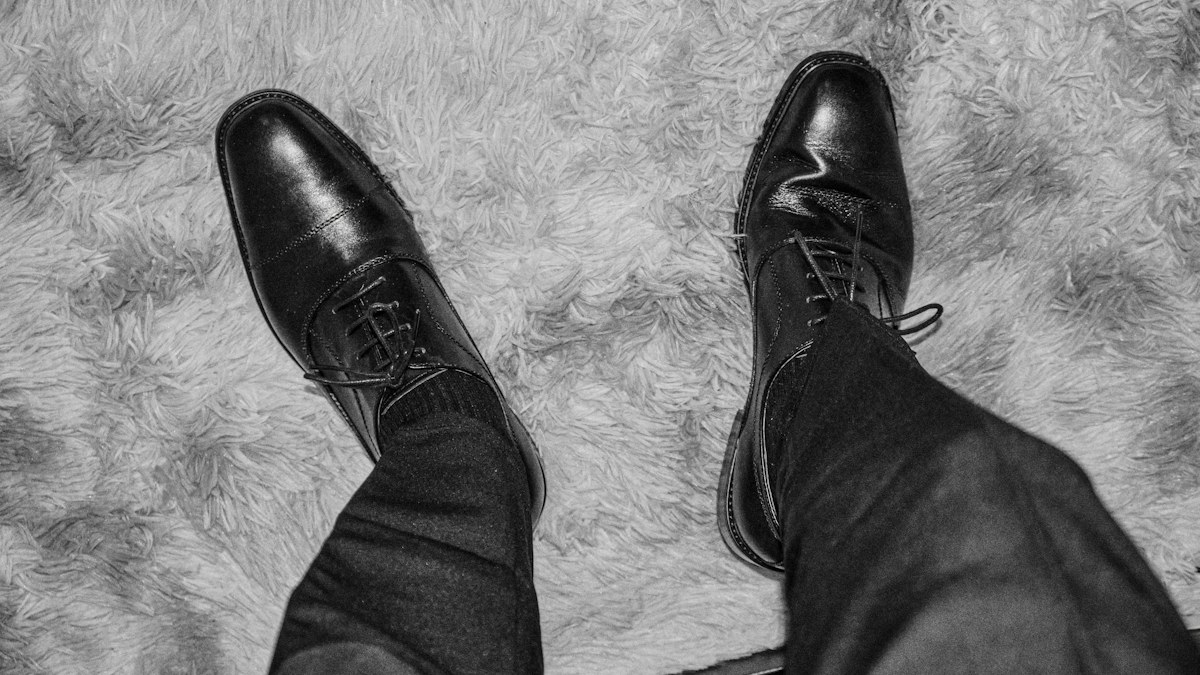
Black dress shoes usually call for a black belt.
This is the easiest rule in menswear because black has very little tonal flexibility in a formal outfit. A medium brown belt next to polished black Oxfords tends to look accidental rather than expressive.
Keep the finish in the same neighborhood too. Highly polished black shoes work best with a clean smooth belt rather than a distressed casual strap.
The buckle should also stay restrained. Silver, gunmetal, or another simple metal finish usually works better with formal clothing than a large decorative buckle.
If the trousers use side adjusters and the outfit does not require a belt, skipping the belt can be even cleaner.
Brown Shoes Give You More Room
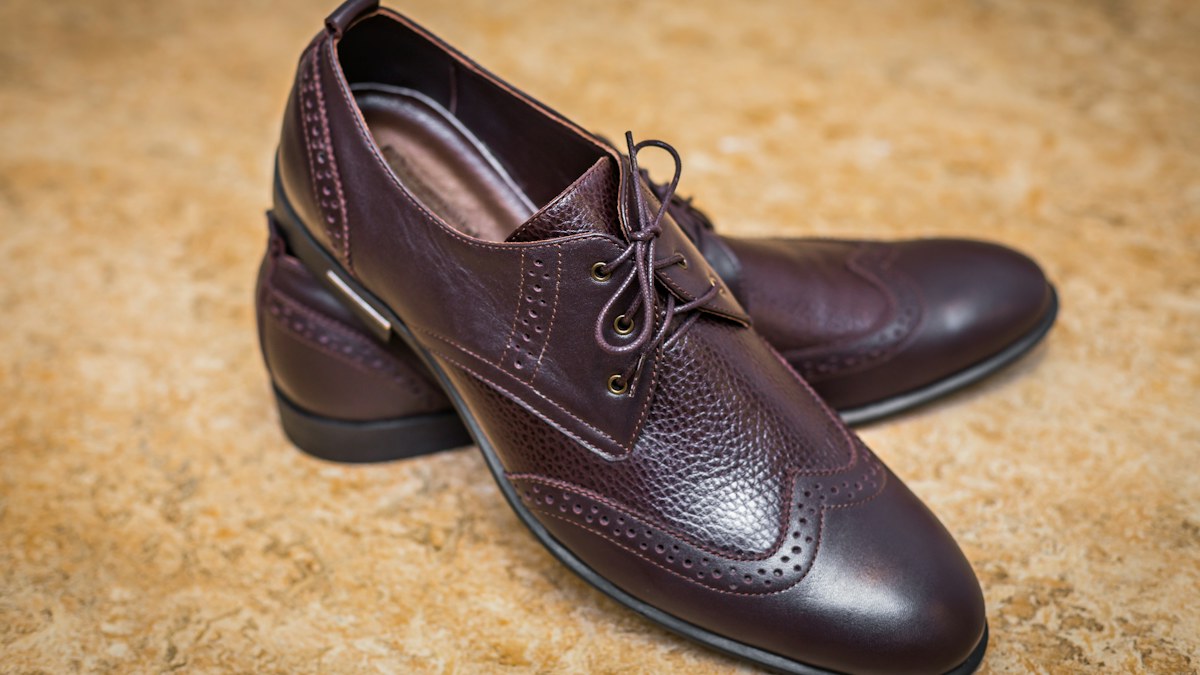
Brown comes in a wide range of shades, from light tan to deep chocolate.
You do not need a belt that matches every subtle undertone. A dark brown belt can work with several medium and dark brown shoes. A medium brown belt often pairs well with tan, walnut, and chestnut shoes when the outfit is not extremely formal.
What matters most is avoiding obvious conflict.
A very pale tan belt can look strange beside nearly black brown shoes. A glossy dress belt can feel wrong with rugged brown work boots. Matching the family while ignoring the level of formality solves only half the problem.
Think about color, texture, and finish together.
Business Casual Gives You More Flexibility
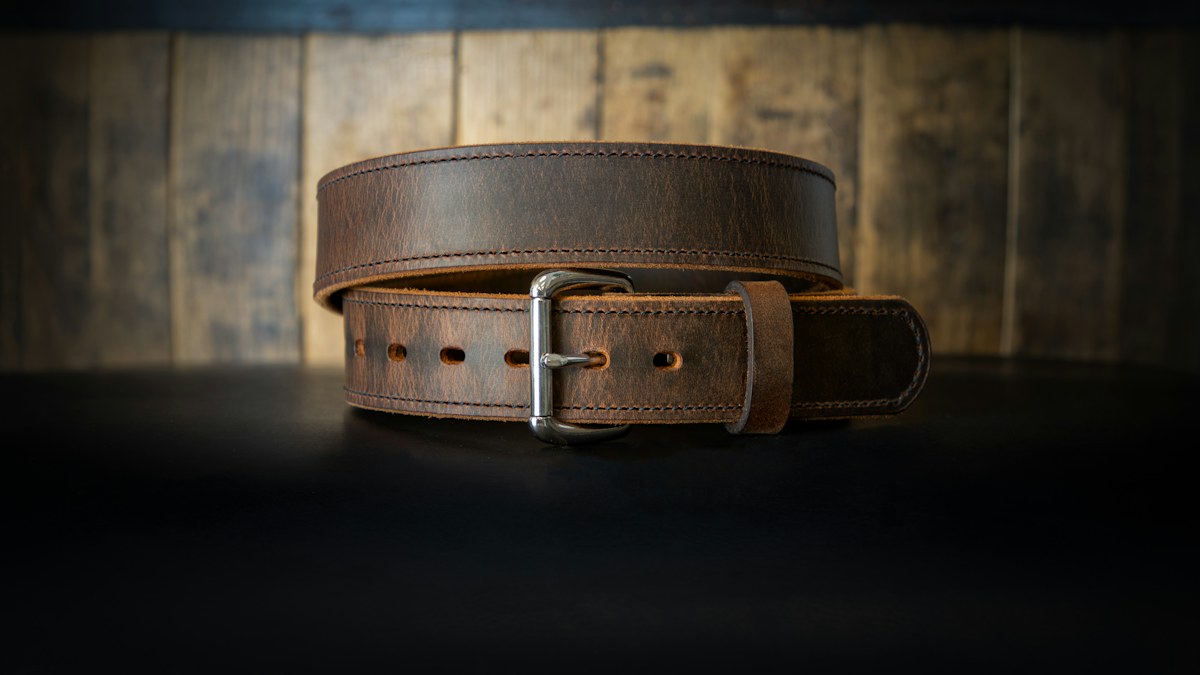
Chinos, loafers, derbies, casual trousers, knitwear, and sport coats let you loosen the rule.
A medium brown leather belt can cover a large portion of a business casual wardrobe. It works across several brown shoe shades and can sit comfortably beside suede loafers or casual derbies.
Suede shoes do not require a suede belt.
In fact, a matte leather belt or a subtle woven belt often looks more natural because it coordinates without becoming a costume.
This is where texture starts to matter as much as exact color.
A smooth polished belt signals more formality. A matte, braided, suede, or lightly textured belt lowers the formality and often works better with softer tailoring and chinos.
White Sneakers Do Not Need a White Belt
This is where rigid matching becomes silly.
White sneakers do not call for a white leather belt.
With casual trousers, denim, or chinos, you can wear a brown, tan, navy, olive, black, braided, or fabric belt depending on the outfit.
The belt should make sense with the trousers and overall color palette, not imitate the sneakers. If you wear white sneakers regularly, our white sneaker cleaning guide covers how to care for them without damaging the material.
If you are building a versatile shoe rotation, How Many Pairs of Shoes Should a Man Own? A Practical Guide explains why a few well chosen categories usually matter more than owning endless near duplicates.
The same logic applies to belts. One or two useful casual belts can cover far more outfits than trying to own a belt for every sneaker color.
Sneakers Change the Rule Because the Outfit Changes
A leather dress shoe is usually one of the most formal visual anchors in an outfit. A sneaker is not.
Once the shoe becomes casual, the belt has more freedom to connect with the trousers, outerwear, watch strap, or another accessory.
Dark navy sneakers with olive chinos can work with a medium brown belt. Gray sneakers with denim can work with black, charcoal, brown, or woven belts depending on the shirt and outer layer.
The question is no longer “Does the belt match the shoe?”
The better question is “Does the belt belong in the same outfit?”
Boots Depend on the Type of Boot
Dress boots and rugged boots should not be treated the same way.
A polished black Chelsea boot worn with tailored trousers generally follows the same logic as a black dress shoe. Use a black leather belt or skip the belt if the trousers are designed for that.
A brown dress boot works with a brown belt in a similar family.
Rugged boots give you more flexibility because texture becomes part of the outfit. Dark brown service boots, denim, and a heavy overshirt can work with a tan or medium brown belt even when the shades are not close.
A distressed belt can make sense with rugged boots but look completely wrong with sleek dress shoes.
Match formality before you obsess over color.
Belt Width Matters More Than Most Men Think
A dress belt should generally be narrower and cleaner than a casual belt.
If you pair a thick rugged strap with slim tailored trousers, the mismatch can be more distracting than a small color difference.
Casual jeans and workwear can handle a wider belt with heavier leather and a more substantial buckle.
Chinos sit in the middle. They work well with simple leather, suede, or woven belts that are not excessively formal or rugged.
This is why the rule is really about visual consistency.
Color is one part of that consistency. Width, leather finish, edge treatment, buckle, and texture matter too.
Match the Level of Polish
A glossy pair of dress shoes beside a heavily distressed belt creates tension even if both are brown.
Likewise, a shiny formal belt can feel out of place with rough suede chukkas and washed denim.
Try to keep the degree of polish reasonably consistent.
Smooth leather shoes work naturally with smooth leather belts. Suede and matte shoes can work with matte leather, suede, or woven belts. Rugged boots can handle thicker, more casual straps.
The exact materials do not need to be identical. They simply need to speak the same visual language.
What About the Watch Strap?
Your watch strap does not need to match both belt and shoes perfectly.
Think in families.
A dark brown leather watch strap, medium brown belt, and brown shoes can work together even when all three are slightly different.
With black formal shoes and a black belt, a black leather watch strap is the cleanest choice if you are wearing a leather strap at all.
Metal bracelets simplify the issue because they do not need to participate in the leather matching rule.
The goal is coherence, not uniformity.
What About the Belt Buckle and Watch Metal?
Matching metals can make an outfit feel more considered, but it is not a hard rule.
A silver watch with a silver or gunmetal buckle is easy. Gold toned hardware can work with a gold toned watch.
Small differences are rarely worth worrying about unless the accessories are large and visually prominent.
Do not let minor hardware coordination distract from bigger issues such as poor fit. How to Choose the Right Jacket Length for Your Body is a good example of why proportion usually matters more than tiny accessory rules.
Fit carries more visual weight than whether two small pieces of metal are identical.
When You Should Skip the Belt
Not every pair of trousers needs a belt.
Some tailored trousers are designed with side adjusters, extended waistbands, or suspender buttons. A belt can interrupt the clean line those trousers are designed to create.
Tuxedo trousers are the clearest example. Traditional black tie does not use an ordinary leather belt.
If your trousers fit properly and are designed to be worn without one, do not add a belt simply because you think every outfit requires it.
A belt should solve a functional or visual need.
If it does neither, leaving it out can be the more refined choice.
The Belt Should Work With the Trousers Too
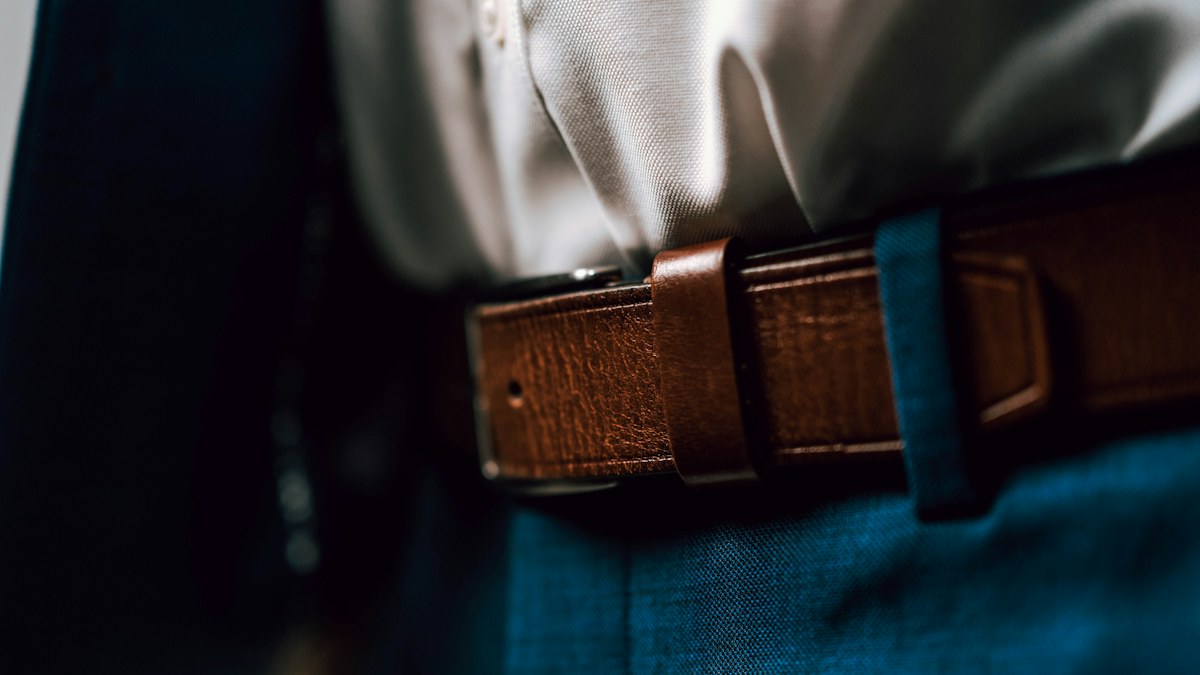
Men often focus so heavily on the shoes that they forget the belt sits directly against the trousers.
A black belt with black shoes may technically match, but it can still look severe with very light casual chinos. A medium brown belt often creates a softer transition.
With denim, casual leather and woven belts usually look more natural than glossy dress belts.
With tailored trousers, cleaner leather and simple buckles keep the outfit refined.
This is also why tucked shirts make belt choice more visible. If you regularly tuck your shirts, How to Tuck In a Shirt Without Bunching or Looking Bulky can help keep the waistline clean enough that the belt looks intentional rather than crowded.
When Contrast Works
Contrast works best when the rest of the outfit is clearly casual.
A tan belt with dark brown boots and raw denim can look deliberate because the materials and ruggedness connect the pieces.
A navy woven belt with white sneakers and stone chinos can work because the outfit is relaxed and the belt adds controlled color.
Contrast becomes risky when the outfit is formal. A bright tan belt with black dress shoes and a charcoal suit usually looks like a mistake rather than a choice.
The more formal the outfit, the more conservative the coordination should become.
Common Belt and Shoe Mistakes
Matching leather color while ignoring the outfit’s formality is a common mistake. A glossy dress belt can look out of place with worn sneakers or rugged boots even when the shade is close. The opposite problem happens when a thick, decorative belt overwhelms tailored trousers.
White sneakers do not require a white belt, and formal shoes rarely benefit from deliberately contrasting leather. Do not force an exact shade match when materials naturally vary. Check whether the trousers are designed for a belt at all, then prioritize fit and proportion. Even a perfectly coordinated belt cannot rescue trousers that sit badly.
A Simple Three Belt Setup
Most men do not need a large belt collection.
A black leather dress belt covers black formal shoes.
A medium to dark brown leather belt covers most brown dress shoes, business casual footwear, and many smarter casual outfits.
A casual belt in woven fabric, suede, or matte leather covers sneakers, denim, and relaxed trousers.
That three belt setup handles a surprising amount of a normal wardrobe.
You can add specialty colors later if your clothing genuinely creates the need. Start with versatility before variety.
This is the same principle behind our capsule wardrobe guide: keep the accessories that make your existing clothes easier to wear, not a collection of options that solve no real problem.
The Modern Men HQ Standard
Match the family and formality, not the paint chip.
Formal clothing benefits from simple coordination. Black with black is the cleanest rule. Brown with brown gives you more tonal freedom as long as the shades and finishes feel related.
Business casual clothing lets texture do more work.
Casual clothing gives you room to use contrast, woven belts, suede, canvas, and complementary colors.
The standard is not perfect matching. It is intentional consistency.
If the belt looks like it belongs in the same outfit as the shoes, trousers, and overall level of dress, you have followed the rule that actually matters.
Frequently Asked Questions
What color belt should you wear with burgundy or oxblood shoes?
A belt in a related burgundy, oxblood, or deep brown tone usually works well. For a formal outfit, keep the leather finish and level of polish reasonably consistent. An identical shade is less important than a coordinated result.
Does a suede belt have to match suede shoes?
No. The textures do not have to be identical. A suede belt can complement casual leather or suede shoes when the colors and level of dress feel related. Reserve a cleaner, more polished leather belt for formal tailoring.
Should your belt match your briefcase or bag?
It does not need to match exactly. Keeping visible leather accessories in a similar color family can make a formal outfit feel coherent. In casual clothing, a canvas bag or contrasting leather is often perfectly appropriate.
Can you wear a brown belt with black jeans?
Yes, particularly with brown boots or other casual brown shoes. Look at the full outfit rather than matching the belt only to the trousers. With black formal shoes and a dressier look, a black belt is usually the cleaner choice.